The project initiation phase must define the legal and platform compliance boundaries for durability demonstrations.
Before launching a cross-border e-commerce product video project, brands must convert durability demonstrations from mere creative concepts into verifiable commercial claims. The primary task of the kickoff meeting is to confirm whether the demonstration content has a factual basis. Marketing leads must provide third-party test reports or internal lab data as the foundation for scriptwriting. If the product has only passed standard usage tests without extreme environment verification, the script must not imply extreme pressure resistance or ultra-long lifespan visuals. The production team should intervene at this stage to assess whether existing materials can support the visual expression. If data is missing, filming preparations should be paused immediately to conduct supplementary testing or adjust the communication strategy.
Compliance review must run throughout the entire project initiation process. Advertising laws in different sales destinations strictly define terms like 'durable' and 'sturdy.' The brand's legal or compliance department must review every action design in the storyboard to ensure the visual message aligns with textual claims. For example, if the video shows a heavy object striking the product without damage, the weight, material, and drop height of that object must be documented. Any substitution of test props, reduction of load, or alteration of materials for visual effect must be explicitly prohibited during initiation. Negligence at this stage can lead to the final video being delisted after upload, or even trigger consumer lawsuits and brand reputation crises.
Decision Criteria for Distinguishing Authentic Test Records from Visual Rhetoric
Durability demonstrations in product video production often face conflicts between authenticity and watchability. The core decision lies in clarifying whether the video serves as evidentiary content or emotional content. If the video aims to directly drive high-ticket conversions or address competitor skepticism, it must use unedited long takes to record the complete testing process. This format sacrifices pacing but establishes irrefutable trust. If the video is for social media traffic or brand awareness, visual rhetoric such as montage, close-ups, or sound enhancement is permissible, provided the core stress points and results remain authentic.
Production teams must establish tiered execution standards. For destructive tests related to key selling points, CGI simulation or prop substitution is strictly prohibited. For non-core background displays or atmosphere creation, visual effects may be used, but 'Simulated Demonstration' must be labeled in the corner of the frame or video description. When reviewing storyboards, brands should verify frame-by-frame which shots are real recordings and which are artistic enhancements. Blurring these lines is the root cause of overpromising. When uncertain whether a technique crosses the line, choose the more conservative option. Cross-border e-commerce platform review mechanisms are increasingly intelligent; overly perfect VFX composites can easily trigger false positives, leading to restricted traffic.
Verification Materials and Pre-Production Prerequisites Required from Brands
To ensure accuracy and efficiency in product video production, brands must provide complete physical samples and technical documentation before entering the studio. Providing only final retail samples is often insufficient; backup sample sets for destructive testing are also required. These backup samples must match the retail units exactly in batch and specification to prevent distorted test results due to sample variance. Additionally, structural exploded views, material parameter sheets, and raw footage of previous tests should be provided. These materials help the Director of Photography understand the product's stress logic and design lighting and camera angles that are both safe and texture-enhancing.
Venue and safety conditions are another critical pre-production preparation. Durability demonstrations often involve flying debris, liquid spills, or open flames. The production team must scout locations based on the test type to verify floor load capacity, drainage, ventilation systems, and fire equipment meet standards. If special equipment operation or hazardous actions are involved, certified professionals must be hired for on-site supervision. Brands should purchase relevant insurance in advance and sign liability waivers. Any on-site work stoppage or safety accident caused by inadequate preparation will result in budget overruns and schedule delays. Do not assume the production team can solve all engineering issues independently; the brand remains primarily responsible for technical validation.
On-Set Execution Standards and Evidence Retention Mechanisms
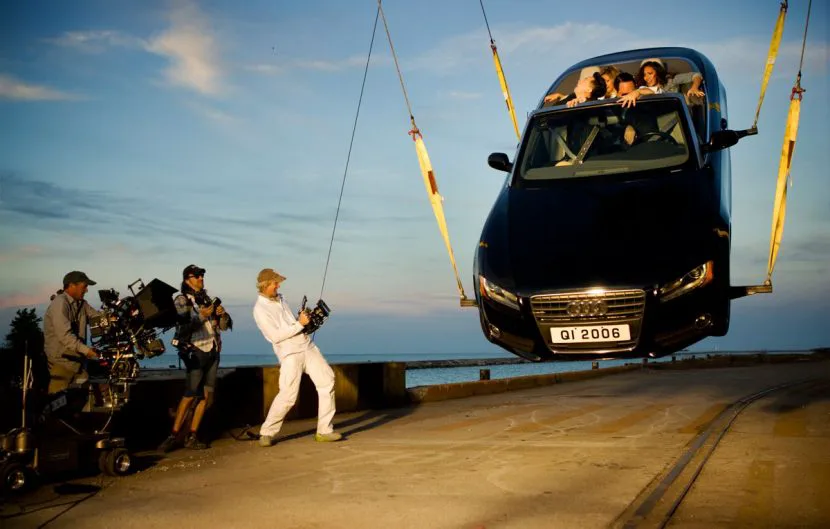
On the product video set, executing durability demonstrations must follow standardized procedures. Rehearsals should be conducted before each test to check equipment status and safety measures. During formal filming, it is recommended to keep one fixed camera recording continuously throughout as a raw evidence backup. This angle requires no attention to composition or lighting; its sole function is to prove that the highlights captured by the main camera are untampered. If a test fails or results fall short of expectations, record and analyze the cause honestly rather than forcing retakes until 'perfect.' Authentic flaws are sometimes more persuasive than fabricated perfection.
On-site supervisors should be engineers appointed by the brand who are familiar with the product technology. The director handles visual presentation, while the engineer determines test validity. When opinions conflict, technical facts take precedence. For instance, a director may want to increase impact force for visual punch, but if the engineer notes this exceeds product design specs and lacks universal representativeness, filming must stop. All test parameters such as weight, speed, temperature, and duration should be detailed on continuity logs and archived corresponding to video files. These records serve not only as a basis for post-production but also as a critical chain of evidence for future platform appeals or legal disputes.
Compliant Editing and Information Disclosure Principles in Post-Production
In post-production, editors must balance narrative pacing with information integrity. The baseline for editing durability demos is that splicing must not conceal failures or alter causality. If a test involves multiple steps, timeline continuity must be maintained. Removing idle waiting time is allowed, but the start and end points of key actions must be retained. Color grading and sound design can enhance texture but must not erase genuine wear marks on the product surface or mask abnormal sounds. Excessive beautification creates viewer suspicion, ultimately undermining the demo's credibility.
Information disclosure should be a standard procedure in post-production. Tests involving sped-up playback, macro magnification, or non-standard environments must include explanatory subtitles in prominent positions. Subtitle wording should be objective and neutral, avoiding misleading language. If AIGC technology is used to generate backgrounds or auxiliary elements, labeling must comply with the latest platform regulations. During review, brands should focus on verifying whether these disclosures are clearly visible and displayed long enough to be read. Many compliance risks stem from subtitles being too small, too faint, or obscured by UI elements. Versions delivered to different platforms should adjust disclosure methods according to specific audit rules; a single master file should not be distributed universally.
Delivery Acceptance Checklist and Multi-Version Adaptation Requirements
Acceptance of product video production should not stop at visual appeal. Brands must establish an acceptance checklist covering technical, content, and legal dimensions. The technical dimension checks whether resolution, bitrate, and color space meet target platform specifications. The content dimension verifies that demo actions, parameter labels, and disclaimers match the approved script. The legal dimension confirms clear copyright for all assets, ensuring music, font, and likeness licenses cover planned channels and durations. Failure in any dimension warrants rejection for revision rather than publishing flawed content.
Given the multi-platform nature of cross-border e-commerce, deliverables should include a complete version system. Beyond the primary 15s or 30s ad cuts, prepare full versions over 60s, silent captioned versions, vertical adaptations, and high-res stills. Each version requires independent compliance review. Source files and project files should also be included in delivery to facilitate quick adjustments for future regulatory changes or product iterations. Upon completion of acceptance, both parties should sign a written confirmation letter specifying the liability transfer point. Verbal approval or chat logs cannot serve as formal acceptance proof. A rigorous delivery process is the last line of defense protecting both brand and production team.
Applicable Scenarios and Risk Warnings for Durability Demo Videos
Not all products are suitable for durability demo videos. This format best suits categories with strong functional attributes, harsh usage environments, and purchase decisions relying on reliability verification, such as tools, outdoor gear, maternity/baby products, or electronics. For fashion apparel, beauty/skincare, or emotion-driven products, forcing durability displays may deviate from core selling points or convey the wrong brand tone. Furthermore, if the product is still in the prototype stage or mass-production consistency is unverified, such videos are inadvisable. Early sample performance does not represent mass-production quality, and premature promises create after-sales liabilities.
Even with category fit, beware of diminishing marginal returns. As markets flood with homogeneous stress tests, audience thresholds rise, forcing brands to escalate test intensity toward dangerous or absurd extremes. At this point, return to real user scenarios, substituting extreme instantaneous destruction with nuanced daily durability. Production teams have a responsibility to warn brands of this trend risk. If scripts fall into the trap of testing for testing's sake, proactively suggest returning to user value origins. The ultimate goal of product video production is building trust, not manufacturing spectacles.
Next Steps and Resource Planning Recommendations
If your brand is considering producing durability demo videos for cross-border e-commerce, start with an internal compliance self-check and test data inventory. Organize existing test reports, user feedback, and competitor analysis to clarify your unique verifiable advantages. Then consult service providers experienced in commercial video production, focusing on their understanding of platform rules and risk control capabilities. The ONCE website lists services covering corporate films, brand videos, TVCs, product videos, overseas marketing videos, social media shorts, and AIGC video production, offering end-to-end support from strategy to delivery for cross-border brands. Before officially starting, verify platform specs against the latest official pre-launch requirements, and reserve sufficient budget and time buffers for potential test attrition and compliance adjustments.
If you are preparing a product video project, organize your brief, reference visuals, product/corporate materials, delivery platforms, and licensing scope first, then visit theE-commerce Product Video Service Pageto translate abstract preferences into actionable production boundaries.