Include sound design in decision-making during project initiation.
Sound design is a core thread that must be integrated from project inception. When preparing commercial videos, brands often prioritize visual style, casting, locations, and color grading, yet rarely discuss audio layering, rhythm, or memorable cues during scripting. This leads to insufficient audio assets or conflicts between sound and visual pacing during editing, ultimately compromising brand recall.

During project initiation, brands and production teams should align on three questions. First, what is the core communication goal of this commercial: is it to make the audience remember a slogan, a melody, or an emotion evoked by a visual? Second, in what context will the target audience view it: scrolling silently on mobile, in a noisy subway, or watching TV in a living room? Third, what existing audio assets does the brand have, such as brand music, notification sounds, or voiceover tones, and do these need to be retained or redesigned?
Specifically, add a sound requirements page to the project brief listing required audio elements, prohibited sound types, reference audio links, and brand audio assets. If the brand lacks existing audio assets, the production team must outline in the proposal how to build a sonic identity system from scratch and provide at least two creative directions for selection.
The risk is that without reference audio from the brand, the production team may rely on their own aesthetic preferences, leading to disagreements during final approval. An exception applies to purely visual experimental shorts with no commercial objectives, where sound design can be left entirely to the director, though expectations must still be aligned in advance.
As a deliverable, the sound requirements sheet serves as the benchmark for post-production acceptance; without it, the post team cannot assess whether the audio meets standards, and the brand cannot provide specific revision feedback.
On set, simultaneously document the usability of both video and audio recordings.
In commercial video production, a sound recordist’s job goes beyond simply turning on a microphone; they must assess whether on-set audio provides usable material for post-production editing. Many brands and production teams focus solely on visual composition while neglecting on-set audio quality, only to discover excessive ambient noise, unclear dialogue, or missing sound details for key actions during editing.
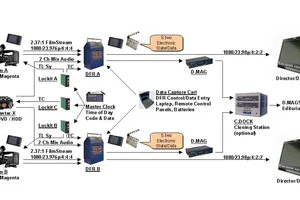
Before shooting, confirm the synchronization method between audio equipment and cameras—whether using timecode or direct audio cable connection—as this determines the precision of audiovisual sync in post-production. During filming, record at least 30 seconds of ambient room tone per scene for use as background beds and noise reduction references in post. Additionally, capture sound effects related to brand interactions, such as product opening and closing, liquid pouring, fabric rustling, and button clicks, as these audio details serve as touchpoints for brand recall during editing.
Specifically, annotate audio capture requirements for each shot in the storyboard, including dialogue, ambient sound, action sounds, and special effects. After each day’s shoot, the sound recordist must organize audio files and log metadata, including scene number, take number, audio content, and usability assessment. Brand representatives should monitor audio quality on set and request immediate reshoots if anomalies are detected, rather than waiting until post-production.
The standard requires at least one clean dialogue track and one isolated action track for every key shot, with ambient coverage for all primary scenes. The risk is that on-set noise—such as HVAC, traffic, or crowd sounds—cannot be entirely avoided; while post-production noise reduction tools can help, excessive processing degrades audio quality, so quieter locations or controlled noise sources should be prioritized during pre-production.
An exception applies to projects using purely CGI or AIGC-generated visuals with no live-action footage; in such cases, sound design requires purchasing stock audio or synthesizing sounds, necessitating advance planning for licensing and budget.
As a deliverable, on-set audio recordings serve as source material for post-production sound editing; if missing, editors must resort to stock libraries, causing the brand to lose unique sonic details and diminishing the distinctiveness of its auditory identity.
Editing pacing must allow breathing room for audio.
When editing commercials, visual cuts and audio entry and exit points must be designed in sync; otherwise, the sound may feel abrupt or the visuals cluttered. Many editors habitually cut the picture first and add music and sound effects later, only to find that musical climaxes fail to align with visual transitions or that sound effects are obscured by cuts.
The correct approach is to import reference music and temporary sound effects during the rough cut to validate edit points using audio. Editors should focus on each shot's in and out points, ensure audio starts and ends naturally, and allow viewers time to process information. Brand memory cues often rely on sonic repetition or variation; for example, a tagline appearing at both the beginning and end with varied background music or effects in between helps audiences remember the sound.
Specifically, editors should create distinct audio tracks on the timeline, including dialogue, music, sound effects, ambience, and foley. Each track requires dedicated control channels to facilitate post-production adjustments. After the rough cut, invite the brand team to review the video, focusing on whether the audio rhythm matches the visual pacing rather than just watching the footage.
The standard is that audio changes at every edit point must be logical, driven by musical beats, natural sound effect transitions, or pauses in dialogue. If viewers perceive sudden audio dropouts or intrusions while watching, the edit points have not been handled properly.
A risk is that editors pursuing rhythmic intensity may overuse sound effects and musical accents, resulting in dense audio that causes viewer fatigue. An exception applies to minimalist-style ads requiring only ambient sound and minimal effects; in such cases, sound design should be more restrained to leave room for audience interpretation.
Regarding deliverables, the audio tracks in the edited version form the foundation for the final mix. Failing to organize tracks properly during editing forces the mixing engineer to reconstruct the timeline, increasing communication costs and turnaround time.
Sound design must establish a proprietary auditory identity for the brand.
The core of brand recall is enabling audiences to associate a specific sound with the brand, which requires clearly symbolic sound design. In commercial video production, sonic branding can take the form of a short jingle, a melody, a distinct timbre, or recognizable voiceover delivery.
The form of the brand's sonic identity, such as a three-note melody, a specific instrument timbre, or a distinct vocal tone, should be defined during project initiation. This motif must recur throughout filming and editing with variations to avoid monotony. For instance, presenting the full melody at the opening, a variation in the middle, and returning to the complete theme at the end helps cement audience memory.
Specifically, the sound designer must create a sonic style reference board before post-production, covering brand music, sound effects, voiceover style, and mixing approach for client approval. Once approved, all audio elements—including volume balance, frequency response, and spatial imaging—must be produced according to this reference.
The benchmark is whether someone unfamiliar with the ad can associate the audio with the brand within five seconds; failure indicates an indistinct sonic identity. A risk arises if clients choose overly complex melodies or effects, increasing cognitive load and hindering recall. However, if the brand already possesses established audio assets, existing elements should take precedence over new creations.
As a deliverable, the sonic identity becomes a reusable brand asset for future videos or ads, so original project files and stems must be retained to facilitate future adjustments.
Post-production mixing must balance artistic expression with platform compatibility.
Mixing is the final stage of sound design, requiring a balance between artistic intent and adaptation to various playback platforms. Commercial videos may air on TV, streaming services, social media, and at live events, each with distinct playback devices, environments, and loudness standards.
Mix engineers must adjust loudness based on the delivery platform; for instance, TV has strict standards while online platforms are more lenient, yet social media users often watch without sound, meaning visuals and subtitles must complement the audio rather than relying solely on it.
Specifically, confirm the list of delivery platforms before mixing and export versions with appropriate loudness for TV, web, and mobile afterward. Subtitle files must also be created to ensure comprehension in silent environments, while dialogue clarity must be maintained by preventing background music or harsh sound effects from overpowering vocals.
The standard is that audio must remain clear and intelligible across standard phone speakers, headphones, and TVs without noticeable distortion or volume imbalance. A key risk is mixing solely on professional monitors, which may result in poor translation to consumer devices, necessitating testing across multiple playback systems.
An exception applies if the ad is exclusively online and the client explicitly waives a TV version, allowing simplified loudness processing provided basic clarity is maintained. Failure to meet mixing standards can result in platform rejection or poor user experience, ultimately damaging the brand image.
The acceptance checklist must cover every aspect of the audio workflow.
During commercial video project acceptance, brands must inspect each stage of sound design individually rather than relying solely on the final cut. Audio acceptance covers dialogue, music, sound effects, ambient sound, mix quality, loudness standards, and subtitle synchronization.
Specific acceptance procedures involve reviewing the final cut to verify that dialogue is clear and natural, music matches the visual mood, sound effects are realistic, ambient sound creates appropriate spatial depth, the mix is balanced, loudness meets platform requirements, and subtitles are synchronized with the audio. Each item requires a definitive pass or fail record.
Acceptance criteria require dialogue volume to sit above background music without sounding abrupt; music should intensify during emotional peaks without masking dialogue; sound effect positioning and distance must match the visuals; ambient sound must be free of noticeable noise floor or hum; playback loudness must be neither harsh nor too faint; and subtitle timing must sync with audio within a two-frame tolerance.
A key risk is that brands may focus only on overall impression while overlooking details like delayed sound effects or slight dialogue echo, which compromises professionalism. An exception applies to fast-paced viral short videos, which may not require intricate mixing but must still maintain basic audio clarity.
Upon successful acceptance, audio project files, stems, mixed versions, and subtitle files must be archived as part of content asset management to facilitate future revisions or reuse.
Scenarios where sound design is inapplicable should be clarified in advance.
Not all commercial videos require complex sound design, and over-designing can waste budget and time in certain cases. Brands must understand the applicable scope of sound design to avoid over-investing resources in unnecessary projects.
Inapplicable scenarios include outdoor digital signage videos typically played on mute, where audio affects only visual rhythm and requires no detailed mixing. Internal training tutorials focusing on spoken instruction also fall into this category, requiring only basic dialogue processing without music or sound effects. Additionally, rapidly iterated AIGC-generated videos often rely on AI-generated audio, leaving limited room for manual sound design.
Specifically, if the viewing environment precludes audio playback or makes it highly unlikely, sound design can be simplified provided dialogue remains clear. If the primary goal is visual impact with audio serving a secondary role, sound design should be restrained to avoid overshadowing the visuals.
The risk arises when brands, unaware of these boundaries, demand complex sound design for every project, leading to budget overruns or schedule delays. An exception occurs when a brand explicitly defines audio as central to brand identity; even for muted platforms, perceptible sonic symbols should be designed, such as visualizing sound effects on screen to imply audio.
Clearly stating exclusions upfront regarding deliverables prevents later disputes and ensures the budget is spent on elements that truly impact communication effectiveness.
The next recommended step is to start with an audio requirements form.
Sound design for commercial video production requires collaboration between the brand and the production team throughout project initiation, filming, post-production, and acceptance. We recommend that brands create an audio requirements form at the start of their next project to define audio assets, reference tracks, prohibited items, and acceptance criteria. This form need not be complex but must be completed before the script is finalized and included as a contract appendix.
Additionally, assign dedicated personnel to monitor audio recording on set to ensure no critical footage is lost. During post-production, involve the sound designer in rough cut reviews rather than waiting until the mixing stage. Upon acceptance, verify each item against the audio checklist and retain all project files. The primary goal is to mitigate project risks and effectively establish brand identity through sound.
If you are preparing a commercial video production project, first gather your brief, visual references, product or corporate materials, delivery platforms, and licensing scope before reviewing.Video Production Solutions pageto translate abstract preferences into actionable production parameters.