The Logic of Translating Communication Goals into Shots
The core challenge of video planning lies in translating abstract brand propositions or marketing metrics into concrete visual symbols. Many projects fail not because of rough production, but because the pre-production definition of "what is needed" is too broad. When clients request increased brand awareness or conversion, this must be broken down into specific user behaviors or emotional resonance points. For example, if the goal is to demonstrate a product's durability, the shot language should focus on usage scenarios in extreme environments, while avoiding mere static close-ups. This translation process requires planners to think in audiovisual terms, anticipating in advance which abstract concepts can be directly presented visually and which require voiceover or subtitle assistance.
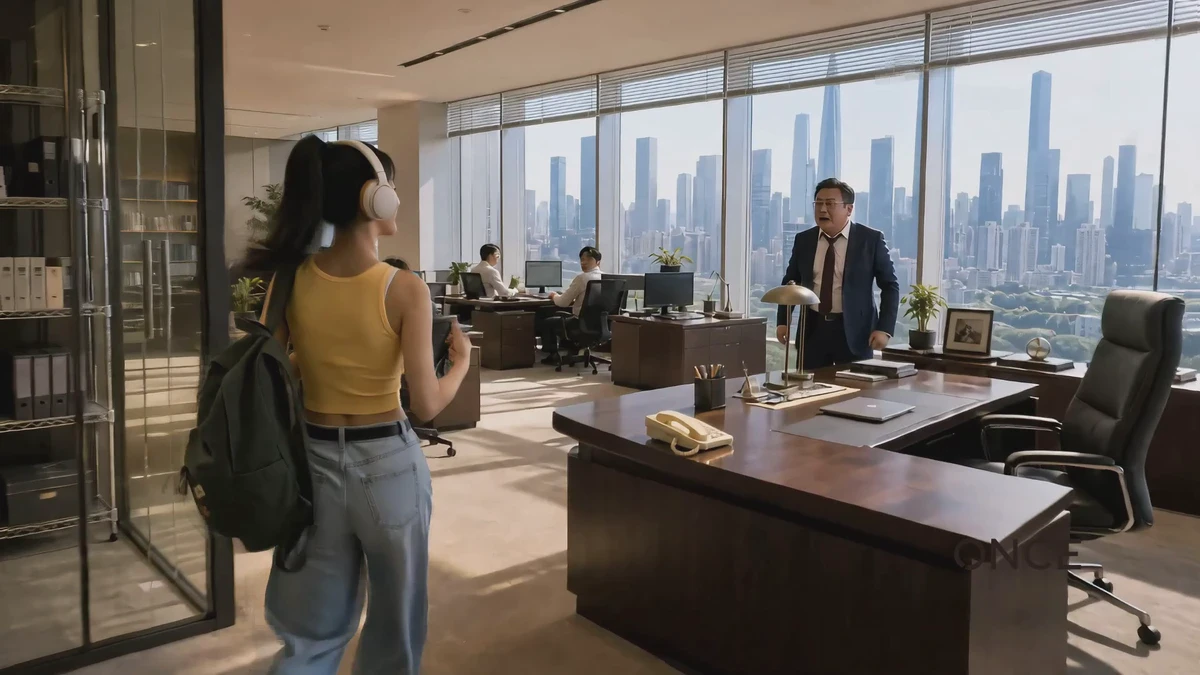
At the project initiation stage, be sure to establish a "goal mapping table." This table should list every core communication point and correspond it to at least two candidate shot options. This action effectively avoids the deadlock of "not knowing what to shoot" on set. At the same time, each shot must be assigned a single function, avoiding forcing too much information into one shot, which distracts the audience's attention. Only when every shot serves a clear communication intent can the narrative efficiency of the final film be maximized.
Completeness Check for Pre-Production Material Preparation
High-quality execution relies on detailed and accurate pre-production materials. Brands need to provide not only product images, but also real usage scenario photos, competitor reference videos, and brand visual identity guidelines. These materials are the foundation for the director and director of photography to build a worldview. Competitor references, in particular, help the production team quickly align on aesthetic expectations, reducing communication costs. However, reference videos are for style inspiration only; directly imitating their composition or camera movement is strictly prohibited to avoid copyright disputes or homogenization.
Additionally, a location scouting report is essential. The report should include details such as lighting conditions, power distribution, noise source locations, and traffic flow planning. If special props or large equipment need to be brought in, property restrictions and load-bearing capacity must be confirmed in advance. Ignoring these physical constraints often leads to major delays on shoot day. It is recommended that the production team conduct an internal pre-review after receiving all materials, flag missing items or potential conflicts, and complete any supplements a week before the official start of filming. Any unconfirmed material gaps should have clear responsibility assigned in the contract to prevent later disputes.
Structured Design of Scripts and Storyboards
Text scripts and storyboard scripts are deliverables of two different dimensions. Text scripts focus on narrative logic and information hierarchy, while storyboard scripts focus on visual presentation and technical execution. A mature storyboard should include shot numbers, shot sizes, angles, movement methods, estimated durations, and remarks. For complex shots, simple sketches or dynamic pre-visualizations should also be drawn. This refined design allows the cinematographer and gaffer to understand the creative intent in advance, enabling efficient lighting within a limited time.
In storyboard design, special attention must be paid to pacing control. Fast-paced editing is suitable for showcasing vitality and a sense of technology, while long takes better reflect texture and immersion. Planners should choose an appropriate pace based on the viewing habits of the target audience. For example, social media short videos usually need to grab attention in the first three seconds, so the opening shot must have strong visual impact. At the same time, every transition in the storyboard should have a logical basis; whether a hard cut or a cross-dissolve, it should serve the emotional flow and avoid arbitrary splicing. Incorrect transitions will disrupt narrative continuity and reduce audience trust.
Risk Control During Production Execution
The shooting set is the critical stage where creative ideas land, and it is also a high-risk area. The production team needs to create a detailed call sheet; a minute-by-minute schedule ensures all departments work together. The on-set director must strictly follow the storyboard script, but should also retain some room for improvisation to capture unexpected gems. However, any deviation from the original plan must be confirmed by the producer to avoid exceeding budget or schedule.
Technical monitoring is equally important. The cinematographer needs to check focus, exposure, and white balance in real time to ensure every frame meets color grading requirements. For key shots, it is recommended to shoot multiple takes and retain different versions of the footage to prevent a lack of options during post-production editing. Sound recording is often overlooked, but poor audio quality will directly ruin a film's professionalism. Be sure to use a directional microphone with a windscreen, and record ambient sound in a quiet environment as background noise. If on-site noise cannot be controlled, consider post-production dubbing or re-recording dialogue.
Standardized Workflow for Post-Production
Post-production is the process of reassembling fragmented footage into a complete story. The editor first builds a rough cut to determine the narrative structure and pacing. There is no need to fuss over details at this stage; the focus is on verifying whether the story flows smoothly. This is followed by the fine cut stage, adjusting shot durations and splice points. The color grading stage is responsible for unifying the tone of the entire film and creating a specific atmosphere. Color management must follow strict color space standards to ensure consistent display across different devices.
Sound design is the invisible driver that elevates a film's texture. The choice of background music should highly match the mood of the visuals, and the addition of sound effects can enhance the realism and impact of the visuals. During the mixing stage, the proportions of voice, music, and sound effects must be balanced to ensure the voice is clearly intelligible. Subtitle production requires attention to font size, color contrast, and duration to ensure the audience can read easily. All post-production stages must establish a version control system; every modification should have a clear change record to avoid overwriting the correct version.
Multi-dimensional acceptance checklist and delivery standards
Acceptance should not only look at the final effect, but should be checked item by item against a preset checklist. At the content level, it is necessary to check whether the information is conveyed accurately and whether there are factual errors. At the technical level, it is necessary to test whether the resolution, bit rate, and audio levels meet the publishing platform's requirements. At the legal level, it is necessary to confirm that materials such as music, fonts, and portrait rights have all obtained legal authorization. It is particularly important to note that different platforms have differences in playback formats and compression algorithms; before delivery, a trial playback test should be conducted on the target platform to observe whether there is stuttering, black bars, or audio-video desynchronization.
The management of source files is equally important. The production team should deliver complete project files, a master version without subtitles, a master version with subtitles, and all raw assets to the client. These assets are the foundation for the client's future secondary creation or archiving. If the contract does not explicitly specify the ownership of source files, it is recommended to confirm in writing with the client before delivery. A clear delivery list not only reflects professionalism, but also effectively reduces after-sales disputes. Any additional services not listed in the list should be regarded as value-added services and quoted separately.
Inapplicable scenarios and boundary definition
Usually, not all brand needs are suitable to be solved through commercial video. If a brand only needs a simple product display without narrative needs, static graphics or live streaming may be more cost-effective. If the budget is extremely limited and there are no requirements for image quality, AIGC-generated content can serve as a low-cost alternative, but its controllability and uniqueness are poor. In addition, if the project cycle is extremely short, such as delivering a high-quality final product within 24 hours, the traditional production process is difficult to guarantee quality; in this case, one should decisively decline or recommend a simplified version of the plan.
In addition, content involving sensitive political, religious, or medical compliance needs to be carefully assessed for legal risks. Such content usually requires an additional legal review process, which may lead to project delays. Planners should identify such high-risk factors early in the project initiation and fully communicate the potential consequences with the client. Clarifying the boundaries of services helps establish reasonable expectations and avoids cooperation breakdowns caused by overpromising. Only when the goals are clear, resources are matched, and risks are controllable can video planning maximize its value.
If you are preparing a video planning project, you can first organize the Brief, reference visuals, product or company materials, delivery platforms, and copyright scope, and then viewVideo Production Solutions pageto move the communication from abstract preferences to executable production boundaries.