The test has ended and the first thumbnail remains on your product video. Someone adds it to the brand library as the winning design. Before asking the China-based studio to reproduce that style across the next launch, check whether the test actually declared a winner.
A publishing default solves an operational need: the video requires an entry point. It does not, by itself, establish a creative finding. That distinction matters when an overseas marketing team buys both production and channel optimization.
Keep the publishing decision beside the test conclusion
Checked November 9, 2026, YouTube’s A/B test titles & thumbnails guidance says the first uploaded option is used when there is no clear winner, and creators can choose manually after testing. Its results include Winner, Performed Same and Inconclusive, with evaluation based on watch-time performance.
ONCE proposes two separate records: what is published, and what the experiment supports. A default selection, an editorial choice and a declared test winner should not all become the same success label in the asset library.
| Record | Question | Example entry |
|---|---|---|
| Publishing decision | Which title-image set is in use, and who selected it? | Product-detail image selected by the marketing lead for clarity |
| Test conclusion | What did the actual report establish for this comparison? | No clear winner; retain the report, candidate versions and observation date |
This is ONCE’s proposed operating method, not a new YouTube report. The article is an evergreen analysis of current guidance, not a release announcement. No client account or experiment was inspected.
Correct the asset-library label before copying the creative
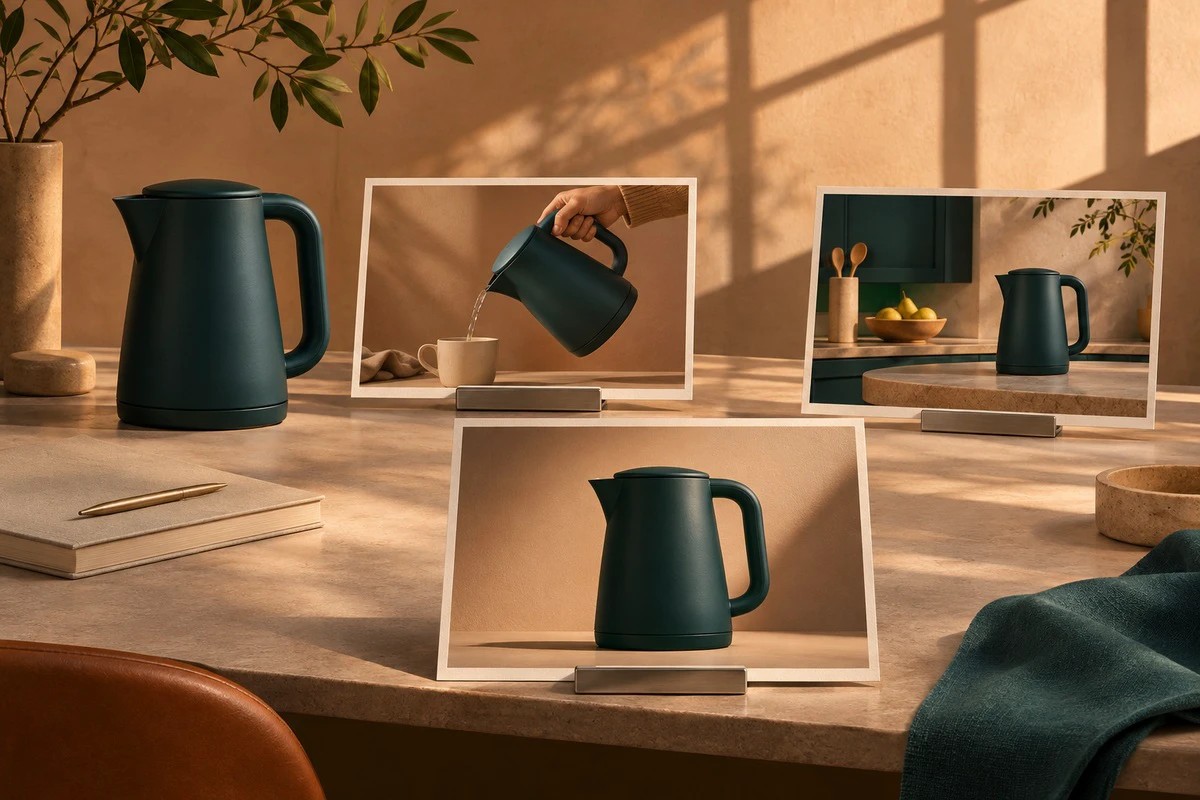
Imagine a hypothetical home-appliance tutorial with three entry concepts: product construction, an operating action and a kitchen setting. No clear winner emerges, and the first set remains in use. The brand can still approve that set because it communicates the product clearly. It should not record that overseas buyers have proven a preference for construction shots.
A useful note would identify the current choice, the inconclusive comparison and the editorial reason for choosing it. A future designer then has a usable decision record rather than an unsupported instruction to imitate a champion layout.
No clear winner also does not establish permanent equivalence between every option or a lack of value in the video. Preserve the actual report state. Then ask whether the candidates expressed different questions, whether the available data could answer the question and whether the team is now trying to infer audience motives. Leave unobserved explanations unknown.
Approve a usable default before the experiment starts
If a first option can become the default, upload order deserves an explicit editorial decision. ONCE recommends approving the first set as an acceptable publishing choice before starting. Every other candidate should also pass checks for product accuracy, readability and correspondence with the video.
Do not put an unapproved rough concept first on the assumption that testing will replace it. The studio can prepare different creative approaches without changing the actual product or implying a demonstration absent from the film.
Keep the video ID, exact title-image combinations, first option, owner and question in the test record. If the test compares title-image sets, interpret the finding at that set level first. It does not automatically isolate which visual detail caused the result. That is an interpretation limit, not a claim that YouTube supplies an additional element-attribution report.
Spend again when there is another question to answer
If the candidates meet the current publishing requirements and there is no urgent unresolved question, a brand can retain an approved entry without commissioning a reshoot simply because the report lacks a Winner label.
If a review identifies an unreadable product or a promise that the video fails to deliver, correct that specific problem. Its rationale comes from the content review; it should not be presented as a finding the test established.
Before another round, define the new question. For a tutorial, that might be whether an operating-action image communicates the actual use question more clearly. Then decide what new picture and title are needed. Repeating comparisons until a preferred result appears is a poor basis for turning a local finding into a long-term creative rule.
A rise in the video’s overall viewing the following week is not, by itself, evidence that the chosen picture caused it. Decisions about paid media, inquiries or sales require their own commercial measurement question. An entry-point test should not silently become evidence for every marketing outcome.
Specify how a testing service closes without a winner
Separate three deliverables in the proposal. Design covers approved candidates, title pairings and source assets. Implementation covers the actual tool, configuration, versions and run record. Review covers the real outcome, current publishing choice and next question.
The operator should verify that the intended tool applies to the account and video. Results from a different method should not be folded into the same report without identifying that difference.
ONCE recommends agreeing the no-clear-winner closeout in advance: who selects the final entry, which report is delivered, what triggers a new round and how additional production and review are charged. This is a scope model, not a rate card or a promise that every experiment finds a champion.
For managed content, the reusable asset is the connection between candidates, report status, publishing rationale and follow-up questions. More winner-labelled files do not establish a stronger creative knowledge base. Whether these records improve margins or marketing outcomes requires real project evidence.
Explore ONCE’s video marketing research for related planning questions. Bring the video, candidates, original report and current selection to ONCE to determine whether the next job is retaining an entry, correcting content or producing material for a new question.
Source and scope
YouTube Help, A/B test titles & thumbnails, current page checked November 9, 2026. Used for report categories, the first-option default without a clear winner and manual selection after the test. The example and two-record method are proposals, not client findings or performance guarantees.