A filter-replacement segment attracts repeated viewing. Marketing sees a feature worth promoting; support sees an installation step people may not understand. Buying a more dramatic product film and clarifying an instruction are very different responses to the same trace.
For brands working with China-based manufacturers and production teams, the useful question is not simply how to generate more replay. It is whether the tutorial helps the intended user complete the intended task with less avoidable difficulty.
Locate the moment before explaining it
YouTube's audience-retention guidance explicitly allows unclear content as one explanation for a replay spike. Repeated playback within a view can also push a segment's view count above the video's total. Neither observation proves that a product demonstration persuaded anyone.
Wistia's Heatmaps documentation describes session timelines and replay colours, limited to playback through its player. Missing data transmission can mean missing heatmaps. Those records are not an all-platform audience census or an eye-tracking map. We checked both official pages on 27 October 2026; neither is presented here as a new product launch.
Production peer BUBI's Reading one video to brief the next argues for reviewing graph shapes against the edit rather than treating them as diagnoses. That is a practitioner method, not independent proof of customer outcomes. ONCE's narrower contribution is a way to investigate avoidable instructional friction before commissioning another shoot.
Define the job hidden inside the peak
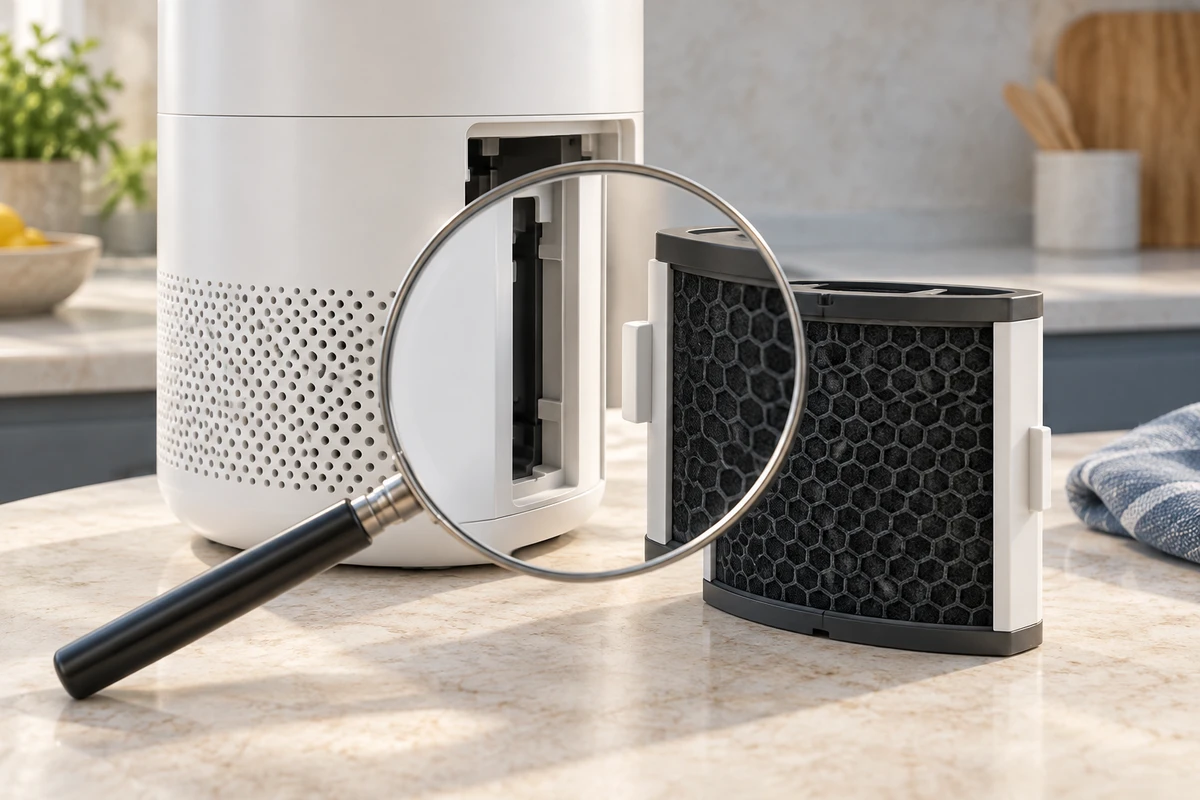
Take a hypothetical filter replacement—not a client example. Users might return because the step is useful during actual work, because the orientation was unclear, or because an interesting mechanism attracted viewers who never intended to install anything.
Specify what this segment should enable: identifying the opening, choosing the correct orientation, recognising completion and retaining necessary conditions. “Make installation look easy” is not a sufficient instructional task.
Then inspect the original footage around the peak. Did a cut skip a state change? Did text cover the hand? Did the explanation arrive after the action? Keep these as competing hypotheses. A plausible explanation is not a measured cause.
Separate pre-purchase evaluation, first installation and later reference use where reliable information permits. Returning to a useful reference can be desirable. Rewinding because the first explanation was ambiguous is a different production problem. If the analytics cannot distinguish those contexts, record the uncertainty rather than assigning an anonymous session to a buying stage.
ONCE's friction-removal comparison
This is a proposed diagnostic, not a validated protocol or a report of tests we have run. Choose one suspected source of difficulty and make one corresponding revision. Do not simultaneously replace music, accelerate the edit and rewrite every caption.
If orientation seems unclear, retain the product facts and operation sequence while clarifying the angle or its matching instruction. Do not generate a connector the real product lacks, or remove a safety condition to make the sequence appear effortless. Animation and AI previews can support discussion; the delivered demonstration must match the current product.
Invite relevant new users to encounter the alternatives under comparable conditions. Random allocation is preferable where feasible; showing everyone the old version first teaches the task before the new version is judged. Define the intended result beforehand: an unprompted explanation of orientation and completion, or appropriately supervised action under brand-approved safe conditions. An accurate explanation is not certification of practical competence.
Record where people replay and what they say they needed. “I wanted to confirm it again” is a legitimate answer, not a failure to be recoded. Small exploratory sessions identify possible problems; they do not establish a population success rate. Separate organic uploads are not automatically a causal experiment.
Lower replay can be the better outcome
| Observed pattern | Check before deciding | Production response |
|---|---|---|
| Less replay, clearer task explanation | Necessary conditions remain; exposure is comparable | Retain the clearer version and monitor actual-use questions |
| Less replay, more errors | Users may simply leave sooner or miss a removed step | Restore missing information; do not celebrate reduced viewing |
| Continued replay, correct task judgments | The video may be serving as a working reference | Consider chapters, a focused excerpt or static steps before reshooting |
| Unclear behaviour and answers | Audience, version, source and task may differ | Repair the comparison and leave the conclusion open |
The principle is to evaluate task understanding alongside viewing effort, not substitute one dashboard number for another. Reference-friendly content does not have to eliminate every return visit.
For an ongoing content programme, retain the segment version, intended task, suspected cause, exact change and observation. That record can inform whether the next budget buys a missing angle, a better reference format or nothing yet. Reduced support demand and production savings would require real business evidence; no such outcome is claimed here.
Ask the next review a more precise question: did the revision help the intended user get this step right with less avoidable effort? A quieter replay curve can be progress—but only when the task result supports that interpretation.
Sources checked on 27 October 2026. The cover is an original AI-generated concept, not an actual product mechanism, customer production or analytics display.