A product looks wonderful inside its gift box. The recipient smiles, the film ends—and the real setup begins. Someone still needs to connect it, prepare its content or fit an accessory. Who is that person, and did the buying experience make the remaining work clear?
For overseas brands producing gift-season assets with a China-based supply chain, ONCE proposes looking beyond the reveal. A short ad need not become a complete tutorial. It should, however, avoid implying that a product is ready to enjoy when essential preparation remains unaddressed.
Appeal at the exchange is not the whole ownership experience
Yale Insights’ Study Explains Pitfalls in Gift Giving, published March 26, 2014, describes research by Baskin, Novemsky and colleagues comparing how givers and receivers weigh desirability and practicality. The institutional account reports differing priorities across eight classroom studies and a field study involving friends exchanging gifts. We rechecked that account on October 25, 2026.
This is older gift-evaluation research, not a current consumer survey or an advertising-effect experiment. The full paper was not successfully read in this run; no effect sizes or additional sample details are adopted. It does not establish that setup footage increases sales or reduces returns. The narrower creative implication is worth exploring: evaluate the conditions of using a gift, not only its attractiveness when presented.
The first-use task handoff below is ONCE’s proposed production method, not a formula validated by that research.
Identify the work the edit leaves behind
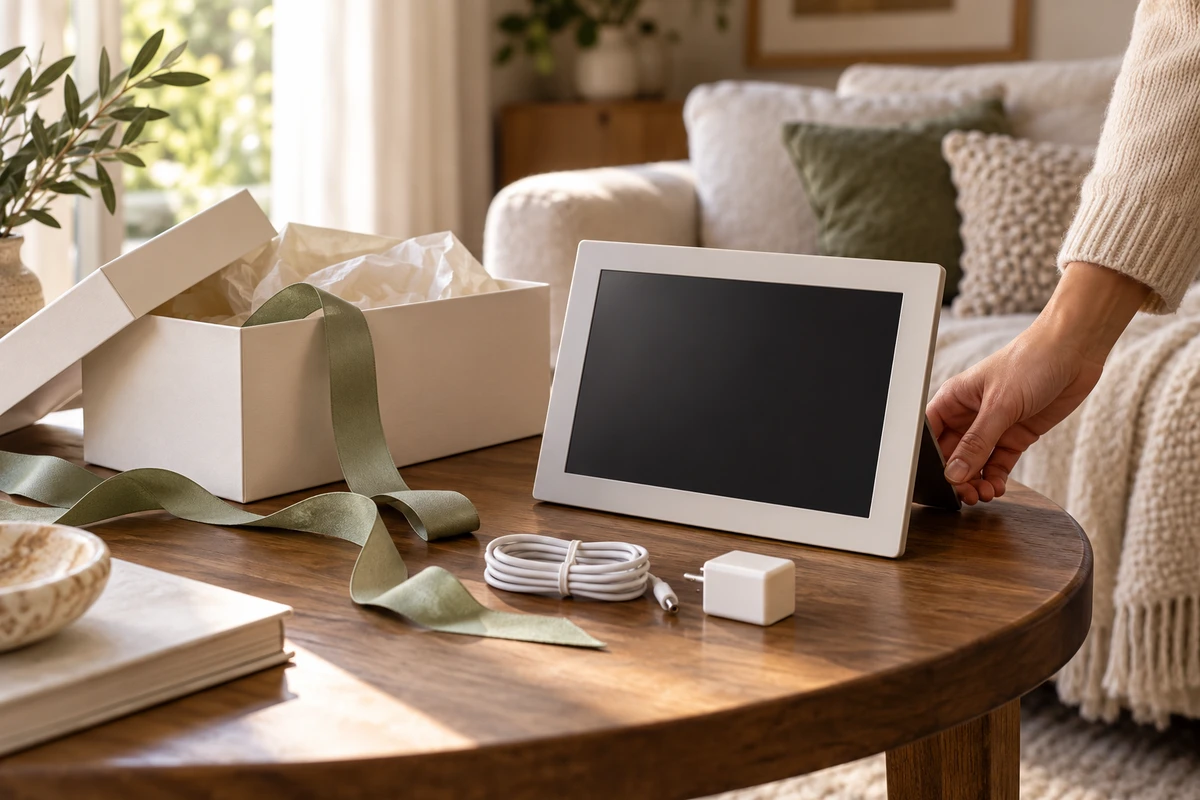
Imagine a fictional digital photo frame that requires power, a connection and prepared photographs. A purchaser sees family pictures in the ad and imagines an immediately personal gift. The recipient may instead receive a device with its content still to be prepared.
That difference is unfinished work, not something a stronger “easy to use” line can settle. The example makes no claim about any real device or ONCE client. Confirm the actual product flow with its owner, and do not set up accounts or handle someone’s personal content without the appropriate agreement.
Make a first-use handoff record around three questions. What is present on arrival? What remains to be done, by whom and when? Where can the user get accurate help afterwards?
The answers should come from the real package, product and service arrangements. Do not film an optional prop as an included accessory. Do not imply that a retailer prepares the gift in advance unless that service exists for the relevant order, region and conditions. A completed demonstration unit is not evidence that every customer receives a completed setup.
Give the ad and the guide different jobs
The ad establishes why the gift fits, identifies any important preparation and makes the arrangement understandable. A separate first-use guide can teach the operation. Neither benefits from pretending to be the other.
For the fictional frame, plan an emotional gift film, a pre-purchase explanation of arrival and preparation, and a first-use guide based on the approved flow. Some footage may serve more than one piece. Renaming the same rapid montage three times does not mean all three tasks have been completed.
Capture clear states: what is inside the box, what the recipient has after unpacking and what becomes available after preparation. Where waiting or another person’s action matters, an edit may compress time without suggesting that the step never existed. Choose an appropriate caption, line or transition for the actual product; there is no universal duration proposed here.
This need not diminish the emotion. Arranging what someone needs to begin can itself express care—but only when the arrangement genuinely exists. A story cannot supply a missing service.
Ask buyer and user to describe the next step separately
Before finalizing, consider showing the draft to people in the relevant situations. Ask what the purchaser expects to receive, what the recipient expects to do and where help would be found. This is a recommended comprehension check, not a test performed for this article.
If the answers differ, inspect whether the film creates the misunderstanding or whether the product page, packaging and service already disagree. Do not use omission to conceal that gap. Claims about conversion or support savings require appropriate separate measurement; comprehension feedback is not a substitute for business results.
AI can assist script organisation and scene exploration. It should not invent a completed connection, self-installing accessory or performed service and present it as actual product behaviour. Accurate states and operations require reliable product materials and suitable review.
Commission the missing transition
If the brand already has many polished unboxings but nothing explaining preparation, the next useful commission may not be another delighted reaction. Record the missing states and actions, then decide what belongs in advertising, pre-purchase content or a help video.
For a partner such as ONCE, a repeatable content service could maintain a product-by-product account of the work between delivery and usability, alongside real feedback about how people understand it. This is an operating proposal, not a claimed revenue or cost result.
A gift film cannot complete every task in the recipient’s life. It should not erase unfinished work and leave the viewer to assume that everything is ready.