Imagine a creator posting an unusual use for petroleum jelly. A brand has three familiar responses: ignore it, repost it, or hire someone to reproduce the idea as a UGC-style ad. Vaseline Verified introduced a fourth option: take the hack into a lab, test it seriously, and return the result to the person who raised the question.
This is not a lesson in chasing trends. It raises a more useful question: when people are already inventing uses for a product, what can the brand still contribute? The answer is not a better imitation of creator language. It is a capability that the creator and the comments section do not possess on their own.
The brand did not take over the conversation
Vaseline Verified launched in March 2025. According to public material from Unilever, Ogilvy and WPP, the team found existing petroleum-jelly hacks on social platforms and brought them to research and development specialists. Some received a Verified verdict; others were explicitly debunked. Ogilvy's case page says the team identified 6,000 organic posts. Unilever's account of the campaign stresses that the brand did not invent the ideas and then brief creators to perform them.
That distinction matters. The brand did not pretend to be one more ordinary account in the community. It acknowledged that the creative act had already happened, then added resources a brand is better placed to provide: formulation knowledge, controlled testing, scientists, and responsibility for safety, legal and regulatory review.
Many “social-first” campaigns simply treat creators as new media placements. Their face, voice and audience carry a message the brand decided in advance. Vaseline Verified redistributed the roles. Creators proposed unverified possibilities. The brand examined the conditions under which those possibilities held. Viewers received a result they could continue to discuss.
A verified system needs the power to say no
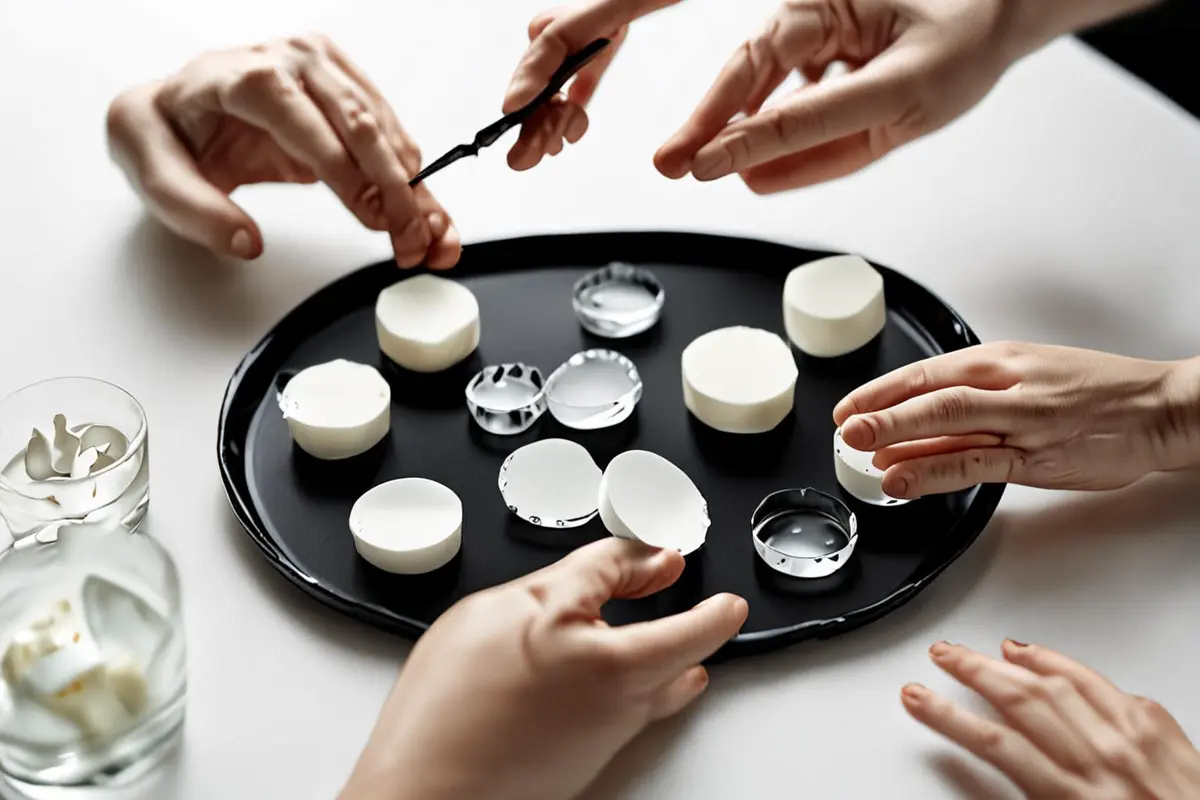
A verification mark matters only if the brand is willing to reject a claim. Public case material describes tests in which petroleum jelly helped remove waterproof eye makeup from a treated forearm and an eggshell was used to visualize how hair dye might penetrate. Claims about whitening teeth or growing eyelashes were rejected. Unilever's article about the scientists behind the work also describes collaboration across R&D, product safety, legal and regulatory teams.
If every hack passes, the laboratory becomes scenery and the Verified seal becomes a promotional sticker. Failed results give the format friction. They tell viewers that the brand is not endorsing every imaginable use; it is accepting responsibility for selection.
There is a broader production lesson here. Credibility does not come only from showing more evidence. It comes from allowing evidence to change the conclusion. Before filming, a team should permit three outcomes: it works, it works under defined conditions, or it does not work. Only then should it design the visual treatment. If the verdict is fixed in advance, a professional-looking test is still only a dramatized demonstration.
Why the lab content still behaves like social content
The campaign did not stretch every question into a long lecture. It preserved the action of the original post: one specific hack, one observable test, one clear result, then a return to the creator who prompted it. WPP describes playful lab-style videos, while the Cannes Lions announcement notes that the scientists shared their findings directly with creators. The campaign received the 2025 Health and Wellness Grand Prix; that is creative-industry recognition, not proof of commercial impact.
Its smallest content unit is not a laboratory look. It is a closed loop: the community makes a claim; the brand turns it into a testable question; the camera makes the method and contrast visible; the verdict explains the boundary; and the result and credit return to the original conversation.
For production teams, the difficult decisions are not how many test tubes or white coats to show. They concern legibility. Should control and treated samples share the frame, or be cross-cut? Can the difference survive on a phone screen? Is the voice-over explaining a variable, or announcing a conclusion the image failed to reveal? Those choices determine whether “verification” is a content mechanism or merely an art direction.
By 2026, verification had begun to shape products
In July 2026, Unilever described how the idea extended from content into products and partnerships. Vaseline Originals launched creator-inspired products on TikTok Shop in Thailand. The company's update says the initial items sold out within minutes and participating creators could earn from sales. Another activation turned runners' real use of petroleum jelly to reduce friction into event support and a partnership.
These are company-reported results, not independent attribution studies. They still reveal a useful direction. When community uses keep recurring, the content team does not have to stop at “make another post.” A validated behavior can become an input to product development, partnership design and value sharing.
The loop then changes from “spot a trend, copy it, chase the next trend” to “observe a behavior, test its value, return the finding, decide whether it belongs in a product or service.” That is slower than borrowing a creator's voice, but it is more likely to create a role the brand can sustain.
The hardest part to copy is not the lab set
Vaseline Verified is not a template every brand can reproduce. It depends on at least four conditions.
First, the brand must possess genuine expertise that adds something to the conversation, rather than using the appearance of authority to package an ordinary opinion. Second, the audience claim must be testable under safe, compliant conditions, with a method that can be shown. Third, the team must be prepared to publish failures and limitations, not only favorable results. Fourth, it must treat creators as contributors, identify the source, and design fair value sharing when an idea enters a product or commercial partnership.
Some questions are mainly about taste, identity or lifestyle. Forcing them into a binary experiment can erase the cultural meaning that made them valuable. Medical claims, high-risk uses and undisclosed methods also require formal evidence and regulatory review; a social video cannot substitute for either. A brand's distinctive capability may be a lab, but it could also be an engineering team, a supply chain, an archive, a retail network or after-sales data. What matters is that it genuinely completes the existing conversation.
Ask what the brand can add
Return to the unusual hack at the beginning. The easiest move is to copy its form. The difficult decision is why the brand deserves to appear.
A sustainable social content system does not need the brand to disguise itself as a creator. It lets creators continue asking questions their community actually cares about, while the brand uses its own resources to test, explain and act. The brand is no longer annexing user content as advertising. It is earning a position in the conversation that another account cannot easily replace.
If your brand already has a growing body of user behaviors, product questions or category debates, explore ONCE's video production solutions to turn expertise, test design and content rhythm into a durable campaign system.
Sources and scope
This article draws on Unilever's July 2025 article about the scientists behind Vaseline Verified, its August 2025 social-first marketing article, the Ogilvy and WPP case pages, the June 2025 Cannes Lions winner announcement, and Unilever's July 2026 update on products and partnerships. Reach and sales figures are described as company-reported claims. The Cannes award indicates creative-industry recognition, not commercial effectiveness. The cover is an original commercial concept image and does not depict a real activation, person, product package or experiment.