Imagine that your social team finds a creator Reel with unusually strong saves, useful product questions in the comments, and a product demonstration that feels native. In many organizations, that observation still ends in a weekly report. The paid-media team sees it too late, the permission is unclear, the music cannot be used commercially, or nobody can explain what the first test is supposed to prove.
Meta is shortening that path. On September 15, 2026, the company announced the global launch of Creator Marketing Hub, with features rolling out through the rest of the year. The workspace brings creator discovery, content recommendations, partnership messaging and Partnership Ads activation closer together. Facebook creators are joining Instagram creators in the Creator Marketplace API. Meta also said Partnership Ads are coming to its Ads MCP connector, allowing compatible AI agents to help create ads and manage creator permissions.
This is an important operating change, but it does not make creator marketing autonomous. It makes the missing handoff between social, production, legal and paid media much easier to see.
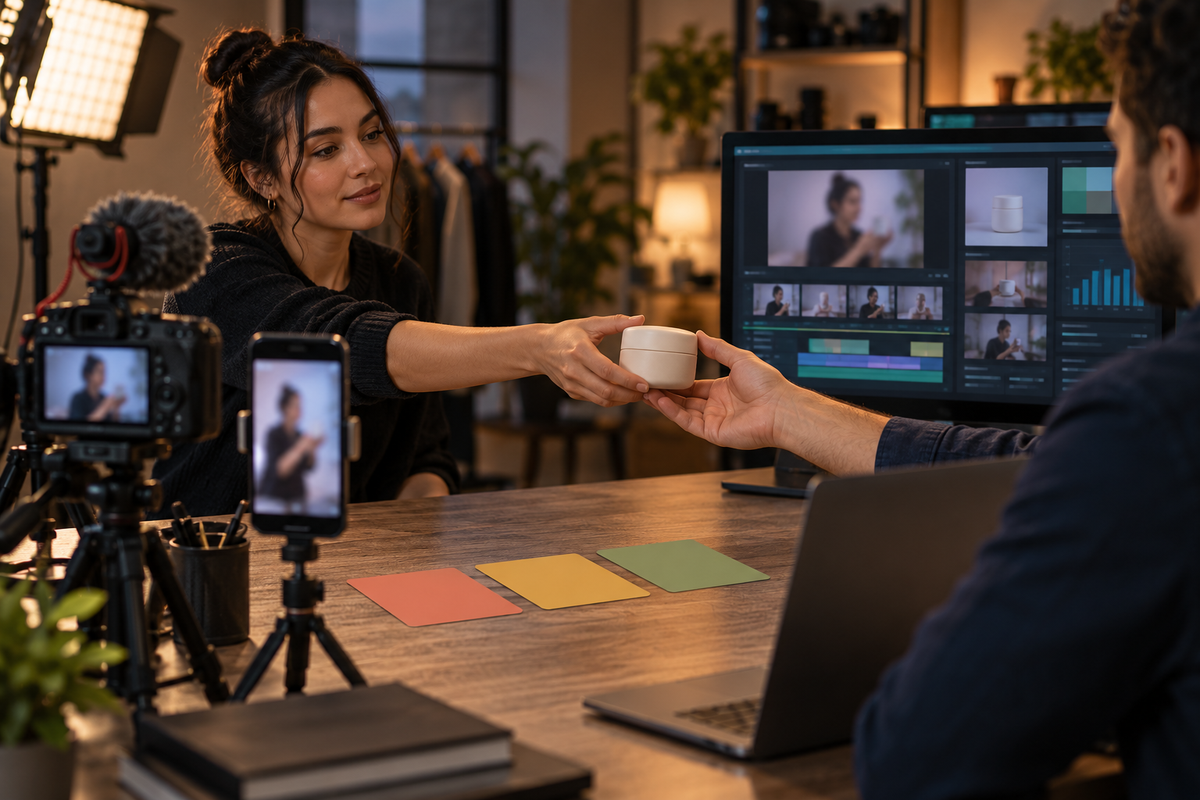
The platform is compressing clicks, not judgment
IAB’s 2026 CreatorFronts recap says creator advertising needs more consistent measurement, reporting, standards and buying processes to reach its next stage of growth. That is a more useful interpretation of Meta’s launch than “AI can now find influencers.”
Marketing Dive’s report on the launch details the connected workflow: expanded discovery and content APIs, creator recommendations, messaging, ad-readiness editing tools and an AI business assistant. The report also notes that Partnership Ads will be supported through Meta’s Ads MCP connector.
Those facts establish what Meta is building. They do not establish that a brand already has a testable objective, a cleared product claim, an accountable approver or a useful learning loop.
The operational gap is familiar. CreatorIQ describes creator assets scattered across email, shared drives and agency tools; organic winners that paid teams cannot see; permissions that delay activation; and creator results that sit outside paid-media dashboards. New Engen’s creative-operations analysis reaches a related conclusion: adding creators, agencies or AI tools does not improve the next production cycle unless strategy, production, activation and measurement are connected.
Organic performance is a candidate signal, not paid-media proof
An organic post and a paid ad do not operate in the same environment. Organic performance reflects the creator’s existing audience, timing, community context and comment dynamics. Paid distribution introduces new audiences, auctions, placements, frequency and a defined conversion task.
A strong organic signal can justify a test. It cannot tell you in advance that the asset will scale.
Before a creator post enters paid media, the team should be able to state one testable reason for promoting it. Is the candidate variable the creator’s credibility, the opening action, the order of the demonstration, the product reveal, the offer or the proof shot? “It went viral” is not a test design.
ONCE uses three gates:
- Signal: What is unusual relative to the creator’s normal range, and which creative element might explain it?
- Readiness: Is the post eligible, permitted, commercially cleared and technically usable in the intended placement?
- Approval: Who owns the objective, initial spend ceiling, target audience, stop rule and final launch decision?
If one gate is undefined, an agent will only execute the ambiguity faster.
The ONCE Creator-to-Media Handoff
1. Discover without stripping away context
Capture the original post, creator, publication time, relevant organic range, comment themes and the reason the asset was surfaced. A downloaded MP4 without the account and post relationship has already lost important context.
2. Qualify the observation as a hypothesis
Rewrite “this performed well” as a statement that production and media can test. For example: “Showing the product in use in the first second may create faster product recognition than opening with a spoken problem.” That hypothesis can guide an edit and a comparison. “People like authenticity” cannot.
3. Clear the asset for the intended paid use
Meta distinguishes content-level and account-level permissions. Its partnership-ad permissions guidance explains that creators and partners can allow an advertiser to promote an individual post, Story or Reel. Branded content also requires the appropriate paid-partnership disclosure.
Music must be checked separately. Meta’s Instagram music guidance says its licensed music library is intended for personal, non-commercial use, while Sound Collection content can be used commercially, including in ads.
This gate is not a substitute for a complete contract. Term, territory, edit rights, likeness and expiry treatment still need proper documentation. It simply tells the media team whether the current object is ready to enter an ad workflow.
4. Adapt only what the test requires
If the original content lacks a clear product shot, safe-zone subtitles, a commercial-music version or a paid-media ending, repair those issues before launch. Every additional change makes it harder to identify which part of the original signal survived.
For brands tied to Chinese manufacturing, the creator does not need to carry the entire production burden. A creator can own the human expression while a Shenzhen team captures reliable product operation, close-ups, clean sound and multi-format coverage. ONCE’s guide to splitting short-form assets across Meta Reels, TikTok Shop and YouTube Shorts shows how platform versions can share product truth without becoming identical edits. A cross-border UGC delivery review can help teams check consent, disclosure and raw-footage handoff.
5. Run a small test with a complete record
The first test does not need to prove that a creator will work forever. It should answer one question. Give the asset a stable version ID and connect it to the ad ID, objective, audience, budget window and stop rule. Avoid changing the creator, message, edit and landing page at the same time.
6. Return the finding to production
“Lower CPA” is not yet a creative learning. Record what production should do differently: move the product reveal forward, preserve the opening gesture, create a cleaner proof shot, answer a recurring objection, or commission a second creator with the same demonstration structure.
That is the point where creator content stops being a post and becomes an input to the next brief.
What an agent can operate—and what people must still decide
An AI agent is well suited to repetitive, structured work: scan authorized posts, compile performance signals, flag missing fields, monitor permission status, create paused campaign drafts, attach IDs and summarize results.
People should keep the decisions that create external responsibility: whether a creator is an acceptable brand partner, whether a product claim is true, whether an organic signal deserves a paid hypothesis, whether cultural and comment risks are acceptable, when spend can go live, and whether an outlier should be paused, re-edited or observed longer.
The practical rule is simple: an agent can advance a well-defined state. It should not invent the brand’s accountability.
Pilot the handoff before buying another platform
A brand can test this operating model in 30 days. Select 10 to 20 existing creator assets and create the same handoff record for each: objective, hypothesis, original post, permission status, required adaptations, version and ad IDs, test window, stop rule, result and next action.
At the end, review three measures:
- Time from discovery to a launch-ready ad.
- Share of candidates returned because of permission, music, product-truth or version problems.
- Share of completed tests that changed the next creative brief.
The first two measure operational friction. The third measures whether the organization is learning.
Meta’s connected creator workflow matters because it moves creator content closer to machine-operated media. The brands that benefit will not be those with the largest creator lists. They will be the ones that can reliably distinguish inspiration from a test candidate, a test candidate from a launch-ready asset, and a completed campaign from a reusable production insight.
If your brand works with Chinese suppliers and global creators, ONCE can help plan the product footage, creator expression, platform versions and test tasks as one global launch content system.
Production examples and next steps
Plan the real product actions and outdoor conditions together. The WISE TIGER inflatable-tent film provides a reference for setup and camping scenes.
Review Ecommerce product video production in China. and WISE TIGER: Day and Night Camping Experience with One-click Inflatable Tent. To discuss your project, send the product actions, locations, weather options and delivery versions through the English project enquiry form.