A conventional YouTube sponsorship is permanent by design. The host read, product demonstration, offer and call to action are edited into one video. The campaign ends, but the integration remains. If the product is discontinued, the retailer changes or the offer expires, the brand has few clean options.
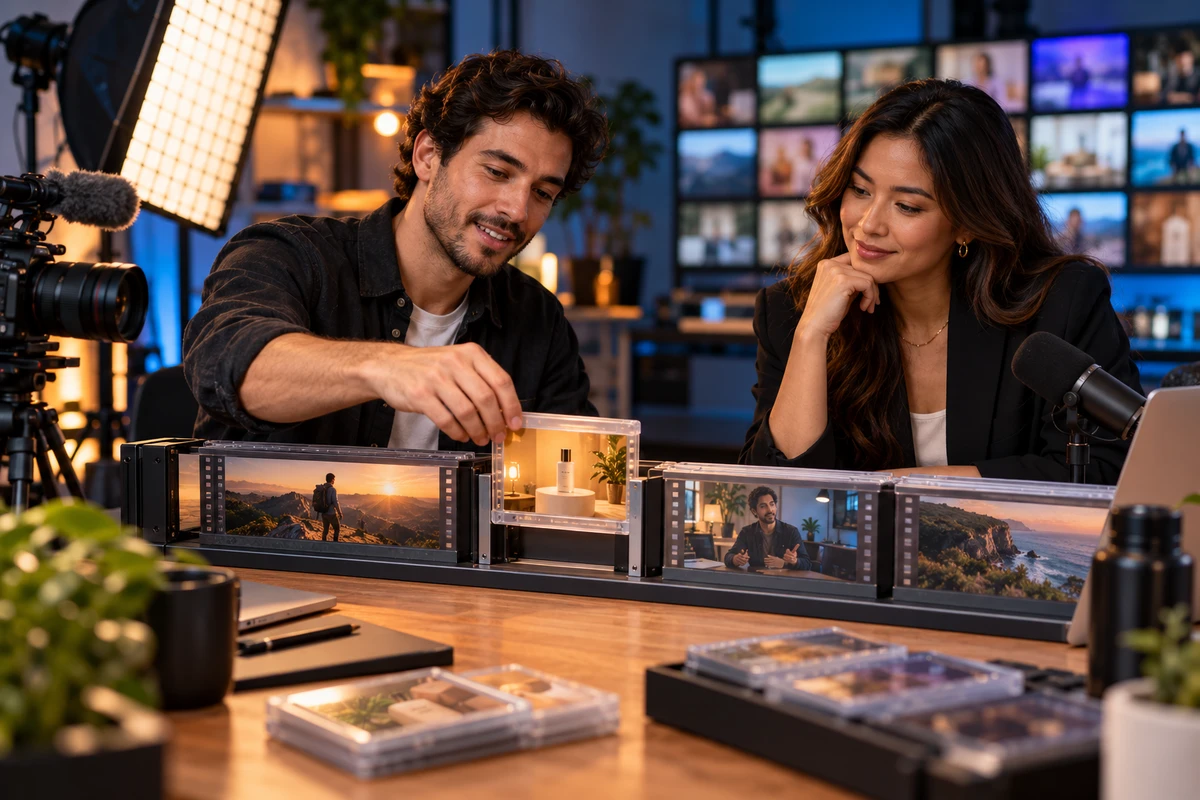
YouTube is testing a different structure. A dynamic brand segment exists as a separate video that can be added, replaced or removed without changing the metrics of the host video. One segment can be placed in as many as 20 long-form videos and restricted to specific countries. That turns a creator deal from a single publication into something closer to time-bound, geo-controlled creator media inventory.
This is still an invite-only 2026 pilot, not a format every channel can sell. But it already changes the buying question. A brand should no longer ask only, “What does one integration cost?” It should first decide whether it needs a permanent integration, a dynamic segment, or a hybrid of the two.
What YouTube has actually confirmed
In its September 23, 2026 announcement, YouTube said it was continuing to test and evolve dynamic brand segments. The company described the ability to insert one segment into up to 20 long-form videos, target by region, and add a built-in product shelf with a direct call-to-action.
The YouTube Help documentation is more specific about the pilot. A creator must be in the YouTube Partner Program and invited. The segment must be 30 seconds to three minutes, unlisted, monetization off and creator-led; third-party commercials and announcer-read ads are prohibited. The host video must be at least eight minutes and have monetization and mid-roll ads enabled. Device support is primarily on mobile apps and living-room devices, with desktop and mobile web support rolling out gradually through 2026.
This is also not an open-exchange programmatic placement. The creator and brand still make a direct deal. The brand approves the partnership in Google Ads, and the segment goes through policy review. If the brand has secured the necessary usage rights, it can then amplify the segment through Creator Partnerships Boost. The platform workflow does not grant paid-media rights by itself.
The unit of purchase is now host video × segment × distribution window
A permanent integration locks the creator’s editorial context and the commercial message together. That can feel natural and durable, but it also gives a short-lived offer the lifespan of the host video.
A dynamic segment separates evergreen creator content from a temporary commercial need. A back-catalog video that still attracts relevant viewers can carry a new sponsor for a defined market and time window. The same “creator integration” quote can therefore represent very different inventory.
| Buying model | Best used when | Main risk |
|---|---|---|
| Permanent integration | The product is deeply relevant to the subject, claims stay current and the sponsor belongs in the editorial story | Offers, links or availability can become obsolete while the video continues to circulate |
| Dynamic segment | A regional launch, seasonal campaign, limited offer or changing availability needs a start and end date | Pilot eligibility, device coverage and approval can limit actual delivery |
| Hybrid | Product proof should remain, while price, retailer, offer or CTA should change | Repetition between the host video and segment can damage pacing and confuse disclosure |
For many cross-border brands, the hybrid model deserves the first evaluation. Put the experience, demonstration and product facts that earn trust in the permanent body of the video. Put the offer, launch market, retailer and temporary CTA in the replaceable segment. This preserves the creator’s long-term opinion without permanently baking in the fastest-changing commercial information.
The ONCE Dynamic Sponsorship Contract: six fields to separate
1. Host Fit
List the actual host videos or content themes, audience, viewing markets, length and contextual risks. Do not buy a segment based on subscriber count alone. The ability to place one segment in 20 videos does not make all 20 relevant. The brand should approve the meeting between each segment and each host video, not just the segment in isolation.
2. Segment Unit
Define duration, script boundaries, product footage, what the creator must express personally, approved claims, CTA, product shelf and replacement versions. Because the segment must be creator-led, the brand should supply substantiated facts, evidence and prohibited wording—not a finished commercial disguised as a host read.
3. Window & Territory
Write the start date, end date, countries, languages, excluded markets and local availability into the agreement. A product available only in the United States should not default to global delivery. Different warranties, prices or retailers may require separate country versions.
4. Rights & Boost
Separate the right to appear organically inside the creator’s videos from the right to use the segment as paid media. Define duration, territory, editing permissions, Creator Partnerships Boost rights and what happens when access is revoked. Google Ads explicitly notes that brands may need a separate agreement with the creator to secure advertising rights.
5. Disclosure & Claims
YouTube requires paid-promotion declaration, but the parties remain responsible for compliance in each target market. In the United States, the FTC advises that a video endorsement should disclose the relationship in the video, not only in the description, and that brands should not assume a platform’s built-in disclosure tool is sufficient. Cross-border campaigns also need market-specific review of language, performance claims, comparisons and required disclaimers.
6. Measurement & Exit
Google Ads can report segment-level impressions and view metrics, but a host-video view and a segment view are not the same event. A viewer may watch the main video and skip the segment. Because Google is not involved in the payment between brand and creator, cost, budget and bidding fields can be incomplete; Brand Lift and third-party measurement are not currently supported.
The contract should therefore name the data access, reporting cadence, segment ID, host-video list, live dates, territories, metric definitions, product-shelf or click data, replacement conditions and who retains the files and reports after the campaign. “Metrics are available” is not the same as complete attribution.
Do not divide the fee only by views
A practical comparison metric is:
Cost per qualified inventory day = (creator fee + segment production + usage rights + paid-media preparation) ÷ approved host videos ÷ actual live days.
This is not a performance guarantee. It exposes differences between contracts. A cheap permanent integration in one new upload—with no territory control, replacement option or paid usage—may be more expensive than a dynamic segment that runs across several highly relevant back-catalog videos. The reverse is also true: dynamic delivery creates no value if the old videos are a poor product fit or if the campaign needs one deep, permanent review.
Before approving a premium for the format, verify four conditions:
- The creator is actually eligible for the pilot.
- Target viewers use supported devices.
- The proposed host videos are contextually relevant.
- The campaign genuinely needs geography, timing or replacement.
If only one condition is true, the new format may add complexity without adding useful inventory.
Creator partnerships will look more like media buying—but cannot lose creator judgment
The opportunity is not to turn a creator’s channel into an empty ad shell. It is to separate two kinds of value: the host video preserves the creator’s durable point of view and audience trust; the segment performs a bounded commercial job.
We made a similar distinction when Instagram Live became reusable paid media: rights, capture and downstream assets have to be defined before the live event. Dynamic brand segments push that principle further. The parties must also define which videos, markets and dates the sponsorship can occupy, whether it can be boosted, how it will be disclosed and how it ends. See ONCE’s earlier analysis, “The Live Ends. The Ad Begins: How Brands Should Buy Instagram Live as Paid Media.”
The next YouTube creator brief should not contain a single line labeled “integration fee.” It should contain Host Fit, Segment Unit, Window & Territory, Rights & Boost, Disclosure & Claims, and Measurement & Exit. That is how a replaceable sponsor slot becomes a governed, measurable and reversible creator-media asset—not simply a host read with a new technical wrapper.
Production examples and next steps
Plan the story, sound-off information and edits around the viewing placement. Huawei App Services provides a reference for short stories built around everyday actions.
Review Short-form video production in Shenzhen and Huawei App Services: Lifestyle App Story Advertisement Collection. To discuss your project, send the channel, audience, story premise and required edits through the English project enquiry form.