A shopper understands the product, completes the order and receives the box. Only then do they discover the missing part of the purchase: drilling, wiring, matching an inlet, calibrating the device or finding a qualified installer.
For smart-home devices, fixtures, charging hardware, automotive accessories and other installation-dependent products, the biggest objection may not be “Does it work?” It may be: Who turns this object into a working outcome after it arrives?
On September 29, 2026, Amazon Ads introduced Sponsored Services, a performance advertising product designed around service outcomes such as calls, quote requests and food orders. In a separate announcement, Amazon said its Yelp integration can surface local professionals on product detail, order-confirmation and package-tracking pages. Eligible Yelp advertisers in U.S. home and automotive services can currently participate.
That is evidence that Amazon is beginning to connect a product transaction with the service required around it. It is not evidence that every hardware brand now has nationwide installation coverage. The useful decision for brands is narrower and more important: product marketing can no longer assume that checkout is the end of the customer’s problem.
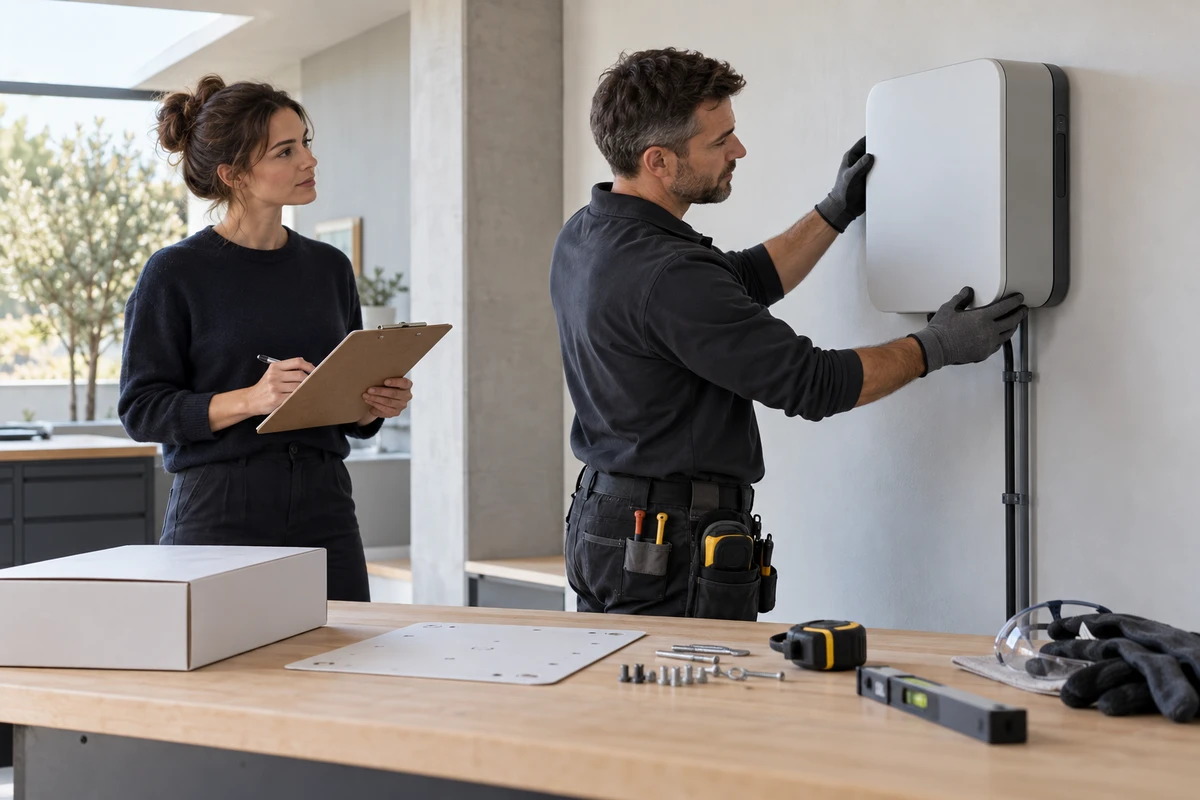
Customers do not buy the box. They buy the working state.
A touchless faucet can be marketed through its finish, sensing speed and water control. But the buyer may still need to know whether it fits the existing countertop, whether an adapter is required, whether the water supply must be shut off, and whether self-installation affects the warranty.
The same gap appears with wall-mounted devices, smart locks, ceiling fans, chargers and accessories that must be fitted or calibrated. Their value becomes real only through a sequence:
Understand the product → confirm site conditions → complete installation → verify operation → preserve support and warranty responsibility.
Most product videos cover only the first step. The device is beautifully lit and every interaction looks frictionless, while the wall, tools, connectors, installation time and failure conditions remain outside the frame. The film may create desire, but it transfers the hardest questions to customer support, reviews and returns.
An installation-aware video does not need to become a full training course. It does need to establish the right expectation quickly: Is this plug-and-play, a reasonable DIY task, or work for a qualified professional?
What Amazon’s move actually changes
Sponsored Services matters because its unit of measurement moves beyond the click. Amazon lists cost per outcome, outcome rate and conversion by outcome type. It also describes service-area information, business profiles, CRM lead delivery and an AI-guided conversation that can help qualify intent. The broader product is scheduled for Amazon Ads Unified API access in Q4 2026, with Ad Console access planned for 2027; the Yelp integration is a more specific current route for eligible U.S. advertisers.
Amazon’s unBoxed announcement uses the example of a shopper who buys a touchless faucet and then needs a plumber. That example reveals two different decisions for a hardware marketer.
First, platforms can identify service demand during search, purchase and post-purchase moments. Installation is no longer merely a problem for the support team to absorb; it can become part of acquisition, attribution and media operations.
Second, the content must match real fulfilment. If a video promises “easy installation” while the approved manual requires an electrician, implies local help where only email support exists, or uses one national call to action for fragmented service coverage, the creative increases the promise gap.
Before commissioning another batch of videos, the brand therefore needs to answer a more basic question: Are we selling a standalone object, or a path from purchase to usable outcome?
The ONCE Product-to-Service Continuity Map
The following framework is ONCE’s production analysis, not an Amazon rule. Use it before scripting to decide how far the content must follow the product after checkout.
| Decision variable | Question to verify | Production consequence |
|---|---|---|
| Installation dependency | Does the product create value without installation or configuration? | Higher dependency requires more than a feature film |
| Cost of failure | Does a mistake cause inconvenience, damage, safety exposure or warranty loss? | Higher risk requires a visible professional-installation boundary |
| Service coverage | Where does verified remote or local support actually exist? | Calls to action and versions must be regional, not generic |
| Responsibility boundary | What do the brand, seller, platform and installer each promise? | Dialogue, supers and landing-page language must agree |
| Handoff data | Which SKU, dimensions, interfaces, site conditions and warranty facts must reach the service provider? | The shoot and product record must capture transferable facts |
Those five variables lead to three practical production levels.
Level 1: Product-only video
Use this for genuinely plug-and-play products with low misuse risk and no specialist tools. Demonstrate the core action and state any essential first-use step accurately. Do not remove a required step simply to make the product appear easier.
Level 2: Installation-aware content pack
Use this when buyers can reasonably complete the setup but need basic tools, measurements or a defined sequence. The deliverables should include prerequisites, dimensions and interfaces, tools, a realistic time expectation, common errors and the point at which a customer should stop and seek help.
The most valuable addition may not be one long tutorial. It may be a reusable library of evidence shots: connector close-ups, the complete parts set, critical actions and final verification. Those shots can support the product page, short-form ads, customer-service replies, help content and third-party installers.
Level 3: Product-plus-service operating pack
Use this for products involving electrical work, plumbing, structural mounting, vehicle systems, safety codes or warranty-sensitive installation. The content system now needs regional service entry points, qualification questions, responsibility disclosures, a support fallback and a product-fact packet for the installer.
The creative job is not to pretend that “someone will handle everything.” It is to make the handoff truthful: where booking exists, who performs the work, whether the quote is separate, what happens when installation fails and what the product warranty covers. A camera cannot supply an operating capability the business does not have.
Five inputs production needs before the shoot
A production team cannot invent a credible service path on its own. Before cameras roll, the brand should provide:
- Installation conditions and prohibitions by SKU;
- Verified service areas and an out-of-area fallback;
- Responsibility boundaries across brand, platform and third party;
- Escalation paths between installation, returns, warranty and support;
- Approved tools, steps and safety language that may appear publicly.
These inputs change the shot list. “Professional installation required” should not be hidden in a tiny end card if it changes the buying decision. It may require a real environment, the correct tools and a visible completion check much earlier in the edit. Partial service coverage should not be flattened into one universal “Book now” version.
For brands connected to Chinese manufacturing, there is also a practical production advantage. Capturing interfaces, measurements, included parts and correct installation actions while product, engineering and samples are still close to the factory is usually more controllable than reconstructing missing evidence after inventory has dispersed to overseas warehouses. The benefit is not a universal savings percentage; it is fewer cross-time-zone reshoots, fewer incorrect demonstrations and less repeated clarification across teams.
A sale is not the finish line. A working product is.
Amazon’s current offer has clear boundaries: U.S. availability, eligibility requirements, specific partner routes and a phased rollout. A brand should never translate that platform capability into an unsupported claim of nationwide installation.
The direction is nevertheless meaningful. Marketing systems are beginning to measure whether the shopper requested a quote, reached a provider and completed a task—not only whether a product sold. Low-dependency products can still use short, focused product films. High-dependency products need content that makes installation, responsibility and handoff visible.
So the next hardware brief should not begin with “How many videos?” Complete the Product-to-Service Continuity Map first. Then decide whether the camera should stop at the product—or keep following until the product is installed, handed over and doing the job the customer actually bought it to do.
Production examples and next steps
Plan the product demonstration around what viewers need to understand. The realme GT7 film provides a reference for product detail and use scenes.
Review Ecommerce product video production in China. and realme GT7: Graphene Ice-Cooling Body Product Demo. To discuss your project, send the product sample, approved claims, use scenes and required formats through the English project enquiry form.