Fantasy-led product films often break at the reveal. The opening builds an inviting world; when the product arrives, it feels as if a different commercial has started. The problem is usually not too much spectacle. The atmosphere, reveal action and product detail are following different visual rules. An AIGC product concept film can turn imagination into product memory by establishing a world, using one causal reveal and then deliberately returning attention to the product.
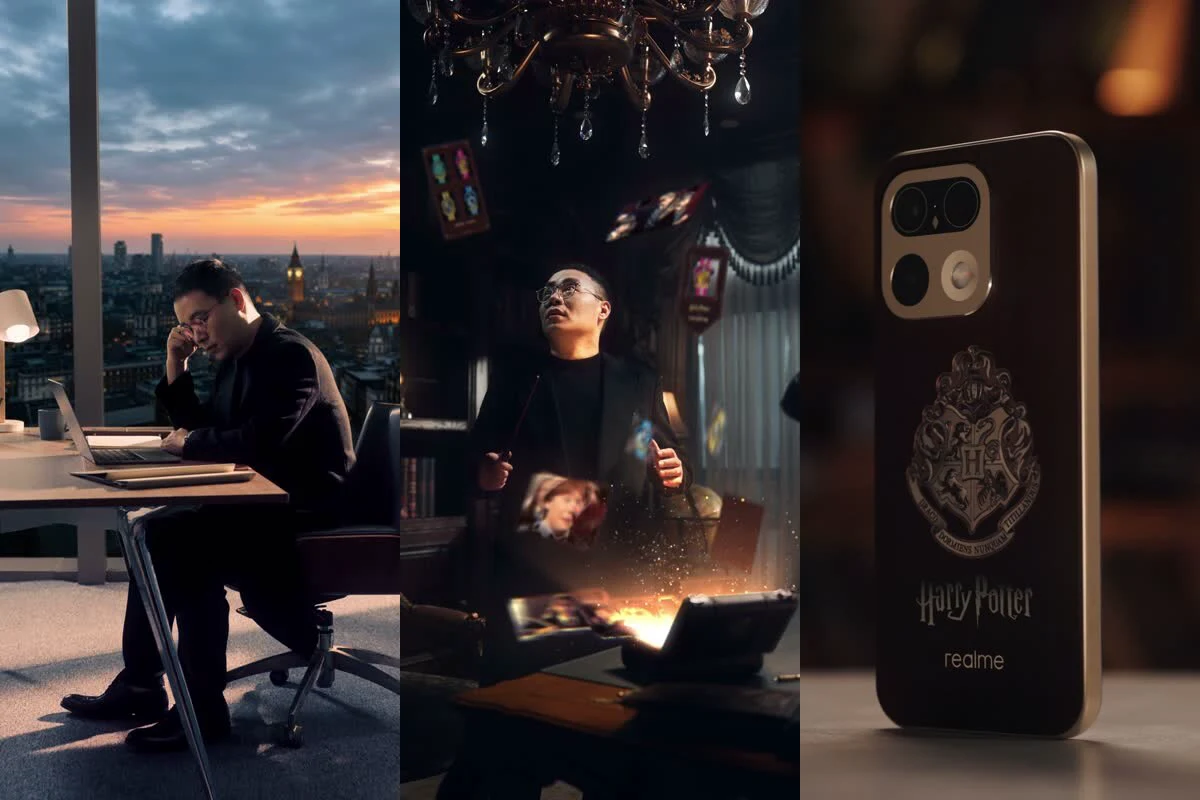
ONCE's newly published realme phone in a magic study AIGC concept film offers a visible example. It moves from a sunset office into a wood-panelled study. Wand light, floating cards and a glowing case introduce the phone; the later shots narrow down to the whole device, camera assembly, gold edge, crest and accessories. This article analyses only the structure visible in the public film. It makes no claim about the generation method, collaboration or licensing status, product performance or campaign results.
Build a world that already has room for the product
Keeping the product off screen for a while does not make the opening independent from it. The public film begins with a cool blue city outside the window, warm sunset light and an office desk. The study continues with dark wood, black clothing, amber practical light and small metallic highlights. When the phone appears, its black body and gold edge already belong to the established palette.
At treatment stage, create a simple visual handoff card. Lock four things: primary and supporting colours, recurring materials, the key-light direction and the product features that must remain recognisable. Locations and fantasy events may change. Those four elements should travel from the environment sequence into the closest product shot. This exposes a broken handoff more quickly than another page of loosely related references.
Use one causal action to trigger the reveal
The wand in the film is more than a decorative prop. Its light leads to the cards, the cards move around the character, the case glows and opens, and the phone becomes visible inside. One shot creates a question and the next answers it. The fantasy action becomes a path to the product.
| Stage | The viewer's question | Shot task |
|---|---|---|
| World | Where are we | Establish colour, material and character state |
| Trigger | What changes the ordinary situation | Use one clear cue in light, action or sound |
| Reveal | What has the event brought into view | Direct a container, occlusion or movement towards the product |
| Detail | Why is this object worth looking at | Confirm silhouette, structure, material and brand information |
| Finish | What should remain in memory | End on a stable product composition or end frame |
If the trigger cannot answer why the product appears at that moment, repair the action before adding more magic, particles or transitions.
Let the spectacle recede after the product appears
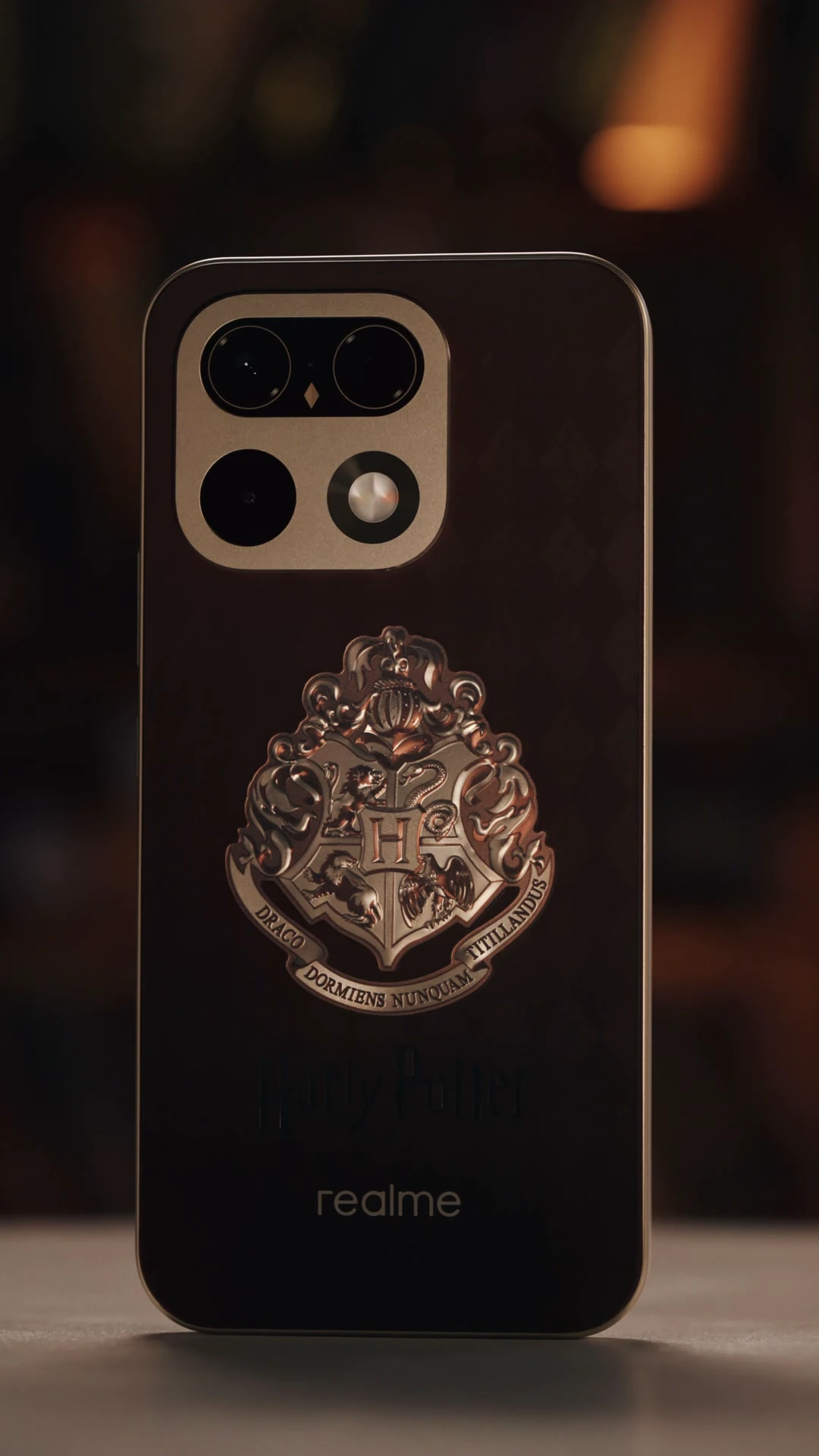
After the case opens, the public film moves from the character, floating cards and the wider room to the complete phone, then to the camera assembly, edge, crest and accessories. Warm practical light and dark wood remain, but movement and information density fall. That change matters: the fantasy draws the viewer closer; the product sequence lets the viewer see.
A practical detail order is full object, identifying feature, material, functional area and final composition. Give each shot one job so particles, fast orbits and shallow focus do not all hide the silhouette at once. A close-up in a concept film is a visual proposal, not automatic proof of a real product specification. A production campaign still needs approved samples, pack artwork, reference photographs or a signed-off 3D model.
Protect product identity with a continuity card
Moving from a medium shot to a close-up is where generated imagery may drift: lens count, frame width, crest position, letterforms and metal reflections can change. Before generation or compositing, lock a front view, a back view, one key-component view and a material reference. Number every feature that cannot change. ONCE's guide to product image-to-video continuity develops this check further.
| Review layer | Lock | Test |
|---|---|---|
| Product identity | Silhouette, module count and position, text and logos | Angle, shot size and movement speed |
| Material | Primary finish, edge treatment and key reflection relationships | Environment colour and highlight intensity |
| World continuity | Primary palette, key-light direction and core prop | Cards, particles, haze and spatial changes |
| Delivery | Approved frames, version number and target aspect ratio | Pacing for landscape, portrait and shorter cuts |
Separate visual approval from rights clearance
A fantasy theme may include recognisable crests, words, costumes, props, music or likenesses. Their presence in a convincing frame does not establish permission for the intended territory, channel or campaign term. Before release, review at least five areas separately: final product facts and SKU, brand and third-party marks, people and voices, music, fonts and input assets, and the terms of every generation tool and output used.
WIPO's guide to generative AI and intellectual property gives organisations a checklist for identifying questions and considering safeguards. A production can turn that principle into an asset register with source, permitted scope, owner, applicable version and unresolved status. Where the toolchain supports Content Credentials, provenance and edit history can also travel with an asset. The C2PA explainer is equally clear that provenance does not judge whether the underlying image or claim is factually true. It supports traceability; it does not replace product or rights review.
For a fuller asset decision tree, see ONCE's AI-video copyright and provenance checklist. Questions tied to a particular jurisdiction, contract or dispute should still go to the brand's legal team and the relevant rights holders.
Approve five key frames before expanding the film
The first creative review does not need a complete storyboard. Five frames can test the structure: one establishes the world, one shows the trigger, one reveals the product, one proves a key detail and one forms the ending. Place them side by side and ask whether colour and material continue, when the product becomes the only subject, whether its identifiers remain stable and whether the final frame can carry the brand memory on its own.
If those five frames work, expand the character action, spatial changes and delivery formats. If the product still feels attached at the end, rebuild the handoff between world and reveal first. To develop an AIGC product concept film, send the approved product references, non-negotiable identifiers, theme boundaries, release territories and aspect ratios through the ONCE project enquiry. The team can use the five-frame structure to test whether the idea returns cleanly to the product.