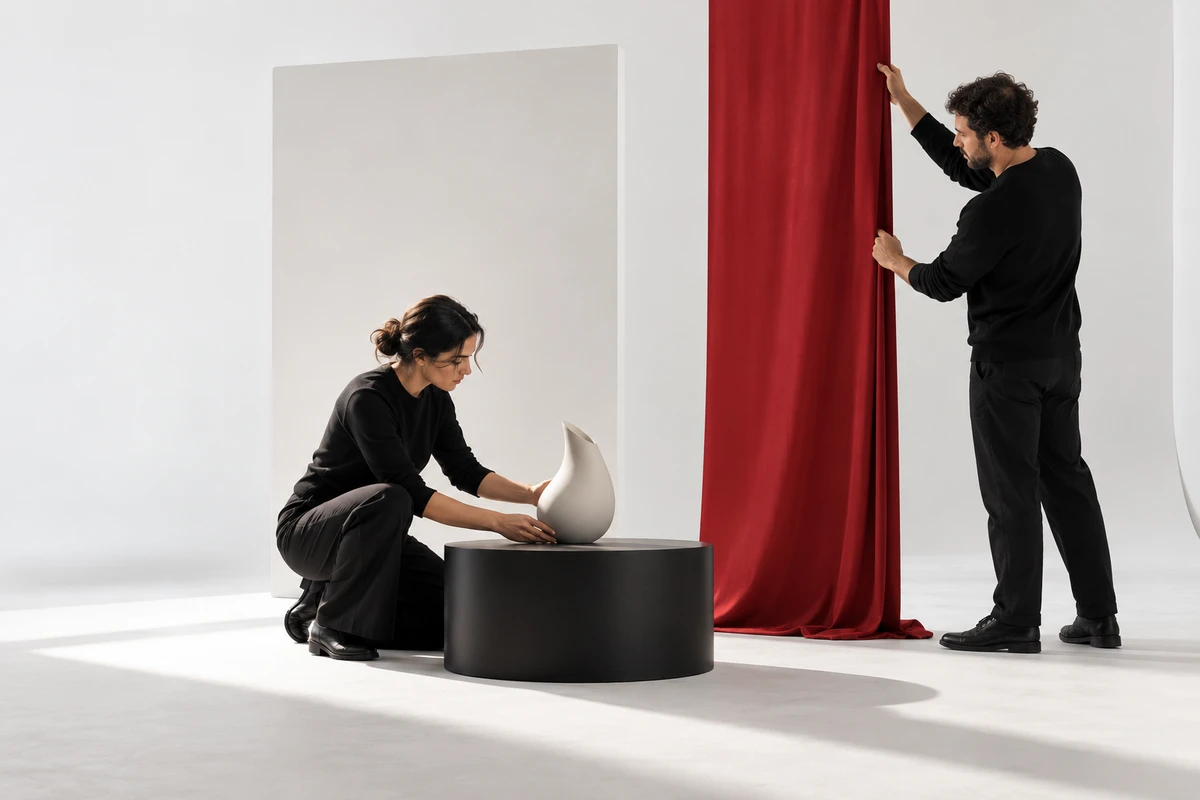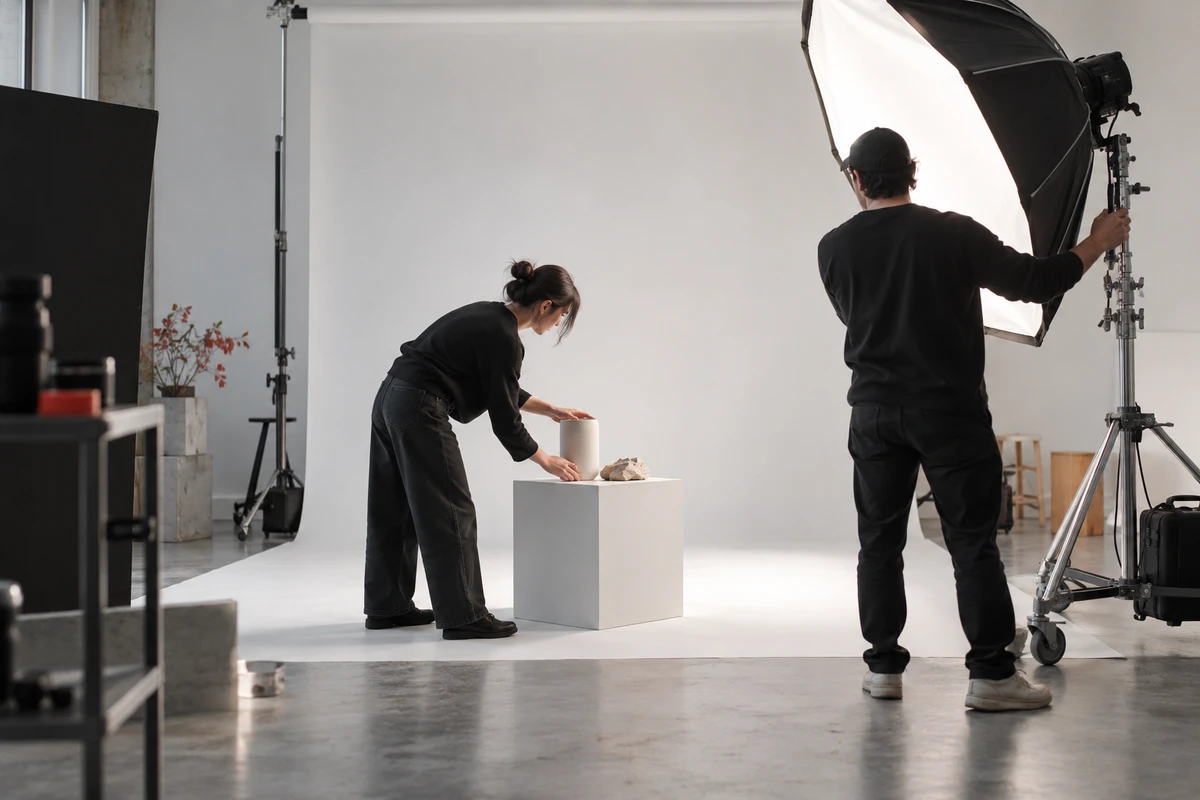
A vintage camera, film stock, studio lights, a dolly and a red curtain can make a beautiful image set. They do not yet make a story. The first question for a 30-second hand-drawn-style brand film is why the character leaves the interview chair and why the stage is the destination. Props, camera movement and colour should all advance that action.
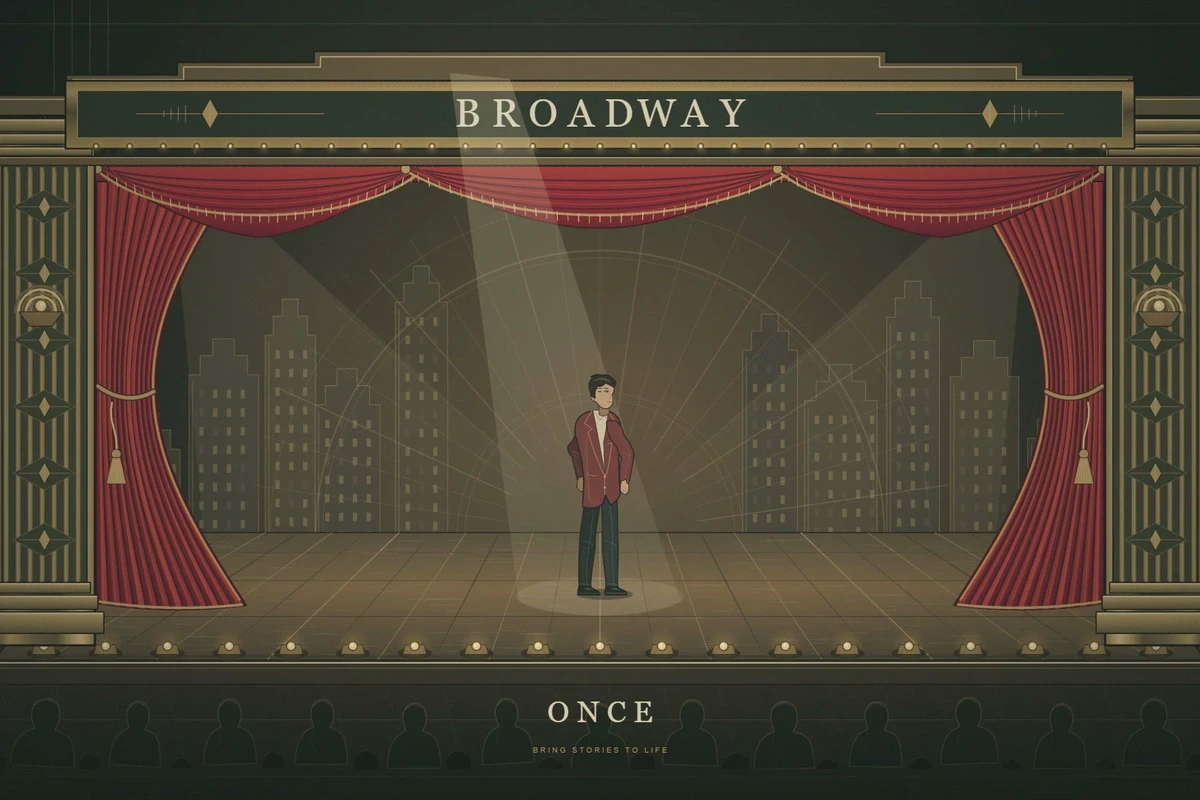
ONCE recently completed an original in-house animation exercise titled Before the Spotlight. A fictional performer begins on an interview set, rises, crosses backstage and reaches the centre of an opening red curtain. The finished film is 1920×1080, 24 fps and 30 seconds long. Its performer, setting, score and sound design are fictional original work; they do not depict a client, a real career or an actual performance. The drawn look comes from custom Canvas contours, pose drawing and hatching rather than scanned hand artwork. This article explains the story structure behind the film. Technical checks are not presented as audience or campaign results.
Turn the visual wish list into one line of action
The initial direction contained many useful visual ideas: a precision camera, film texture, vintage craft, continuous movement and a theatre. The project became a story only after those ideas were compressed into one sentence: a person being interviewed stands up, walks through backstage and faces an audience when the curtain opens.
That sentence defines a start, a direction and a destination. The camera knows what to follow. The performer has a reason to move. Every prop can be judged by whether it helps the movement. Before production, write: who starts where, what changes their direction, and where they arrive. If the sentence still needs a paragraph of lore, the spine is not tight enough.
| Time | Action beat | Visual job |
|---|---|---|
| 0–4 sec | Camera and dolly preparation | Establish the filmmaking world and spatial direction |
| 4–6 sec | Light, boom and slate settle | Make the approaching interview visible |
| 6–9.5 sec | The performer listens | Create a quiet state before change |
| 9.5–11.8 sec | Lean, rise and turn | Deliver the narrative pivot |
| 11.8–25.8 sec | Cross backstage as the curtain opens | Turn physical travel into anticipation |
| 25.8–30 sec | Reach centre stage and bow | Resolve identity and brand memory |
Give every filmmaking prop a consequence
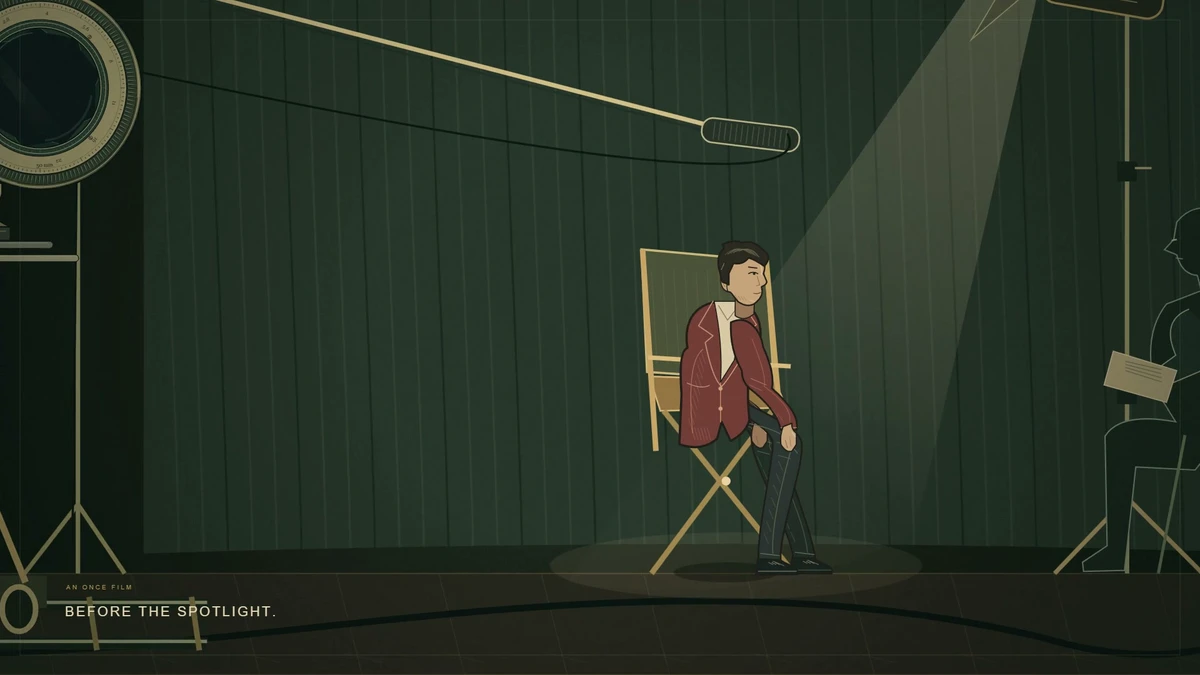
The camera and track establish a working set. The key light turns, the boom lowers and the slate closes, making the interview ready to begin. Once the performer leaves the chair, a stage sign, fly ropes and footlights continue to point forward. The red curtain is not decoration at the end; opening it is the final reveal.
Two questions expose unnecessary props. If this object disappears, can viewers still tell what the character will do next? Does it change the light, sound, sightline or direction of movement? When both answers are no, the object is probably repeating the style rather than helping the story.
A continuous-shot feeling comes from spatial continuity
The film aims for a continuous follow, but the production still separates interview, rise, walk, curtain reveal and bow. What must remain continuous is the performer's facing direction, foot contact, camera sightline and relationship to the set. These four elements can be reviewed in separate animation passes. When they jump, a film can feel disorienting even without an obvious cut.
The rise is the most exposed transition. Weight moves forward, a foot reaches a load-bearing position, and only then can the walk cycle begin. During the backstage move, stride length must match actual travel rather than looping the legs in place. A different production context is explored in rough-cut narrative confirmation: visual finish should not hide a broken story structure.
Use colour to complete the change of space
The interview area begins in warm black, deep green and brass. The burgundy jacket is initially a small focal colour. As the performer travels backstage, the red curtain occupies more of the frame and starts to echo the costume. When the curtain opens, the colour handoff and the spatial reveal happen together. No explanatory title is needed to tell viewers that the character has entered a different role.
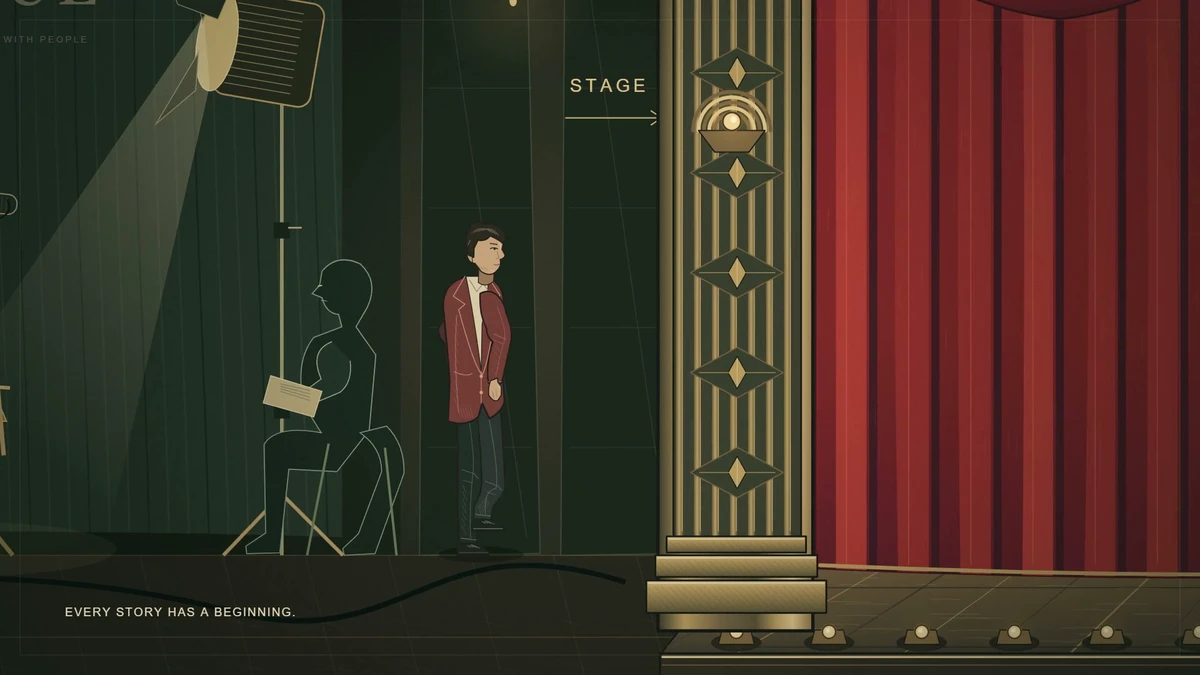
A colour script can stay simple. Give the opening, pivot and ending one dominant colour and one emotional job each. Then decide how light carries the eye from one colour to the next. The vintage palette becomes a reviewable story tool instead of a uniform filter.
Approve six story cards before animating 720 frames
The final film contains 720 frames, yet its story can be tested much earlier. Begin with six cards: set establishment, interview readiness, the rise, backstage tracking, the curtain opening, and the final stage image. Place them side by side and check whether the performer remains identifiable, movement direction stays stable, and each card brings the character closer to the destination.
Animation review can then use three layers: full frames at the story beats, consecutive-frame strips around the rise and walk, and normal-speed playback of the whole film. Sound follows the same logic. Slate, film transport, footsteps, curtain movement and applause appear only where they explain an action. Decode, frame-count and peak-level checks prove that a file can play; they do not replace watching the pacing or listening to the mix.
Write the brand-film brief as eight checkable fields
| Brief field | What to lock |
|---|---|
| Character | Silhouette, costume, movement behaviour and fictional boundary |
| One line of action | Starting point, reason for change, direction and destination |
| Six beats | One narrative job for each beat |
| Hero props | How each prop changes movement, sightline, light or sound |
| Space | Entrances, exits, blocking and camera path |
| Colour | The handoff between opening, pivot and ending colours |
| Continuity | Weight, foot contact, screen direction, stride and camera speed |
| Delivery | Duration, aspect ratio, frame rate, audio versions and editable assets |
If the project contains a larger world, see how a character gives viewers a route through a 3D brand film. To test a visual transition before expanding production, compare the five-frame reveal structure for a product concept film. Both methods make sequence and intention visible before more detail or effects are added.
Prove the story can travel before increasing visual density
A sophisticated 30-second animation does not come from placing more vintage objects in every shot. It comes from making the performer, camera, light, sound and colour work toward the same destination. Prove that journey with six cards and a low-cost animatic first. Detail, texture and final sound can then be improved without hiding where a problem began.
For a hand-drawn-style brand film or animated brand story, prepare one line of action, six beats, character references, the colour handoff and delivery formats. Then review ONCE's video production solutions or share the brief through the project enquiry page. The first creative discussion should answer why the character needs to reach that destination before deciding how elaborate each frame should be.
Production examples and next steps
Connect the brand story to people, products and work the camera can show. The Baseus supply-chain partnership film is a brand-film reference.
Review Brand film production and Baseus: Brand Film That Works Hand in Hand with Supply Chain Partners. To discuss your project, send the audience, central story, visual references and planned versions through the English project enquiry form.