The Transformation of Trust from Brief to Visual Language
The credibility of a corporate promo video does not come from flashy rhetoric or expensive equipment; it stems from an honest presentation of the business logic. Before launching a project, marketing leaders must translate abstract brand visions into concrete facts that can be visually verified. This requires the Brief to not only include core selling points, but also clearly define which details are non-negotiable baselines of truth. For example, if smart manufacturing is the focus, the ambient noise of the production line, workers' operating standards, and the actual running status of the equipment are all key anchors for building trust. The production team's role at this stage is to help the brand identify these anchors and translate them into specific shot requirements, while avoiding merely pursuing visual aesthetics.
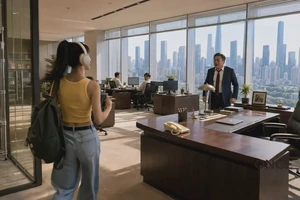
When establishing the tone of trust, decision-makers need to examine whether every promise in the brand narrative has corresponding visual evidence. If rapid service response is claimed, the visual language should capture fast-flowing data streams or highly coordinated team actions, while avoiding static office scenes. This mapping process from concept to image requires establishing a strict correspondence table to ensure every voiceover line is supported by a corresponding shot, thereby reinforcing the audience's psychological identification at a subconscious level.
A Checklist Mindset for Pre-Production Material Preparation
Delays or deviations in many projects stem from ambiguous pre-production materials. Brands must provide a complete organizational chart, business process flowcharts, key personnel backgrounds, and past high-definition asset libraries. Especially for content involving specialized techniques or complex processes, desensitized operation manuals or internal training videos must be provided. These materials are not only the foundation for screenwriters' creative work, but also an important basis for directors to develop shooting plans. Missing any part can lead to logical breaks during on-set filming, thereby weakening the professional feel of the content. It is recommended to set up a shared cloud folder, upload files categorized by department, process, and personnel, and label copyright permissions to avoid disputes over material authorization issues in post-production.
The depth of material collection directly determines the professional depth of the final cut. In addition to standard documents, internal Standard Operating Procedures (SOPs), quality control reports, and customer feedback records should also be collected. This implicit knowledge often hides the most compelling details. For example, the rigorous attitude behind a quality inspection report approved through multiple layers is more powerful than any verbal promise. Through systematic material organization, the production team can anticipate shooting difficulties in advance, formulate more precise execution plans, and reduce the risk of rework on-site caused by information asymmetry.
De-performance strategy for interview design
Interviews are the segment most likely to expose a false sense in corporate promotional videos. Traditional formal seated Q&A often appears stiff and unconvincing. Credible interview design should focus on situational restoration and emotional expression. Directors need to communicate deeply with interviewees in the pre-production phase, sort out the intersection of their personal experiences and corporate development, and uncover resonant story threads. During filming, dual-camera or multi-angle capture can be used, utilizing shallow depth of field to highlight characters' expressions while retaining a certain amount of ambient sound to enhance presence. Avoid having interviewees memorize scripts; encourage them to retell in their own words after understanding the core viewpoints. These naturally revealed imperfections are often more infectious than perfect lines.
To further reduce performance traces, the choice of interview location is crucial. Placing it in the interviewee's real working environment, such as a workshop workstation, laboratory, or conference room, can effectively activate their sense of professional role. The questioning approach should shift from closed to open-ended, guiding the interviewee to recount specific cases while avoiding macro concepts. When interviewees are immersed in memories or narratives, their micro-expressions and body language will be more natural and relaxed. This expression based on real experience can cross the screen barrier, establish an emotional connection with the audience, and give the brand story flesh and blood.
Camera blocking logic for real scenes
When shooting in real scenes, the biggest challenge lies in lighting control and spatial order. The production team needs to scout locations in advance, assess the variation patterns of natural light and the distribution of on-site power. For industrial plants or office areas, avoid over-lighting that leads to a "studio feel"; try to utilize existing light sources or adopt a low-key lighting style to preserve the texture and layers of the space. For camera movement, handheld photography can bring a sense of breathing and participation, but attention must be paid to the balance of image stabilization; fixed shots are suitable for presenting grand narratives or stable structures. The key is that the visual language should match the content's rhythm. Fast cutting is suitable for showcasing efficiency and vitality, while long takes are more appropriate for conveying composure and focus.
Interactive relationship between environment and characters
- Confirm whether the characters' actions match their professional identities, avoiding overly staged traces.
- Check whether clutter in the background interferes with the subject's expression; perform local cleanup or blurring treatment if necessary.
- Record ambient sound samples for atmospheric layering in post-production mixing to enhance immersion.
The core of camera blocking lies in revealing the symbiotic relationship between people and their environment. The cinematographer should learn to observe how light reflects off different material surfaces and how to use foreground occlusion to add depth to the shot. When shooting team collaboration scenes, avoid overly uniform positioning and capture unscripted moments of interaction, such as eye contact, gestural cues, or shared focus on a single point. This dynamic visual flow can break the monotony of static shots, showcasing the internal vitality and tacit understanding of the enterprise, thereby indirectly affirming its management efficiency and cultural atmosphere.
Restraint and Precision in Post-Production
Editing is a process of reshaping the narrative rhythm and the last line of defense in establishing credibility. The editor must strictly follow the principle of "information density," eliminating redundant footage and ensuring that every frame drives the story forward or reinforces the core viewpoint. Regarding color grading, a unified color base should be set according to the brand's tone, but over-saturation or filter abuse must be avoided to prevent distortion. Sound design is often overlooked, yet it is crucial for emotional guidance. The selection of background music should sync with the visual emotion, and the addition of sound effects must adhere to physical laws; subtle sounds like footsteps or keyboard clicks can significantly enhance realism. Subtitles must not only be accurate but also consider reading comfort and brand font guidelines.
In post-production, authenticity is also reflected in respecting the raw footage. Avoid using exaggerated transition effects or showy camera movement composites, as these techniques often distract the audience and weaken the seriousness of the content. Audio processing is particularly critical; the clarity of the human voice should take priority over the atmospheric feel of the music, ensuring the audience can easily capture the core information. At the same time, pay attention to controlling the dynamic range of the audio to avoid volume fluctuations that cause auditory fatigue. Through meticulous sound design, the texture and professionalism of the video can be greatly enhanced without altering the visuals.
Standardized Workflow for the Review Process
The pre-delivery review should not focus solely on the visual effects of the final cut; it must also verify technical specifications and legal compliance. The brand should check against a pre-set review list item by item, covering image clarity, audio levels, subtitle typos, and logo placement. It is particularly important to note that all music, fonts, and image assets used must be legally licensed, with corresponding proof documents provided. Additionally, it is necessary to confirm that the delivery format meets the technical requirements of various publishing platforms, including resolution, bitrate, encoding format, and cover image dimensions. It is recommended to retain the project source files and split-track assets for minor adjustments or re-editing based on market feedback.
Common Review Risk Points
- Ignoring color differences across playback devices, resulting in abnormal color tones when viewed on mobile.
- Failing to reserve safe margins for the intro and outro, resulting in key information being cropped in vertical videos.
- Audio loudness does not meet industry standards, causing user volume to fluctuate across different devices.
During the acceptance process, cross-platform compatibility testing is essential. Since the video will be played across multiple devices and network environments, multiple rounds of viewing must be conducted on PC, mobile, and large-screen projections. Focus on checking text readability on small screens, as well as audio clarity in noisy environments. Meanwhile, legal compliance review is a baseline requirement, ensuring all referenced content complies with advertising laws and relevant regulations, avoiding PR crises caused by infringement or non-compliant statements. Only through rigorous multi-dimensional testing can the final product possess the foundation for widespread distribution.
When high-cost live-action production is not applicable
Typically, not all corporate promotional needs are suited for investing substantial resources into live-action shooting. When content is highly abstract, the audience is extremely niche, or the budget is severely limited, animation demonstrations, data visualization, or simple graphic carousels may be better choices. Furthermore, if a company is in its startup phase and its business model is not yet fully finalized, overly detailed live-action shooting may instead lead to material waste due to subsequent adjustments. At this point, adopting a lightweight production approach, focusing on the clear communication of core messages, often yields a higher return on investment. Decision-makers must rationally evaluate the suitability of production methods based on communication goals, audience characteristics, and resource constraints.
When deciding on the production format, priority should be given to information delivery efficiency while avoiding excessive formal grandeur. For product principles that are highly technical and difficult to demonstrate intuitively, 2D or 3D animation often explains the logic more clearly than live-action. For internal training or specific industry exchanges, concise and lively PPT-style videos may be more popular among professionals than cinematic blockbusters. Flexibly choosing production methods is not only responsible for costs, but also an optimization of communication effectiveness. The key is to find the expression method most suitable for the current stage and corporate image, achieving value maximization.
Next step action recommendations
Before launching the project, it is recommended to organize a cross-departmental meeting, inviting marketing, product, and technical leads to jointly participate in the Brief discussion, ensuring all parties have a consistent understanding of the core message. Subsequently, look for a production team with industry experience, requesting them to provide preliminary creative concepts and execution plans tailored to this project, focusing on evaluating their ability to understand real-world scenarios and their interview guiding skills. Through multiple rounds of communication and plan comparisons, gradually refine execution details, laying a solid foundation for the success of the final video.
At the execution level, establishing a regular progress synchronization mechanism is crucial. Hold brief review meetings weekly to promptly align on expected deviations and resolve unexpected issues. Maintain an open mind, accepting professional suggestions proposed by the production team, while holding firm to brand bottom lines at key milestones. Ultimately, a highly credible corporate promotional video is a perfect combination of strategic thinking and artistic expression. It is not merely a video work, but a visual carrier of corporate values, requiring sincerity and professionalism to be injected into every detail in order to stand out in fierce market competition and win long-term audience trust.
If you are preparing a corporate promotional video project, you can first organize the Brief, reference visuals, product or company materials, delivery platforms, and copyright scope, then viewCorporate promotional video service page, translating communication from abstract preferences into executable production boundaries.