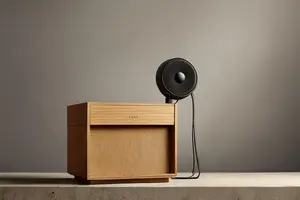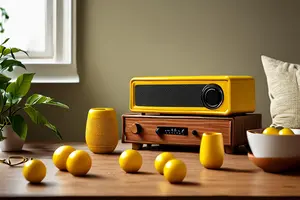
A sheet of paper folds into a mountain. A cup hops across a table. A box opens like a stage curtain. Stop motion advertising can make objects feel as if they have intentions of their own, creating a small world through materials, movement and pauses.
Handmade texture is a storytelling choice
Stop motion creates movement by adjusting an object and photographing it one frame at a time. Small irregularities, paper edges and real shadows can give a fantasy scene a tangible presence. Aardman's commercial work spans stop frame, 2D and CGI; the medium is a starting point, and the brand still needs to decide what the movement should mean.
Imagine a travel organizer brand expressing the ease of getting ready to leave. Clothes, charging cables and toiletries move into place by themselves, and the zipper closes. Instead of a static arrangement, viewers see a rhythm of tidying. The movement from disorder to order gives an abstract feeling a concrete form.
Let the product suggest the movement
A sturdy tool need not float like cotton, and a light travel cup need not move like a heavy machine. Observe how the actual product opens, feels in the hand and fits into a space before deciding what to exaggerate. A crisp fold in cardboard, the bend of fabric or a pause as metal parts meet can each give motion a different personality.
Exaggerated movement is creative expression, not proof of performance. When capacity, connections or operating steps matter, film a real demonstration and distinguish it from the imagined action. An organizer can swallow clothes by itself in an animation; its product page should still show how items actually fit and state the real dimensions.
Give imperfection a purpose
A slight wobble may feel inviting, but it can also make a label or structure difficult to read. Decide which details can carry a handmade trace and which must remain stable. Decorations may shift slightly; product marks, colors and important features should match the real object. Allow enough time to see the beginning and end of an action so that the sequence does not become an unintelligible flicker.
Adobe's stop motion guide recommends identifying the message before organizing the shoot and post-production. For a brand, that means deciding whether the audience should remember a character, a feeling or a product action before choosing the rhythm and shots.
Combine stop motion, live action and generated imagery
Stop motion can turn everyday objects into characters and make paper, fabric or clay part of the story. Changing a movement or set, however, can mean arranging and shooting it again. Live action is useful for natural performance and continuous product operation, though making objects move on their own may require additional practical or post-production work. Generated imagery can help explore imagined environments, but the resulting product shape and details still need shot-by-shot review.
One film can give each approach a role: open with a stop motion world around the organizer, show packing and closing in live action, then return to the same materials and colors for the ending. Related camera positions, light direction or a connected action can help the transition feel like one story. If a product's effect requires continuous proof, a longer real demonstration may be more useful than elaborate animation.
Begin with one small action
Use a replaceable sample and a simple set to test a few seconds. Does the object express a feeling? Is the product still recognizable? Does the transition into a real demonstration feel natural? Do not treat a fictional movement in the test as a product claim. Then decide whether to expand it into a full brand film or a shorter mobile version.
Planning a product video or brand campaign? Contact ONCE to discuss a visual language suited to your product.