How to Assess Location and Power Compatibility During Project Initiation
Before starting commercial video production, location scouting and power calculations must be included as independent technical review steps in the project initiation process. Many project delays or budget overruns stem from confirming only whether the location’s visual style matches the script, while ignoring the physical environment’s hard constraints on shooting execution. When approving budgets and schedules, brands and marketing heads should require the production team to provide a technical scouting report that includes power load calculations.
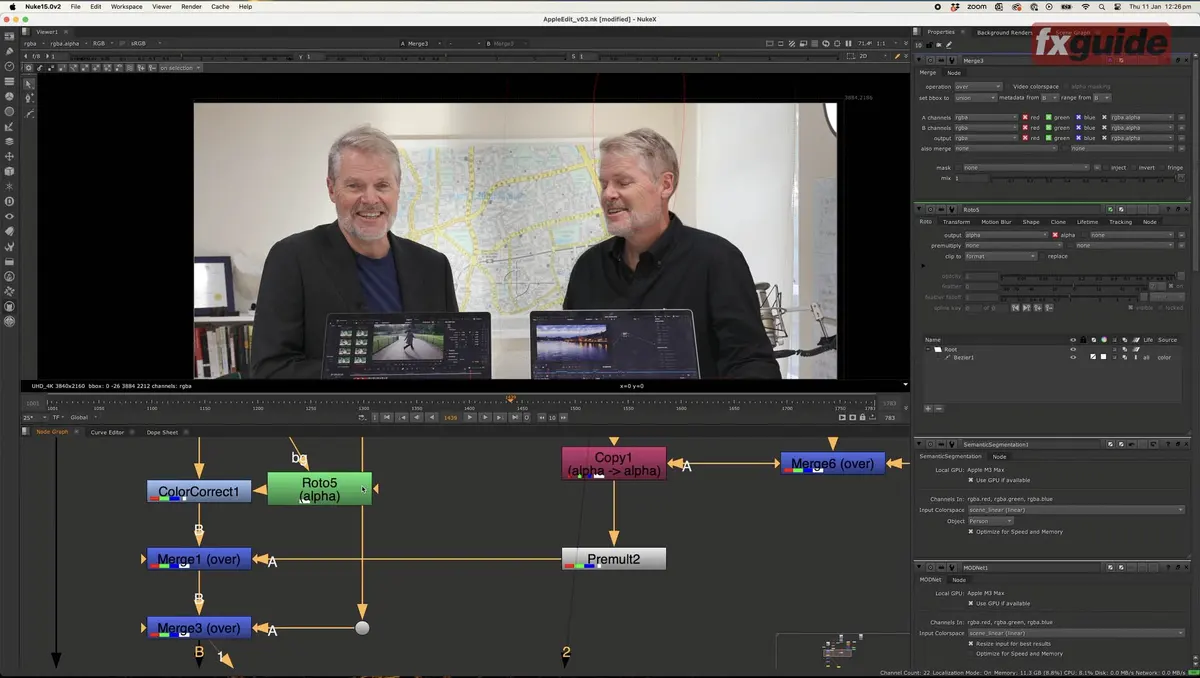
The core action in assessment is converting the lighting plan in the storyboard into a specific power requirement list. The Director of Photography and gaffer must list all planned light models, quantities, and maximum simultaneous power usage, with a safety margin of over 20%. This list must be cross-checked item by item against the distribution panel parameters provided by the location property management. If the location is an old building or a temporary structure, verify the degree of wiring aging and breaker specifications. When the calculated load approaches or exceeds the location’s power supply limit, decide during the initiation phase whether to change the location, adjust the lighting plan, or rent a generator truck.
The risk at this stage lies in information gaps. Location agents or contacts often lack professional knowledge of film production, and their verbal promises of “sufficient power” have no legal validity or technical basis. The production team should insist on obtaining written electrical diagrams or on-site measurement data. If accurate calculations cannot be completed before shooting begins, include liability clauses and emergency plan cost allocations in the contract for work stoppages caused by insufficient power. Ignoring this verification step can lead to frequent tripping, equipment damage, or even fire accidents on shooting day, directly causing project delivery failure.
Basic Materials and Decision Basis Required from Brands
To ensure effective location and power verification, brands should not act merely as approvers but must provide accurate business background information in the early stages. This information directly affects the production team’s precision in judging power scale and location conditions. Vague requirements can lead to overly conservative equipment configurations that waste budget, or overly aggressive estimates that create safety hazards.
- Clear distribution scenarios and image quality standards,Different platforms have different requirements for video bitrate, resolution, and dynamic range. If the project involves high-spec HDR production or extensive high-speed photography, the power consumption of lighting and post-production equipment will be significantly higher than that of ordinary social media short videos. Brands need to confirm the final delivery platform and core selling point presentation methods during project initiation so the technical team can reverse-engineer the on-site power load.
- Light source analysis of reference images,When providing reference clips, brands should help explain the desired light and shadow texture. The power requirements for natural light effects and high-intensity artificial lighting differ greatly. If reference images include large softboxes or multiple special effect lights, the production team needs to plan for three-phase power access or generator placement in advance.
- Location coordination authority and contact list,If the brand designates the shooting location, it must provide contact information for the property engineering department with technical interpretation authority, not just administrative contacts. It should also clarify the allowed construction time windows, noise restrictions, and backup power switching mechanisms. This information determines whether additional rental of silent generators or UPS uninterruptible power supplies is needed.
- Immutable delivery milestones,If the project has a strict launch deadline, the brand must inform the team in advance. This affects the production team’s decision-making tendency regarding power risks. Time-critical projects usually choose more reliable but higher-cost power solutions to ensure certainty, while projects with flexible timelines may have room to try using the location’s native power combined with voltage stabilizers.
Power Distribution and Safety Verification Process on Set
During the shooting execution phase, power verification shifts from paper calculations to physical connections and real-time monitoring. This process must be led by licensed electricians or professional lighting assistants; non-professionals are strictly prohibited from connecting high-power equipment arbitrarily. The focus of on-site execution is not just “powering on,” but establishing a traceable and emergency-ready power management system.
The first step is implementing zoned independent power supply. Lighting, cameras, monitors, DIT workstations, and domestic power must be physically isolated. Lighting crews typically use dedicated three-phase lines, while precision digital equipment should connect to clean power processed through voltage stabilization and filtering. This separation prevents voltage fluctuations from lighting startups/shutdowns from interfering with footage recording and prevents domestic appliance faults from affecting core shooting equipment. Each circuit should be labeled with its purpose, rated current, and corresponding breaker position.
Secondly, establish a pre-shoot stress testing mechanism. After all equipment is connected, do not start creating immediately; instead, perform a full-load operation test. Set all lights to maximum brightness, simultaneously start camera recording and DIT backup, and observe for at least fifteen minutes. During this time, use clamp ammeters to measure whether phase currents are balanced, check if cable connector temperatures are abnormal, and listen for unusual noises from generators or transformers. Only when all indicators are stable can the power system be declared ready.
The site also needs continuous monitoring and emergency measures. Key nodes such as the DIT station and director’s monitor should be equipped with UPS units to ensure enough time to save data and shut down safely in case of unexpected mains power interruption. Electricians must stay on duty at the distribution end throughout, regularly recording voltage and current readings. If the load rate continues to rise or voltage deviation exceeds equipment tolerance, immediately pause shooting to investigate the cause; never continue working with a hope-for-the-best attitude. This rigorous execution discipline is the baseline for safeguarding assets in commercial video production.
Hidden Impact of Power Conditions on Post-Production and Content Assets
Location power conditions concern not only shooting safety but also profoundly affect post-production workflows through footage quality and metadata integrity. Many compromises actually stem from early-stage power environments. Understanding this causal relationship helps production teams make decisions in the early stages that are more beneficial for post-production reuse and delivery.
Unstable power supply can cause cameras or recorders to produce bad frames, dropped frames, or even corrupted file headers. Such damage is difficult to detect on small on-set monitors and often only appears when DIT transcodes or editors import the footage. Fixing these issues is time-consuming and labor-intensive, and in severe cases, key shots may be ruined. Therefore, the cost of investing in high-quality power management equipment in the early stages is essentially buying insurance for post-production efficiency. If the location’s power conditions are known to be poor, the DIT team should increase on-site verification frequency, adopt a dual-backup strategy, and record power anomalies in detail in daily reports for traceability.
Additionally, the power environment affects the baseline of color management. Lights of different color temperatures may experience shifts in color rendering index or flicker under voltage fluctuations. If constant current drivers are not used or voltage stabilization is not applied on set, footage shot at different times within the same scene may show subtle color inconsistencies. This significantly increases the difficulty for colorists to match shots in post-production, potentially forcing the team to abandon certain creative effects. In commercial video production, maintaining clean power means maintaining consistency in color science, which is crucial for accurate brand image communication.
For content assets with long-term reuse needs, power-related technical documentation should also be included in deliverables. Recording the power configuration, encountered issues, and solutions for each shoot provides valuable references for future productions at the same location or under similar conditions. This knowledge accumulation is an important part of ONCE’s content asset management services, helping brands reduce trial-and-error costs for subsequent projects.
Acceptance Standards and Delivery Checklist for Location and Power
Acceptance in commercial video production should not focus solely on the final cut; work results related to location and power also require structured confirmation. Incorporating these technical indicators into the acceptance system effectively defines responsibilities, avoids later disputes, and provides an objective basis for project reviews.
- Technical Scouting Report Acceptance,Confirm that the report includes complete power load calculations, distribution point maps, risk assessments, and contingency plans. The report must be signed by the Director of Photography, gaffer, and location technical representative. Reports missing any element or unsigned are considered invalid and cannot serve as the basis for starting shooting.
- On-Site Power Test Record Acceptance,Check whether the DIT daily report or electrician’s log contains full-load test data, voltage and current monitoring records, and descriptions of abnormal events. Records should specify timestamps, equipment IDs, and handling results. Records with only vague descriptions like “normal” without quantitative data are not accepted.
- Footage Integrity Verification Report,Confirm that all raw footage has passed hash verification and has no damage markers caused by power issues. If power interruptions occurred, include specialized inspection explanations and remedial measure records for affected footage. This is the final evidence for judging whether early-stage power management was qualified.
- Equipment Return and Location Restoration Confirmation,Verify that all rented power generation, voltage stabilization, and distribution equipment is returned in good condition, and that the location’s original circuits are restored. If there is damage or alteration, attach repair vouchers or compensation agreements. This acceptance relates to the long-term cooperation relationship between the brand and the location, as well as legal risks.
The above acceptance items should be completed promptly at each project stage node, rather than piled up until final delivery. Phased acceptance allows for timely problem detection and correction, preventing small hazards from accumulating into major accidents. The production team should proactively submit standardized documents, and the brand should audit based on established standards, with both parties jointly maintaining professional norms in commercial video production.
Special Circumstances and Alternatives Not Applicable to This Process
Although systematic location and power verification is a general rule in commercial video production, strictly executing the full process may not be feasible or necessary in certain specific situations. Identifying these boundary conditions helps teams flexibly adjust strategies and avoid resource waste caused by dogmatism.
For video projects generated entirely by AIGC or full CGI, there are no physical shooting locations or on-site power issues. The technical focus of such projects should shift to computing resource scheduling, render farm stability, and data storage security. Although scouting is not required, the availability and cost of cloud services still need to be assessed during project initiation, which can be regarded as “power verification” in the digital age.
For minimalist social media short videos or documentary-style interviews that rely entirely on natural light or small LED fill lights, and where total equipment power consumption is below the capacity of ordinary household sockets, the power verification process can be simplified. In this case, the focus should shift to battery life management and backup power preparation, rather than complex distribution systems. Even so, it is still necessary to confirm that location sockets are properly grounded to avoid leakage risks.
In breaking news reporting or emergency public relations response scenarios, time priority outweighs technical specifications. Teams may be forced to enter and shoot without sufficient scouting. In this case, adopt a defensive strategy by bringing a complete independent power supply system (such as large-capacity mobile power stations) and relying completely on location power; simultaneously shorten single shooting durations and increase intervals for equipment cooling and inspection. Afterwards, promptly supplement the technical review to convert experiences from unconventional operations into contingency plans for future similar projects.
When the location is a highly sensitive area (such as laboratories, data centers, or cultural heritage protection zones), standard power access may be strictly prohibited. Such projects require prior negotiation with location management for dedicated isolated power supply solutions, or the use of special technical means such as wireless transmission and battery power. Forcibly applying standard processes is not only unexecutable but may also violate safety regulations. Respecting location specifics and customizing solutions is the hallmark of professional production.
Next Step Action Recommendations and Risk Warnings
Completing location and power verification is only one part of risk management in commercial video production, not the endpoint. It is recommended that brands and production teams solidify this process into a project management template and iterate optimizations during each review. For upcoming projects, prioritize arranging a joint technical scouting session to align creative, technical, and location perspectives on-site.
It is crucial to emphasize that no technical solution can completely eliminate uncertainty. Even with the most thorough preparations, you may still encounter extreme weather, sudden regulatory controls, or hidden equipment failures. Therefore, maintaining reasonable buffers in project budgets and schedules is more pragmatic than pursuing theoretically perfect solutions. ONCE consistently advocates for creative problem-solving grounded in real-world constraints across corporate videos, brand films, and various commercial video productions. If you are planning a new project and seek targeted technical assessment support, please contact us through our official website channels; we will provide professional services tailored to your specific needs.
If you are preparing for a commercial video production project, start by organizing your brief, reference visuals, product or company materials, delivery platforms, and copyright scope before reviewingthe Video Production Solutions pageto translate abstract preferences into actionable production boundaries.