Imagine an overseas homewares team commissioning a capsule collection through a Chinese manufacturing partner. The media partner has offered a recognizable name, a launch feature and access to an archive. The factory needs a design approval. The film team needs a brief. Calling all of this “the collaboration package” does not tell any of them what they can make.
Before commissioning brand licensing video production, identify the actual transaction. Is the brand buying a way to reach an audience with an existing product, or permission to develop a different product? Both can be sensible. But the second needs a creative explanation of what changed—not merely an announcement that two names have come together.
An archive can inform a product, not just decorate a campaign
On October 12, 2026, Hearst UK announced a Harper’s Bazaar UK licensing partnership with Sofas & Stuff. Its release describes six archive-inspired upholstery designs, sold as fabric and used on made-to-order furniture, alongside marketing by both partners. The retailer’s collection page identifies British magazine covers from 1930–1959 as the inspiration.
That is a specific collaboration structure, not evidence of its profitability. The materials do not disclose the license price, guarantees, royalty terms or incremental sales. Nor have we viewed the campaign film or assessed its reception. ONCE’s inference is narrower: an editorial archive can become an input to product development, giving the launch a different story to explain.
Hearst’s own Licensing service description includes product-development input, brand guidelines, point-of-sale work and cross-brand promotion. These are the company’s stated services, not terms that every media partnership automatically includes. A buyer must establish the contents of the actual offer.
ONCE’s Three Scopes, One Design Bridge
For a cross-border launch, we propose three separately inspectable scopes and one connecting page. They can sit within one agreement; they do not require three suppliers. This is a planning method developed for this article, not a report of a completed ONCE client project or a substitute for legal review.
| Scope | What the buyer needs to specify |
|---|---|
| Product license | The permitted source assets, products, markets, sales channels and term; who approves designs and samples; what further permission is needed to show archive material in marketing. |
| Media support | Named channels, placements or events; production versus posting responsibilities; timing, paid amplification and the reporting deliverable. “Promotion included” is not a guaranteed audience. |
| Content production | The approved product to film, deliverables and languages, source-material supply, reviewers, revision allowance, fees and excluded work. |
The connecting page is the design bridge: approved source element, transformation decision, approved product expression. It gives the manufacturer, brand team and production team a shared explanation of how one became the other.
Consider a fictional desktop-accessory collection. An archival illustration contains an interlocking curve; the new organizer reinterprets it as a divider shape. The bridge should show the source that may be displayed, the approved design and a photograph of the actual sample, with a short account of what was retained and what was changed. The production company should not infer that archive access permits every image to appear commercially. The relevant rights owners and qualified advisers must resolve that question.
If the collaboration is instead a jointly curated selection of existing products, say so. Curation and audience relevance can be useful propositions without a new physical design. Inventing a manufacturing transformation would make the film less truthful, not more premium.
Work backward from the approved sample
The bridge becomes a practical way to develop the film. For the fictional organizer, a source detail establishes the idea; a design decision explains the reinterpretation; a real product view shows what the customer receives. This can be a short sequence, not necessarily a documentary. Its purpose is to make the collaboration understandable.
The manufacturing connection matters here. A concept render is not a production sample, and an early prototype is not automatically the item approved for sale. Identify the specific sample and design version behind the shot list. When an overseas reviewer signs off remotely, attach that reference to the review rather than asking them to judge an attractive edit without knowing which product it depicts.
Confirm permission to display historical material before designing archive-heavy shots. Confirm what a real development process looks like before staging it. These are dependencies to resolve before filming, not reasons to ask an editor to reconstruct an origin story afterward.
Keep product usefulness in the plan as well. A launch film can explain why the partnership matters while a separate demonstration explains capacity, dimensions or everyday operation. Some footage may serve both, but a story about heritage should not displace information the buyer needs to choose the item.
Where the agreement only provides media access, the appropriate film may simply show the existing product in a relevant context. Do not commission a pretend archive-to-product journey to make an ordinary sponsorship resemble a product license.
Compare the collaboration with a real alternative
Rather than counting all capsule sales as incremental value, compare two scoped scenarios: proceeding with the collaboration and proceeding without it. ONCE’s simplified planning expression is:
Relative contribution = difference in net sales revenue − difference in variable product and fulfillment costs − difference in license settlement costs − difference in fixed development, content and media costs.
Use a common period, scope and currency. Fill it with actual quotes and explicitly stated demand assumptions, including discounts, returns and sales displaced from the existing range. Unknown demand remains unknown; it should not be filled with an optimistic forecast to make the proposal balance. This is a project comparison, not an accounting standard or return guarantee.
Avoid double counting. If an actual agreement makes a minimum guarantee recoupable against royalties, model that settlement rather than automatically adding both in full. If the package already includes a particular shoot, do not purchase or deduct it again. Conversely, sample shipping, localization and additional photography are not free merely because nobody has assigned them a line yet.
Expected exposure is not cash to subtract from the budget. Treat distribution as a condition that may influence demand and needs evaluation. A team seeking access to a particular readership, without a suitable design proposition or development window, may have a stronger reason to buy a defined media-content partnership than to launch a licensed SKU immediately.
For a production partner such as ONCE, the actionable opportunity starts with scoped design-story development, filming and subsequent versions. A well-kept, permitted record of approved transformations could support future work. It does not turn client archives or product designs into the studio’s IP. Any longer-term ownership or revenue participation needs a separate agreement about rights, investment and operating responsibilities; uncertain upside should not silently replace payment for committed production.
When discussing a product and campaign production brief with ONCE, bring the proposed partnership scope, the approved sample status and the design change the audience needs to understand. Those inputs are more useful than asking the film team to make a loosely defined collaboration “feel iconic.”
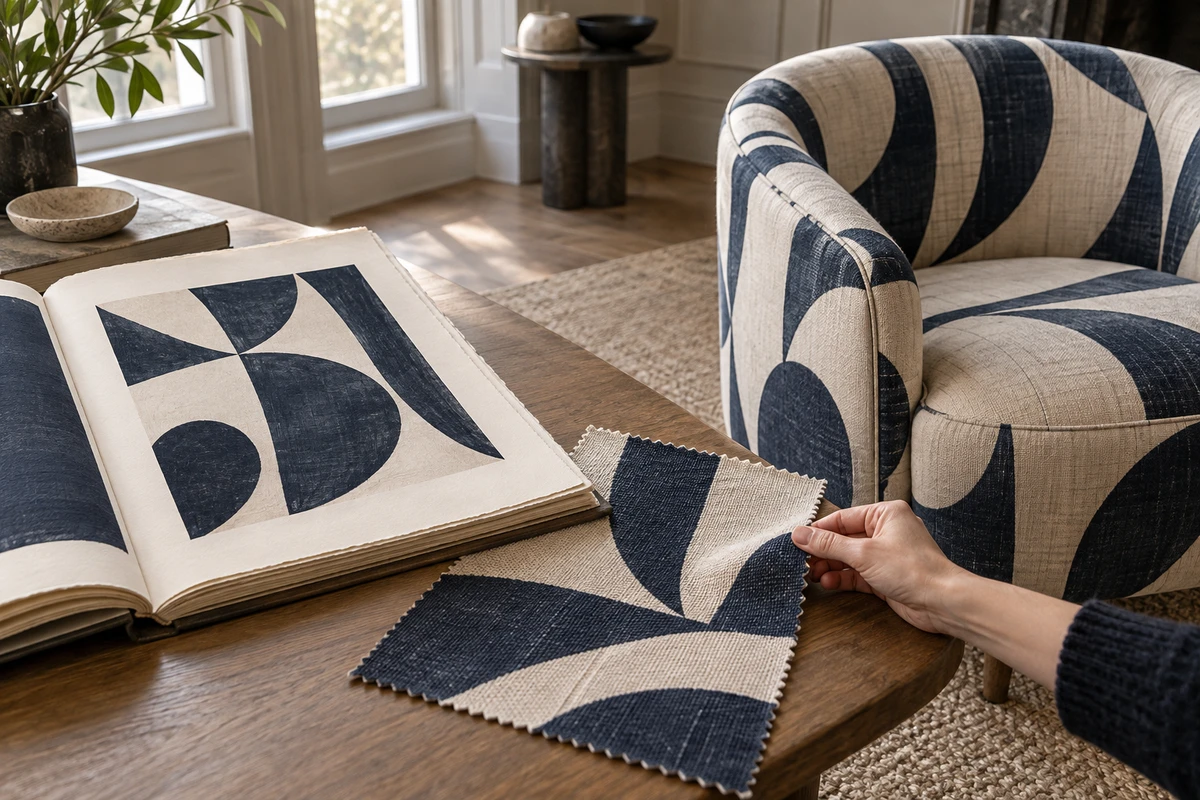
Sources checked October 17, 2026. The dated announcement is October 12; the linked licensing and collection pages do not state publication dates. The cover is an original AI-generated concept, not a depiction of either company’s products or collaboration. Examples and the planning framework are ONCE’s analysis, not reported client results.