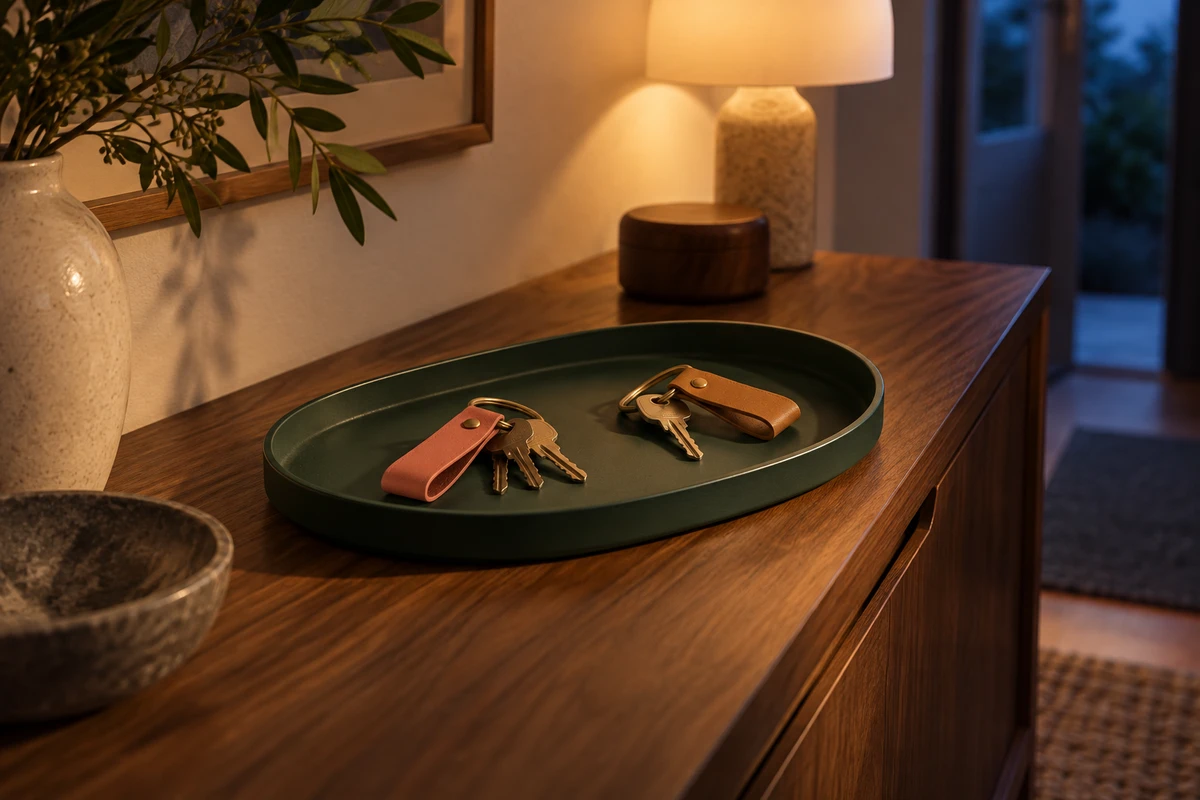
Someone comes home and puts their keys in an entryway tray. They do it again, then again. Is that a monotonous script, or the beginning of a story? The difference is not the number of repetitions. It is what the viewer understands differently the next time.
Repetition in commercials can turn an ordinary action into a point of comparison. It need not create a fantastical time loop or reproduce every frame exactly. What matters is the choice that becomes noticeable because something else stays familiar.
Repeat the entrance, not necessarily the experience
In its February 10, 2020 Groundhog Day advertising account, Jeep describes Bill Murray returning as Phil Connors, an opening alarm at six, and the Gladiator entering a story of changed daily experience. This discussion uses the brand’s historical written description, not a complete viewing. Its reported views and awards are not proof that the narrative technique will work for another advertiser. Consulted October 16, 2026.
The useful question is how a familiar beginning can coexist with a different experience, not whether every brand should borrow a famous film. Existing characters, music and story material cannot simply be transferred into a new advertisement. An original script can establish repetition through its own product and everyday setting.
Separate three tasks: similar events recurring within a story; reproducing an action during filming for compositing; and a player restarting a video after its ending. They can coexist without being the same creative problem. A seamless replay need not advance a story, and similar actions filmed from a fixed position need not connect end to beginning.
For the script, ask whether returning to the same entrance leads to a different action. Changing clothes and backgrounds while keeping the same statement and outcome may produce decorative variation. That can show a range, but it is not necessarily narrative development.
Give the same action a different choice to carry
Consider an original, fictional advertisement for a key tray. This is not an ONCE client project, an actual shoot or a product-effectiveness test.
On the first evening, someone enters, puts down their keys and immediately continues toward a room, bag in hand. On the second, the framing and landing position are similar. This time the hand leaves, then returns to pick up the keys as an off-screen voice asks, “Going out again?” On the third evening, two people enter together, put their respective keys in the same tray and leave the entryway together. The second person is visible, not a secret withheld for a final reveal.
The sequence needs no caption announcing that life has improved. Nor should the tray be presented as the cause of a changed relationship. It simply remains present through someone hurrying away, changing a plan, and coming home with another person. The product participates in life without making the characters’ decisions.
Keep one recognizable reference: the tray’s position, the direction the hand enters, or the moment the keys meet the tray. Arrange the rest around the most important change. If the second evening hinges on picking the keys up again, avoid simultaneously changing the setting, adding a sweeping camera move and introducing many props. Give the returning hand room to register.
Similarity does not require copying the performance
Reusing the first evening’s key-drop shot with different follow-on scenes can create a neat pattern. It can also remove preparation the performance needs. Someone already intending to leave again and someone changing their mind after an invitation may hesitate, remain in place and move onward differently.
Repeat the framing while allowing the actor to perform a differently motivated action. Alternatively, deliberately reuse a neutral contact shot and let the next action supply the difference. The decision depends on whether the change occurs before, during or after the gesture, not on which method appears more sophisticated.
Sound can preserve a reference too. The first key drop leads into hurried footsteps. The second is followed by footsteps stopping. The third leads into conversation between two people. The point is the relationship between moments, not exaggerating every impact to suggest an unverified material property. Narration should also leave room for change instead of describing every image in turn.
When another repetition adds less than it takes
Repetition uses screen time, so each occurrence needs a job. The first introduces an action. The next establishes or changes an expectation. A later one may deepen or redirect it, or may be unnecessary. There is no rule that every advertisement should repeat something three times. If two occurrences make the comparison, a third day need not be added for symmetry.
In the fictional tray story, a second evening with neither the returning hand nor new relationship information might be removed. Conversely, a film about accumulated everyday experience can use gentler repetition without engineering a reversal every time. The question is whether that calmness serves the theme, rather than compensates for missing footage.
A cutdown consisting only of keys touching the tray could become an attractive action montage while losing the story of where someone goes afterward. Retain the contrast between coming home alone and returning together, or make the shorter version one complete everyday moment. A clear task matters more than preserving the original repeat count.
For an internal review, ask someone uninvolved in the script what stayed the same, where something changed, and why that difference mattered. The conversation can expose unclear expression. It is not audience-effectiveness research or a basis for predicting sales.
Repetition need not be where a story pauses. It can give a small change weight: the same tray, the same action, but a different choice. Planning a brand film? Bring the product’s real use and the change in everyday life you want to portray, and discuss the script and production approach with ONCE. Find the difference worth seeing again.