A fabric swatch arrives from a supplier in China. The campaign treatment imagines it moving like a landscape, but the overseas marketing team has only seen a render. Before approving the set, someone needs to find out what the actual weave does under light and how the proposed movement will be made.
That does not mean every launch needs an elaborate physical experiment. ONCE recommends a narrowly scoped material rehearsal first. Find out whether one real transformation is worth watching before committing the whole film to it.
When an ingredient becomes a creative instrument
In its October 5, 2026 announcement, Chipotle described recording an original track at Abbey Road Studios with the London Vegetable Orchestra, using instruments made from vegetables used in its restaurants. The company reported three months of experimentation to develop the instruments.
This is the brand’s account of its process. We have not watched the film or listened to the track, and it does not establish sales impact, audience recall or a development timetable for another production. The useful proposition is more specific: the ingredient can help make the work, not merely appear in it.
Adding music to a food close-up and building an instrument from an ingredient are different creative relationships. In the latter, production must respond to what the material allows. Its contribution cannot be established simply by adding a provenance line to the finished ad.
Give the material a job, not just a place in frame
A material can explain a product’s construction, supply a visual texture, or change the work through its behavior. None is inherently superior. A buyer comparing finishes or construction may need a clear demonstration more than an elaborate performance.
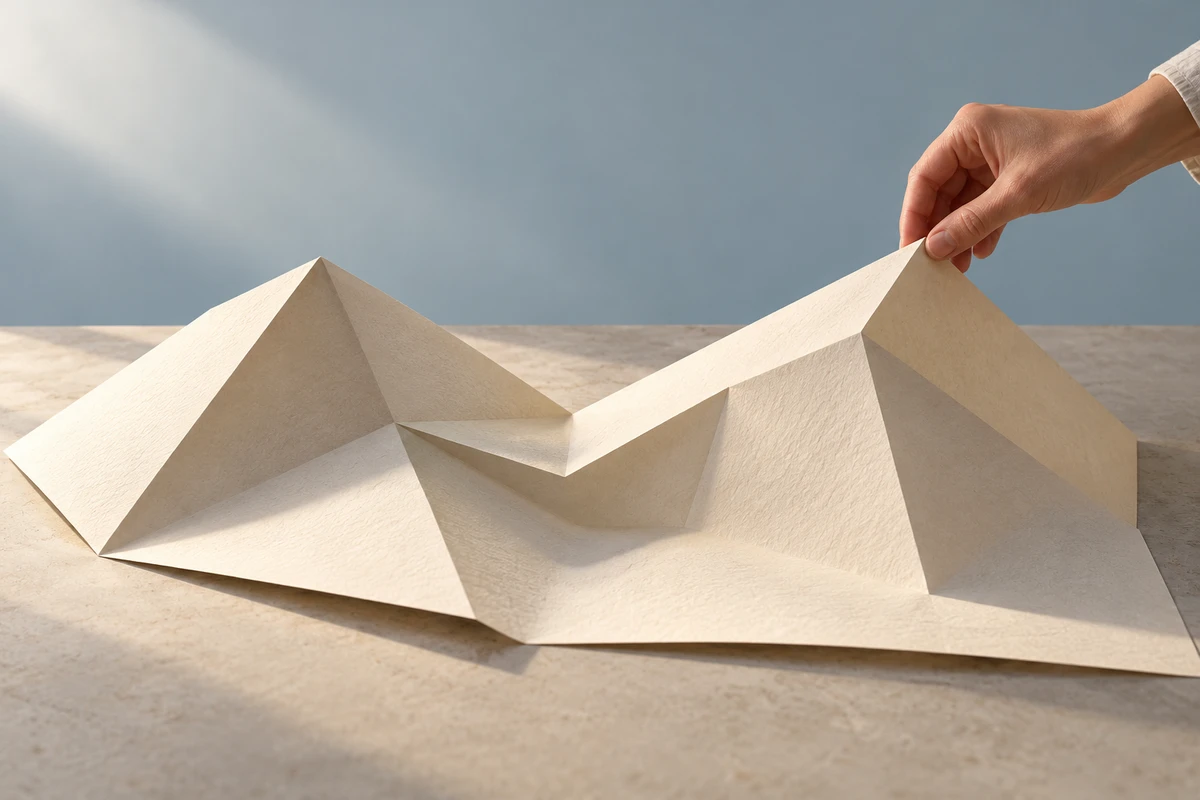
Material-led development becomes interesting when a transformation offers a relevant new way of experiencing something familiar. A sheet folded into a landscape can make the passage from flatness to volume the subject of a film. The same sheet behind a presenter may serve a different, perfectly legitimate decorative purpose.
Nor does working physically require leaving everything untouched. In its TEKLA production account, Scale Model Studios describes backing white paper characters with a second black layer to control light passing through them. This is a written production reference, not our review of the film. It illustrates that a material’s screen behavior may need deliberate construction.
ONCE’s Material Rehearsal Sheet
This is a proposed development exercise, not completed client research. It scopes a piece of exploratory production rather than asking a supplier for an entire unpaid campaign: can one action with this material produce a transformation worth developing?
Consider a fictional home-textile brand asking its production team to turn a length of fabric into a moving landscape. This is a development example, not a client project or a claim about a particular fabric’s softness, strength or light transmission.
Identify the actual supplied fabric, including any backing or treatment. Try one movement: lift a section by hand and let the resulting fold travel across the frame. Record a simple view that shows both the material and how it is moved, before adding narration or a large set. The overseas team can then distinguish an attractive imagined shape from a movement the sample can actually support.
Document the reset as well. Does the cloth return to the starting arrangement? Do new creases change the next take? Does a second length behave differently? If grips, supports or frame-by-frame repositioning are needed, include them in the production plan. None of these observations is a standardized textile test, and manually created movement should not be presented as a self-acting property of the fabric.
State the intended brand meaning separately. A sequence about the possibilities of shaping a room is an artistic proposition. A claim that the fabric is softer or more durable requires appropriate product evidence. A graceful wave does not establish either property.
The rehearsal sheet therefore connects five things: material identity, performed action, visible change, reset conditions and brand meaning. Develop a relationship among those elements in one short sequence before expanding the shot list.
An unsuccessful action can still reveal the next idea
If the cloth will not travel as imagined, concealing the problem in post is not the only response. Simplify the movement, change the arrangement or specify the required support. The gradual formation of a fold may become more interesting than the sweeping wave in the treatment. A constraint can change the story, not just obstruct it.
If every interesting transformation requires a substitute material or entirely digital deformation, acknowledge the change of route. Animation and stand-ins remain valid options; the team should simply stop presenting the sequence as a performance by the original ingredient. A concept image cannot establish physical feasibility.
Some ideas should not proceed. The material relationship may need too much explanation, the actual product may become irrelevant, or the only connection back to the brand may rely on an unverified performance claim. A straightforward product demonstration can be the better creative choice.
Practical exploration also needs appropriate operating conditions. Cutting, heating and other processing should be assessed by people competent to carry out the work. A small rehearsal is not permission to improvise hazardous techniques for a shot.
Commission a question before commissioning the spectacle
A useful development scope names the material, the action to explore, the recorded output and the decision it should support. It also states when to proceed to full production. This lets a brand separate exploratory work from a commitment to deliver every movement in a finished treatment.
For ONCE, the longer-term opportunity is to retain production judgment: how processing changes appearance, which movements reset, and which depend on particular conditions. With the relevant permissions and project terms, that knowledge can inform future work. It does not automatically grant cross-client asset rights, exclusive IP or proven margin improvement.
For a discussion through ONCE’s brand film and commercial production solutions, bring the actual material, the intended brand theme and the product facts that artistic processing must not distort. The first creative question is not how spectacular the finished film could look. It is what worthwhile change the material could genuinely help create.
Sources checked October 16, 2026. The factual references are Chipotle’s release and Scale Model Studios’ undated TEKLA account. The Material Rehearsal Sheet and packaging scenario are ONCE’s original proposals, not tested results or partner endorsement.