After a brand film launches, one question often remains: where will a new viewer encounter it once the campaign has passed? A website that continually pushes the newest release to the top may preserve older films while leaving only the team able to find them meaningfully.
A brand film library serves people deciding whether to watch, not just people storing files. It needs to answer more than “What have we made?” It should explain “Why might this film be worth your time now?”
From release dates to reasons to watch
YETI’s official YETI Presents page, consulted October 17, 2026, offers featured films, all films and series entrances. Entries show topics, runtimes and story descriptions, while the all-films area lists interests including fishing, climbing and coastal pursuits. These are observations of public page text, not a complete interaction test or viewing of every film. They establish no traffic, watch-time or sales result.
The visible structure suggests an editorial possibility: help viewers search by interest while offering a small selection to those who do not yet know what they want. Release dates can remain without carrying the entire navigation task.
Quarters, project codes and producing departments are useful internally. A question such as “Why does someone keep doing this after the working day ends?” may offer an audience entrance. These systems serve different people. Viewers need not learn the brand’s project schedule.
This is also different from a footage archive or licensing catalogue. An internal archive concerns files, versions and retrieval. A licensing catalogue describes work for possible uses. A public film library first introduces finished works to viewers. They can share information without turning an internal spreadsheet into a viewing experience.
Give a newcomer a complete first encounter
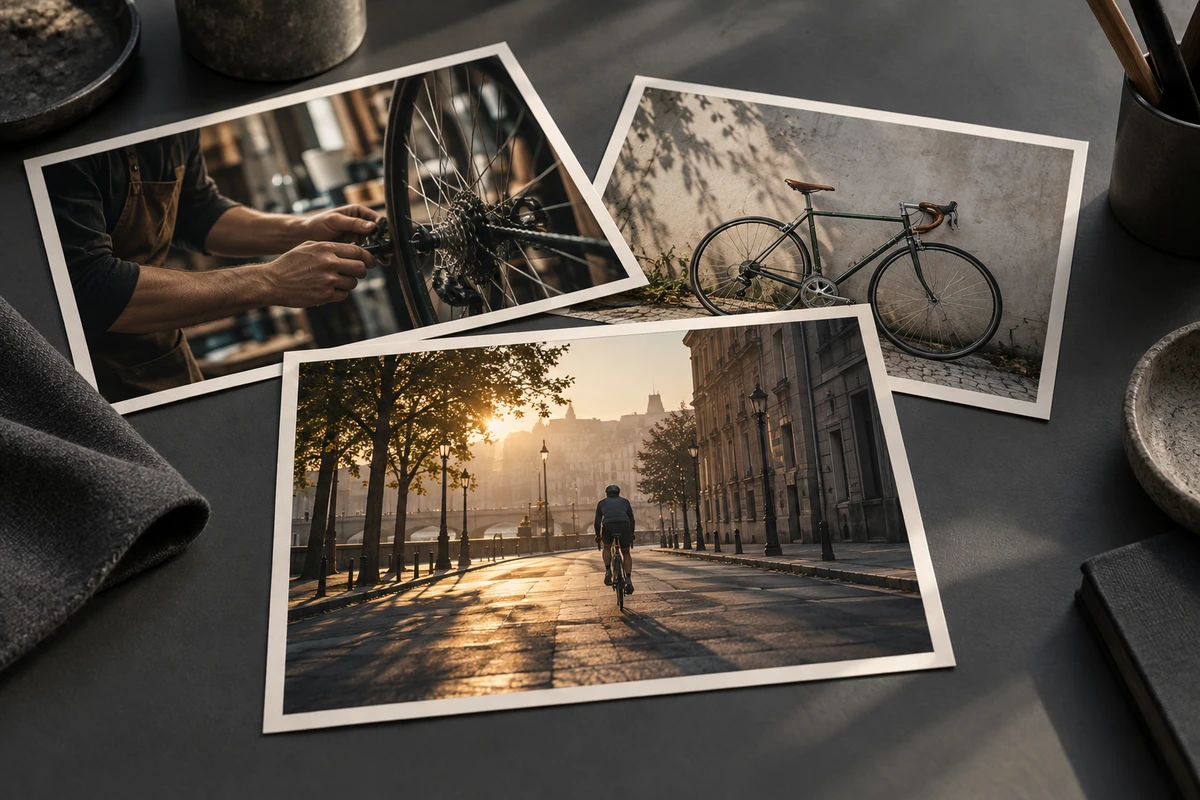
Imagine a fictional cycling brand with three works suitable for public presentation: a short film about a novice’s first solo ride across a city, a documentary about a bicycle mechanic, and an older product explainer. This is an original planning example, not an ONCE client project or a source of real viewing data.
Chronological ordering might put the older product explainer first. It is useful to someone researching that model, but not necessarily the right opening for a visitor interested in cycling life. A small introductory selection could lead with the novice’s story to establish what the collection cares about, while preserving a clear separate route to the explainer.
The first recommendation need not be the shortest film or the one with the largest view count. Can someone who knows neither its protagonist nor the previous campaign understand it independently? Does it represent a question the collection genuinely intends to explore? If every film needs a marketing manager’s explanation, improve the introduction or choose another entrance.
Describe the viewing promise, not an award you give yourself
“Our major film of the year” or “Celebrating passion” offers little help with selection. Identify the person, the activity and an unresolved question. The fictional novice film might be introduced as: “On his first solo ride across the city, distance is not his hardest adjustment. It is the hesitation at every junction.” That establishes a direction without revealing the entire ending.
Runtime is a practical commitment: how much time should someone set aside? It should describe the version actually available, not an old cut or trailer. Title, cover, description and opening should also concern the same thing. A product close-up should not promise one viewing experience and lead unexpectedly into an unrelated long-form portrait.
Explain the relationship behind the next recommendation
After the fictional novice film, the mechanic’s story could offer another perspective on becoming familiar with a bicycle: the rider’s and the caretaker’s. That connection is more specific than calling both “brand stories.” The recommendation should still explain that the next film is a character portrait, not a beginner’s tutorial.
Related does not mean identical. Tagging everything “exploration, passion, life” can create visual consistency without useful distinctions. Build a few entrances supported by the films that actually exist, and allow a work into more than one appropriate selection. A small collection need not invent many categories merely to fill a page.
Nor must every next step remain inside the library. Someone finishing an explainer may need accurate usage information. A portrait viewer may want a follow-up interview. Someone else may simply want the film to end quietly. The next step should extend the viewing reason rather than force every experience toward the same sales message.
Whether these choices help requires observation. Ask people uninvolved in production to choose using the page alone and explain why. After publication, use available viewing information and feedback to reconsider the entrances. One conversation or click count cannot establish long-term brand effectiveness.
Let an older film belong honestly to its time
A library need not make every older work appear current. Preserve the model and applicable version for an older product explainer. Do not carry expired event dates, places or registration invitations into present-day recommendation copy as active information. Historical work can retain a historical place without being removed wholesale or quietly repackaged as new.
If a person’s story has a confirmed development, add a separately dated update rather than making later information look like an ending the original film already knew. Before public presentation, the appropriate people should also confirm whether the work and accompanying information remain suitable to display.
For a production team, this creates meaningful editorial work beyond handing over a film: accurate descriptions, considered relationships between works, and a clearer understanding of what the next film should add. It does not make every project a content platform. With only one core film, presenting it well may matter more than building a large library.
Keeping old films available is not the same as giving people a reason to choose them today. Already have a collection of brand films? Bring the intended audience and a few works suitable for public presentation, and discuss brand content and video production with ONCE. Find the first film worth recommending before deciding what to create next.