Warmth in a home advertisement often means everyone finally sitting down together: a dining table, a sofa and a reunion at the end. The message is clear. But if the product is a chair for quiet reading, must a person sitting alone signify loneliness?
Not necessarily. Another kind of warmth is recognizing that someone wants a little uninterrupted time and not immediately calling them back. This is not a new template that replaces togetherness with solitude. It asks whether people in a home can choose both company and time for their own activities.
Intimacy is not a head count
IKEA’s US newsroom discussed private moments at home in Privacy Crisis: IKEA’s Life at Home Report Finds That Americans Are In Need of Self-Care, published on October 10, 2019. The article distinguishes privacy from being completely alone, including watching a film with someone close among its examples. Here, the useful reference is that historical perspective, not its population percentages, a forecast of current demand or health advice.
For advertising, the distinction matters. Whether other people are in the frame and whether a character has time of their own are different questions. Two people doing separate things can be close; someone in a group may be participating only because they are expected to. Physical distance does not automatically establish the quality of a relationship.
When developing a quiet domestic scene, ask less about making it feel therapeutic and more about what this particular person wants to do. Finish a chapter, listen to one side of a record or organize the day’s belongings. A specific activity makes a sad expression unnecessary as an explanation for being alone.
It also gives the brand a more honest role. A chair can provide somewhere to sit and read. The story cannot automatically turn it into a way to repair relationships, relieve anxiety or solve loneliness. Credible domestic life comes from how someone uses an object, not from making furniture the answer to every emotional problem.
What can a reading chair contribute to a story?
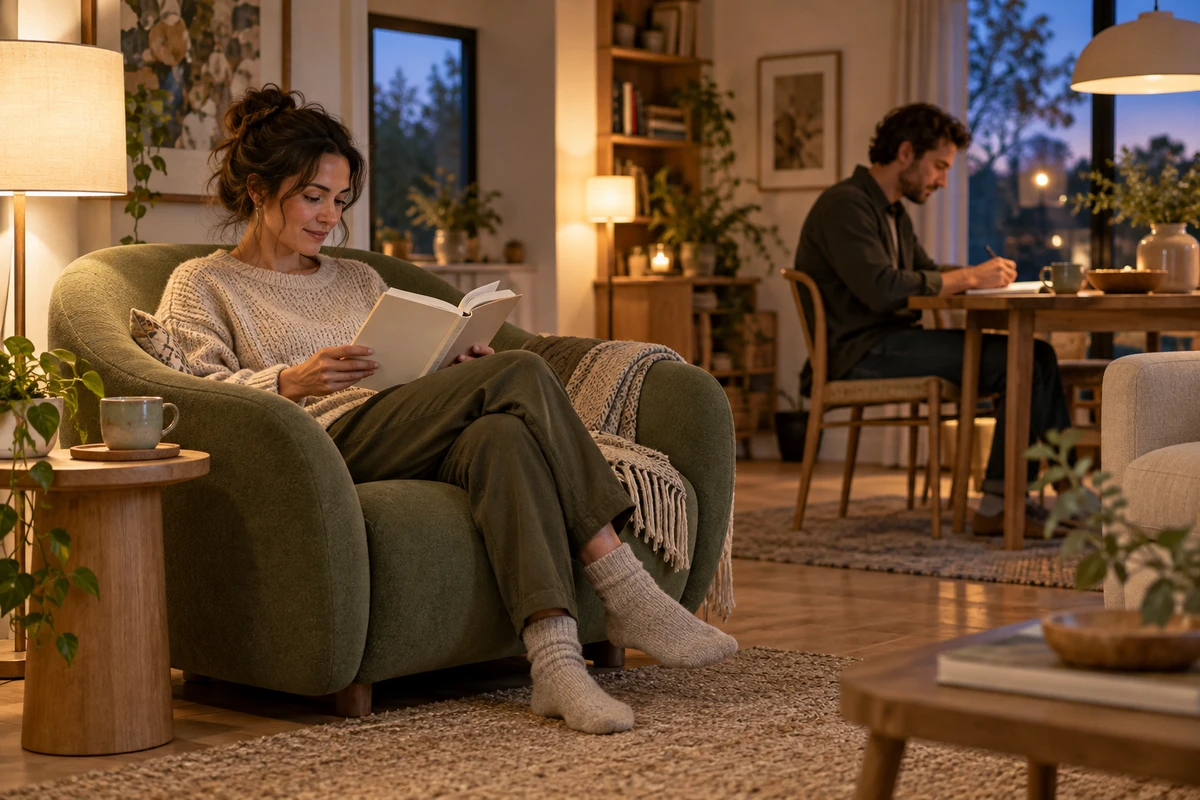
Consider a fictional commercial concept, not an IKEA film or an ONCE client project. After dinner, someone puts away the dishes and takes a book to a reading chair in a corner of the living room. Another person walks past, about to suggest watching a program together. Seeing the open book, they take the remote to the other side of the room instead. The reader glances up, smiles and turns a page.
Nobody is expelled, and the ending does not need a group embrace. The change is small: an invitation is held back and a choice is understood. The chair belongs in the story because it accommodates an existing reading habit, showing how this particular space is used.
Remove the second person and leave only an empty room, a figure seen from behind and a long pause, and the same reading action might suggest loneliness. Make the departing person visibly annoyed and the story becomes rejection or conflict. Neither is inherently wrong; they are different stories. The team should choose deliberately, rather than expecting a voiceover to declare the result warm afterward.
The product needs appropriate attention too. Arranging the pages before sitting down and settling into a reading position can leave room to show the chair’s overall form and use. Specific construction details may require separate product shots. Do not make the chair unrecognizable background in pursuit of emotion, or interrupt a natural break with constant pose changes to display every component.
Use the actual product in a rehearsal and have the performer sit and stand appropriately. Comfort, load capacity, adjustment range and suitability for particular users need product information and relevant verification. A satisfied expression cannot establish them. The brand can express an aspiration while remaining clear about what the product actually offers.
Show consideration, not simply an empty room
Set design can support the relationship without requiring a separate study. There might be a visible distance between the reading chair and the shared activity area. People can still exchange a glance while keeping their attention on different things. The arrangement depends on the actual furniture and room, not a universal recipe of oversized windows and a vast living room.
Our discussion of set design for home product advertising considers how ownership and use make a set feel inhabited. The question here is what kinds of relationships that inhabited space allows.
Sound and editing also interpret the moment. Removing every domestic sound and adding heavy music might suggest estrangement. Retaining distant cup movements, footsteps or a quiet acknowledgment could instead explore the idea of being in the same home with some time to oneself. This is a creative direction, not a formula promising that a sound produces a fixed emotion. Listen to how the whole passage works.
Time alone need not end at the conclusion. Forcing the reader to close the book and return to the sofa might make personal time seem like a detour awaiting correction. The story could end with continued reading or with a later, voluntary return to company. What matters is that the character chooses, rather than having that choice withdrawn for a busier ending.
For international versions, meet the people who live there
In Life at Home: How can IKEA help the many people with the dilemma of privacy?, published on February 28, 2020, Ingka Group describes a shared-living discussion event held in London in December 2019. Participants understood privacy differently, even within that small group. This account of an event is not a representative comparison between countries and cannot establish national preferences for solitude or togetherness.
For an international home campaign, start with the living arrangement. Does the character live alone, with a partner or with friends? How do they express a wish for quiet, and what response fits that relationship? Age, routines, housing and individual habits may all matter. The actor’s nationality cannot supply the answers.
Ask people familiar with the intended situation to read the script: what do they think is happening, and which action feels unnatural? One participant cannot represent an entire market, but they may reveal an assumption the team missed. If interpretations differ, retain that disagreement and return to the intended audience, rather than selecting whichever opinion seems most culturally authoritative.
Some advertisements should still celebrate reunions. Others need lively activity or a direct furniture demonstration. A moment alone need not become every brand’s shorthand for sophistication. Quiet has substance when it connects a real activity, a product use and the relationship the brand wants to explore.
A good home advertisement need not insist that nobody ever disagrees. It can show a smaller understanding: I have not withdrawn from our life. I just want to finish this page first.
To develop a home brand film, bring the product and a specific domestic activity to ONCE VISUAL to explore the relationship between the people and the product’s place in their everyday life.