Foley in a product ad is not about making every movement louder. It helps an audience hear the change that matters: what the hand touches, how far away an object is, and whether an action has finished. Sound can be designed without pretending that a quiet product has a mechanical response it never makes in use.
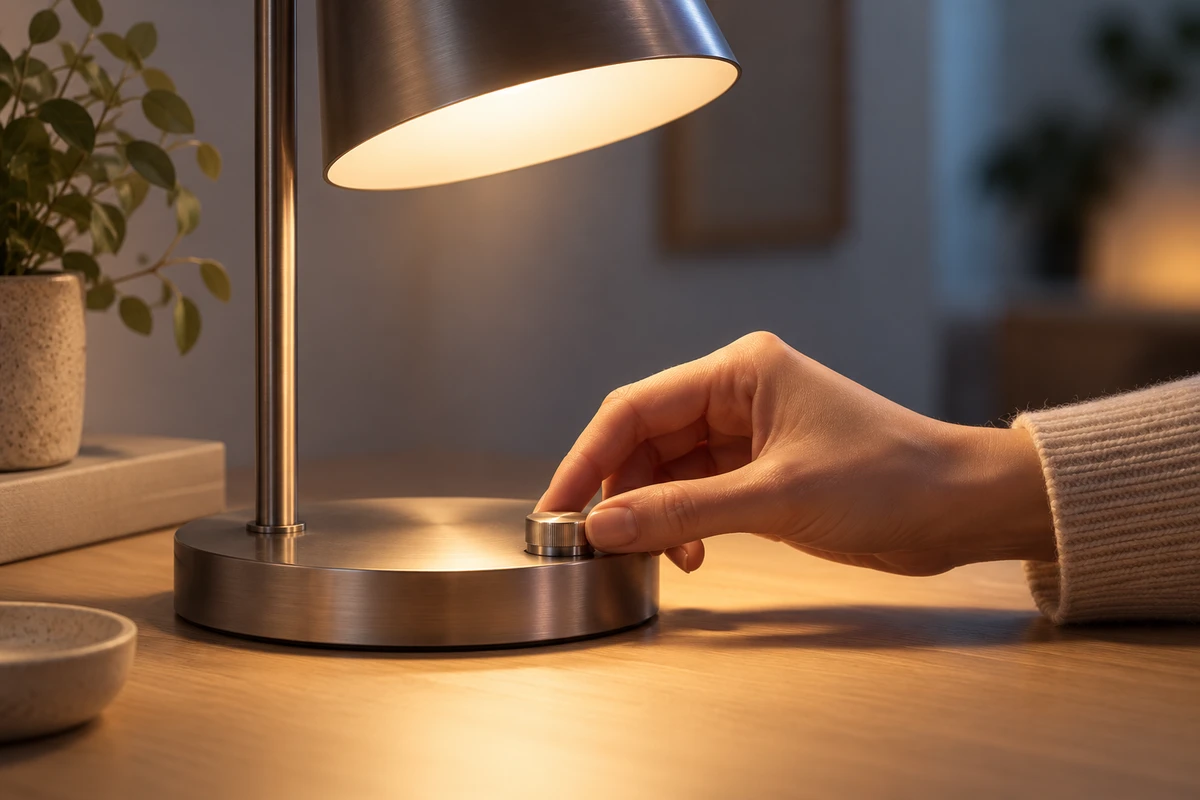
Imagine an original, fictional ad for a desk lamp. Someone approaches a table and turns a metal dial; the light slowly brightens. We do not know whether this imagined product's dial makes any sound, so we should not begin by adding a premium-sounding click. First decide what viewers need to understand from the movement. Then decide what to record, construct, and leave out.
One action can give sound different jobs
If the film is about settling into a quiet evening of reading, the dial need not dominate the person. A slight brush of skin against metal and the room's low ambience may belong in that scene more than a heavy metallic strike. If the idea is about a sudden decision to switch on the light, the sound can briefly focus attention at the end of the turn, then give the space back to the character. That is a choice of rhythm, not a description of the lamp's actual mechanism.
In its account of the Tarkett sound-design project, Pentagram describes manipulating real carpet samples and recording minute details at close range. The case suggests a useful starting point: listen to the material first, then choose what deserves emphasis. It is a record of one creator's project, not proof that every material should be close-miked or that this approach improves ad performance.
Stylization sits at the other end of the range. In its Ralph Lauren Home project account, Fulton Street Media Group says it recorded resonant glasses for a shot and shaped the sound to feel as though wind were passing across them. That is more than cleaning up location sound. It lets an actual object carry a little fantasy. The two approaches can coexist: both start with what is in the image, then choose what the sound should remain faithful to.
Give original sound, Foley, ambience, and music separate roles
Adobe's guide to adding sound effects to video distinguishes sounds performed to picture, environmental ambience, and other effects; effects can be newly recorded or appropriately licensed. Avid's film-sound workflow introduction, published September 3, 2026, likewise describes dialogue, effects, Foley, and music as elements prepared separately before the final mix. We borrow the division of labor, not the staffing model of a feature film for a short commercial.
For the fictional lamp, the sound captured on set can be a reference even if room noise makes it unusable in the final edit. A newly performed turning sound can give the hand and object their point of contact. Room tone establishes a late-evening interior. Music moves the emotion. If all four insist on announcing texture at once, the viewer may hear none of the product. Listen to the action on its own first; bring the ambience and music back gradually to find which layer is masking it.
Volume also implies camera distance
A faint friction sound can feel plausible in an extreme close-up of the dial. After a cut to the whole room, the same detail should not still sound as though it is pressed against the listener's ear. As the image opens up, the mix might surrender close detail, let the room's reflections matter, or hand attention to the environment. That is more than moving one effect's volume slider. There is no universal decibel setting here; the edit must be heard in its intended playback conditions.
Carry sound across a cut without inventing a feature
The imagined ad could have three beats. As the hand reaches, we hear a sleeve graze the table edge. In the dial close-up, a short, clear contact sound marks the turn. When the cut reveals light on the book, that sound recedes and the page and room take over. The second shot need not be loud to become the hinge of the sequence.
Hearing the next shot's page turn before seeing the book can draw the viewer toward the result. Allowing the dial sound to continue beyond the cut can keep two images inside the same action. Adobe's explanation of J-cuts and L-cuts describes these basic overlaps between audio and picture. They are storytelling options, not automatic upgrades.
What needs restraint is the claim a sound makes about the product. Suppose the lamp has no mechanical detent, but the edit adds a sharp ratchet click. A viewer could take it for real stepped feedback. If the film only needs to express the decision to turn on a light, a fictitious click is unnecessary. Emphasize the fingertip leaving the metal, or let the music change when the light appears. If a real feature is central to the ad, check it against the actual sample and product information; sound is not a substitute for proof.
The turn still has to read with the sound off
Audio can add touch and timing, but it should not be the only way to understand the product action. Watch the fictional film muted. Do the hand and dial meet clearly in the same shot? Can we see the change in light? Is there enough time to recognize the lamp? If the silent sequence cannot show what was turned or what changed, more sound effects will only hide a visual problem. This is a creative self-check, not a claim that every viewer watches muted or that one version converts better.
The opposite is also true: a sound-on version needs no noise in every frame. Once viewers see a hand about to turn the dial, a brief quiet space can make the actual change matter. Foley helps the picture express object and action. It should not stamp every attractive close-up with a certificate of “quality.”
For a future product ad, bring the real item, the operation you want to show, and a rough cut without music to ONCE's commercial production team. Together, we can decide which sounds should come from the product, which merit a fresh recording, and which stylized treatments need checking so they do not misrepresent it.
Source note: The Pentagram, Fulton Street Media Group, Adobe, and Avid pages linked above were checked on October 20, 2026. The case descriptions are based on their creators' published text; we do not claim to have viewed or analyzed the full films. The lamp and three-shot concept are fictional, not an ONCE client project, recording test, or performance demonstration.