A dining table can be immaculate and still feel as though breakfast has just happened. A chair is slightly withdrawn, a napkin rests beside a partly finished plate, and the product remains easy to see. The difference from random clutter is a preceding action that explains the arrangement.
For home brands commissioning content around products made in China, “make it feel more real” is an incomplete art-direction brief. Decide whether the image needs to show the product clearly in a display state or place it inside a moment of use. Neither treatment is inherently better. They do different work.
A deliberate choice, not a new rule of authenticity
In an October 19, 2026 Marketing Dive interview, Marriott marketing executive Behnaz Ghahramani described a creative intention that allowed crumpled sheets and a meal already in progress, rather than everything appearing perfectly prepared.
That is a reported statement of the brand’s intention—not an ONCE interview, an analysis of the finished films or evidence that imperfection improves sales. The useful question is whether the scene has to look unused in the first place.
Lauren Blair Hirsch’s RBW Studio / Product Imagery portfolio describes custom backgrounds, plants and shadows used to create lived-in settings, alongside product-focused short videos. The undated page was checked on October 20. It documents the creator’s account of the work, not an independently verified effect on customers.
Give the set a position in time
Consider a fictional dining-table campaign. Someone has finished a quiet breakfast and stepped away to answer the door. The camera stays with the table. This is an illustration, not an ONCE client project or a claim about a real household.
A product-detail photograph might need the tabletop cleared so its edges, finish and construction are visible. The campaign’s final shot may need a different state: enough remains to suggest the interrupted breakfast. Applying the first shot’s tidiness standard to the second could erase the scene’s recent history.
The opposite mistake is adding unrelated bags, clothing and packaging merely to signal everyday life. They introduce activities the story never established. A lived-in set is not a quota of untidy objects.
ONCE’s preceding-action set pass
This is a proposed production method for a scene whose basic story and setting are already chosen. It is not a tested audience-research instrument.
Replace the mood word with an action
Instead of “natural and welcoming,” write: “The diner puts down the napkin, moves the chair back and leaves the table to answer the door.” That gives the stylist an origin for each change.
Walk the action in the intended arrangement. Observe what moves and what stays. Select the traces that fit the story and the camera; do not preserve every accidental fold or displaced object. The resulting scene is still staged advertising. A plausible sequence does not turn it into documentary evidence of a customer’s home.
Look at the empty frame
Remove the performer temporarily and examine the intended camera view. Do the remaining objects belong to the breakfast? Does a bright package pull attention away from the table? Does the arrangement suggest a brief interruption, or an unrelated abandoned room?
This is an editorial review of possible readings, not proof of what all viewers will understand. Reduce ambiguous detail or establish it in the preceding shot. A styling explanation cannot supply a story the image never communicates.
Reset the story state, not automatically the showroom
Keep separate references for the states needed across connected shots: the chair before departure, its position afterward, and any objects the performer moved. A single photograph of a “correctly dressed room” cannot describe every moment in the sequence.
If the diner places the napkin beside the plate before leaving, it should not reappear folded in a different place without a reason. If a different arrangement is creatively important, change the action plan rather than expecting the editor to explain the inconsistency.
This does not require every fabric fibre to match. Prioritize trackable object positions, action results and product state. Judge smaller variations in the actual shot. “Restore the interrupted-breakfast state” is a clearer instruction than “tidy it again.”
Keep the product truthful and legible
A displaced chair can tell part of the story. Props obscuring an essential product feature serve a different purpose and need scrutiny. Artificial scratches, stains or deformation can suggest damage rather than ordinary use; they are not interchangeable with a casually placed napkin.
A lifestyle arrangement also does not substantiate easy-clean, wrinkle-resistance, durability or other performance claims. Verify the product, conditions and proposed expression separately. Do not manufacture a problem and use an edit to imply an unverified capability.
The same distinction applies to origin. Studio sets, CG and AI imagery may serve a creative concept. Looking lived-in does not justify presenting them as a real customer’s home, actual feedback or a record of a real shoot.
Commission states as well as props
Ask for the key scene moments, the traces intended to remain and the continuity between adjacent shots—not just a prop list and an attractive wide image. When the assignment includes clean product photography and a lifestyle film, mark their different states so preparing one does not inadvertently undo the other.
With permission, these references may provide a starting point for a later pickup. They do not guarantee that a new sample, material, action or location will behave identically. Recheck the actual conditions; no time or cost saving is assumed here.
When discussing a home-product brief through ONCE’s video production services, bring the moment you want to portray as well as the room reference. A clear preceding action gives the art team something more useful than a request for extra realism.
Before smoothing every fold, ask what happened immediately before this frame. Keep the traces that carry that moment. Remove the ones that tell a different story.
Source limits
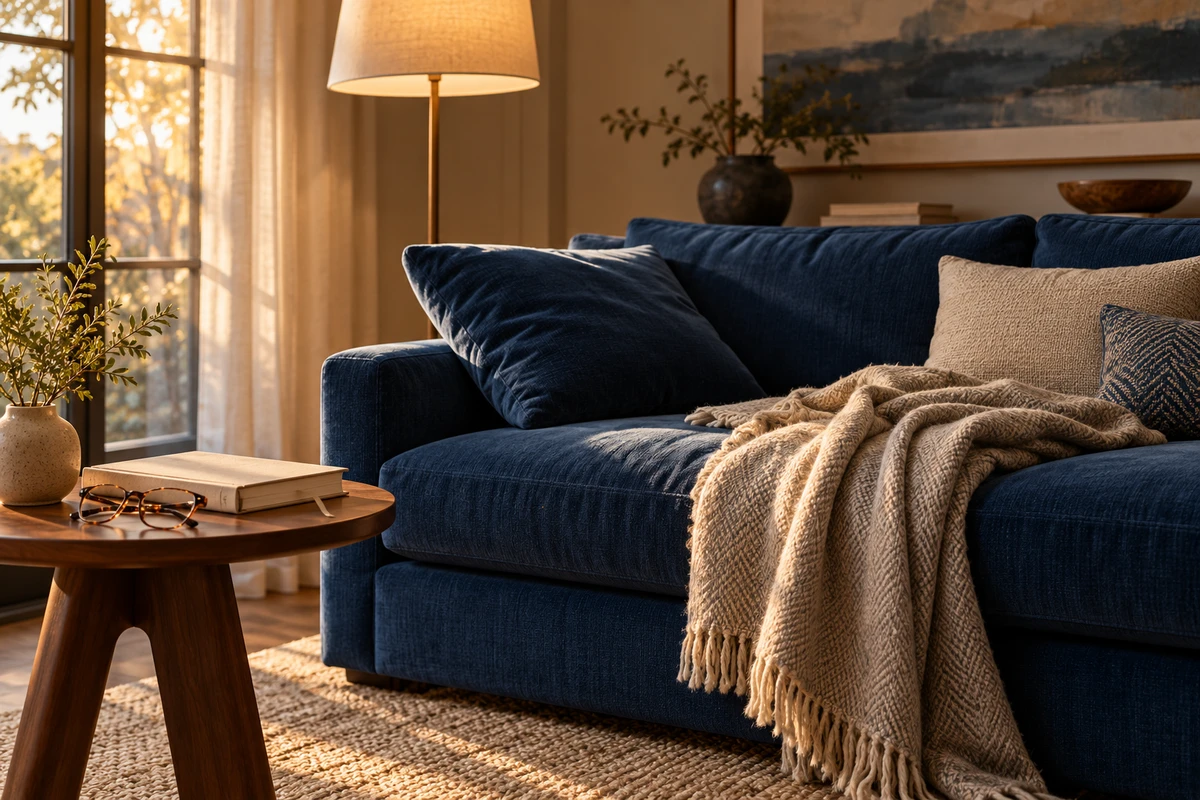
The Marriott material is a brand executive’s intention reported by Chris Kelly on October 19, 2026. The RBW portfolio is the creator’s own description, accessed October 20. No campaign footage was watched or analysed shot by shot for this article, and no household or audience study was conducted. The breakfast scenario and original AI cover are conceptual illustrations, not client results.