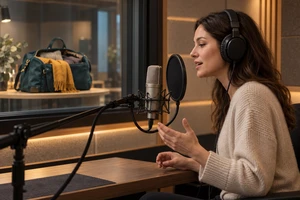
Both individual auditions look promising. One performer is relaxed and funny; the other is warm and clear. Put them on the same bench, however, and they may not feel like old friends. Perhaps each is waiting for their own line, offering a smile to the camera, without being affected by the other person's presence.
Commercial casting therefore asks two questions: who suits each role, and which combination makes the intended relationship legible? Photos, individual performances and role-specific material can begin to answer the first. The second calls for observing what happens when the performers share a scene.
Define the relationship before looking for chemistry
“They should feel like friends,” “good chemistry” and “natural together” express an aspiration, but not enough direction for a read. Friends may indulge one another or constantly tease. Colleagues may be comfortable or still testing their footing. Sharing a frame does not mean both should smile warmly throughout.
In his commercial chemistry-read advice, MXM Casting's Andy Betts emphasizes listening, responding and adapting to direction. The page displays September 23 without a confirmed year; it was checked on October 18, 2026. This is a practitioner's account of audition observations, not evidence of advertising effectiveness.
Replace a personality label with an action-based relationship. For example: she wants an old song to make her friend admit she still likes it; the friend pretends to be uninterested, then cannot resist joining in. That describes intentions and mutual influence more precisely than “two energetic best friends.”
The portable-speaker ad used below is entirely fictional. It represents no ONCE client, real performer, recorded audition or specific product capability. Two adult friends sit on a park bench. One puts down a speaker, about to play a song both know; the other recognizes what she is up to. The product participates in a shared listening moment. The scene makes no claim about sound quality, connection speed or output.
Does the partner change this performance?
The audition excerpt can focus on this small interaction rather than require the entire ad. Let both performers first play the situation as explained. Then observe who waits for a response, and who changes an approach because the response differs from what they expected.
Suppose the person choosing the song delivers a preplanned smile as soon as she sits down. Her partner follows a separate rhythm of surprise, head shake and laughter. Each performance may look complete in isolation. Together, they may still fail to create an act of teasing. If recognition comes later, does the first performer wait, try again or smile at exactly the same predetermined moment? Those differences matter more to this scene than the size of the smile.
Conversely, hesitation is not automatically a lack of connection. A glance at the speaker followed by a look at the friend might communicate “you're playing this again.” The pause can belong to their familiarity. Ask whether it relates to the partner's action, not whether a pause exists. A quiet combination may suit the spot; a constantly lively one may pull it toward a different style.
When comparing combinations, keep the scene's task and reasonable preparation conditions consistent. Do not give one pair a clear relationship brief while asking another to guess the situation, then attribute the difference entirely to the actors. You are considering how this combination plays this scene, not assigning permanent ratings for authenticity or likability.
Keep a continuous shared passage available, too. Cutting one actor's best initiation against a reaction from a different take may help imagine a finished edit. It does not establish that the pair actually responded that way together. When assessing interaction, look first at a version that happened, then discuss what editing might contribute.
Can both performers absorb one specific note?
In Bevan and Grant's casting interview, published by Casting Networks on October 21, 2025, Olivia Grant recalls Robin Wright adjusting dialogue that did not work aloud and incorporating other actors' contributions. This is a retrospective account of casting a television series, not a commercial case or audition footage viewed for this article.
The useful reminder is that a read can expose the script as well as the performers. An awkward line may need rewriting. A relationship requiring a lengthy explanation may not yet have a clear task. “Be more natural” should not become the actor's responsibility to repair every uncertainty.
For the fictional speaker scene, give the person choosing the song one concrete note: do not smile yet; wait until you know she has recognized it. Let the other performer retain her existing intention. Run the passage again. Does the first actor genuinely attend to her partner? Does that extra waiting change what the partner gives back?
This is easier to discuss than simultaneously asking both for more warmth, sophistication and youthful energy, because the adjustment concerns an observable point in the relationship. But the aim is not to reward obedience. An actor may propose another plausible approach. Judge whether it clarifies this scene, rather than treating every expression initially imagined by the director as the only valid answer.
Compatibility does not erase contrast
One character may be direct while the other watches before acting. That difference can be the scene's appeal. Making their delivery speed and expressions identical may produce synchronization rather than a relationship. Preserve differences that can respond to one another, rather than asking the performers to become alike.
A credible fictional relationship is also not the same as private intimacy between actors. Keep the read within an agreed performance task. Unexpected physical contact, probing personal questions or uncomfortable improvisation should not be used to manufacture a spark. Professional performance can establish familiarity without making a private relationship part of the assignment.
Choose a pair for a particular piece of work
Not every production needs a paired read. A solo presentation, separately filmed product-use shots or an ad whose characters never interact may call for attention to delivery, movement or a specific skill instead. Even with two people, ask whether their relationship carries the creative idea before turning a chemistry read into a ritual.
One fluent passage also cannot establish suitability for every language, scene or an entire series. If the key action is handling a product together, examine that action under appropriate conditions. If the important moment is an understated exchange, lively improvisation alone will not answer the question. Return to what the finished film actually needs.
Move the discussion one sentence beyond “I like this person”: what did she receive in this take that changed her next action? Identifying a concrete initiation and response makes it easier to explain why a combination belongs in the spot. A chemistry read supports a creative judgment. It is not audience research or a guarantee of sales or advertising performance.
If you are developing a two-person brand film, bring the short passage that genuinely requires mutual influence to ONCE's brand film production team. Find where the relationship happens before deciding who should sit together.
This is original creative-method analysis. No auditions or audience tests were conducted for it. The speaker scenario and generated cover are independent fictional concepts. Sources were checked on October 18, 2026.