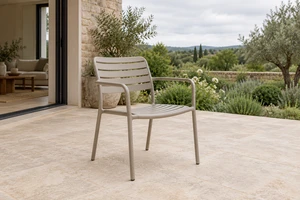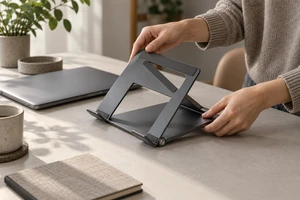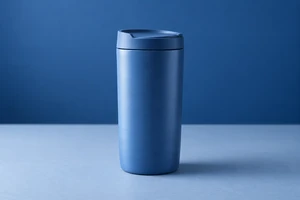
A hypothetical tea-accessory brand has three clips: a close view of pouring, a desk worker putting down their phone for a sip, and someone taking tea onto a balcony. The cameras, rooms and speaking styles differ. Before asking a production partner to make everything look alike, decide what the film should leave the viewer understanding.
For an overseas brand commissioning work around Chinese products, that decision belongs in the creative brief. A film about making a little personal time may benefit from different lives and rooms. A film explaining how to fit a filter needs the relevant operation clearly shown. The same folder will not necessarily support both.
This is a fictional development example, not an ONCE project or a tested campaign. It illustrates a production choice: when several people supply footage, the relationships between their observations become part of the creative work.
Distributed capture still needs a creative point of view
Chipotle’s August 31, 2026 announcement described a Behind the Foil campaign made from footage by 100 creators, without traditional scripts or shot lists, for national television and social channels. It also identified KIDS’ creative-strategy involvement and an intention to retain the distinctive qualities of the contributions.
We are using the written announcement, without claiming a shot-by-shot review of the linked films. It documents one production arrangement and its stated intent; it does not establish superior results, lower costs or the disappearance of directors.
ONCE’s inference concerns where production value can sit. When capture is distributed, selecting and connecting what people noticed can become a substantial commission. Whether an existing library justifies editorial development before another shoot depends on what is actually in it.
Work back from the thought the film should leave behind
In the tea example, the shared question might be: “How do these people begin a moment that belongs to them?” The close view supplies a tactile detail. The desk scene shows a choice to pause. The balcony gives the product another relationship to everyday life.
Those contributions need not have identical framing to belong together. Each cut should add something to the thought. Repeating the same information with another face may add little, although a repeated action can also supply deliberate rhythm. The editor should be able to explain its role in this particular film.
This also gives the team a practical distinction between expressive difference and a problem worth fixing. Unintelligible essential speech, an obscured operation or a misleading product colour can defeat the brief. A small camera movement or an individual pause may be useful. Assess the material rather than treating every irregularity as authenticity or every difference as damage.
The ONCE Three-Perspective Assembly
This is a proposed development exercise, not a performance formula. Three perspectives provide a manageable starting point; the number is not a claim about advertising effectiveness.
Write one viewer-facing question. Then select three meaningfully different answers from footage cleared for this project. Choose for the information or experience each contribution supplies, rather than matching compositions first.
Build an intelligible rough assembly with the context and original sound each passage needs. Temporarily withhold the strong music track that might make every transition feel equally smooth. At each cut, ask what the viewer learns next. If removing someone changes nothing, examine whether the passage is redundant or has a specific rhythmic purpose.
Ask a person outside the edit to describe the film in their own words and identify what they thought happened continuously. This is a comprehension check. It can reveal a misleading connection; it cannot establish audience trust or predict sales.
Keep distinct experiences distinct
Several people pouring tea can form a sequence of related observations. Cutting one person’s initial pour to another person’s full cup, under uninterrupted water sound, can instead suggest a single operation. Using that construction to imply speed or ease would ask the material to prove something it does not show.
In this example, retain enough person and place information for the change of experience to remain legible. When the task is to explain filter assembly, use a clear, correct operation from one source, or commission the missing footage. The multi-person structure should not conceal a missing step.
Sometimes the assembly exposes a different problem: the clips have no useful question in common. Separate creator films may then be a better outcome. Alternatively, identify the particular missing connection that new filming could supply. Generic praise will not necessarily become an observed group portrait through colour treatment and music alone.
Commission the editorial judgment, then decide what to shoot
Unmade’s current service page presents existing footage, creator content and product assets as starting points for ad development, with new filming available when needed. The undated page was checked on October 17, 2026. This establishes the provider’s public positioning, not an industry performance benchmark.
For a brand managing content across markets, a defined footage review and sample assembly can be a useful first commission. Ask for the common question, the sample and reasons to retain, separate or supplement the contributions. That is creative development with its own scope, not an assumed free sorting exercise before the “real” production.
For ONCE, a possible source of continuing value is the permitted record of why an edit worked for the brief: which perspective added a person, which repeated information, and which transition invited a misunderstanding. Actual time or margin benefits still need to be measured. Keeping the reasoning does not grant reuse rights to someone else’s footage.
Bring the proposed shared question, the usable clips and any product operation that must remain clear to the next production conversation. A sample can then show how much visual consistency the idea needs, and where a different perspective is doing valuable work.
Sources checked October 17, 2026. The tea example and original AI-generated cover are fictional concepts, not client work or images of the Chipotle campaign.