Slow motion can make a product seem worth a closer look. It does not automatically make it worth buying. What changes first is the viewing experience: a moment expands, allowing attention to settle on material, movement and mood. The question is whether that experience serves the product’s value or makes an efficient function look sluggish.
For slow motion product ads, “How many frames can we shoot?” is therefore not the only useful question. Is this time intended for enjoyment or judgment? When both tasks compete within one shot, a premium impression can come at the expense of understanding.
Luxury Perception Has Evidence, Not a Shot Guarantee
The INSEAD summary of SungJin Jung and David Dubois’s research reports twelve experiments involving chocolate, shampoo, mineral water and wine in the US, UK and France. It supports a pathway from slow motion through immersion and anticipated enjoyment to greater perceived luxuriousness. Blurring, buffering and very low or high immersion tendencies weaken the effect; desire is more strongly affected when luxury consumption is a salient goal.
That is not a universal uplift across products and audiences, nor a formula saying slower is always better. Its useful contribution is a more specific question about “premium”: does the viewer want to spend time with this product and imagine enjoying it? That is different from demonstrating durability, responsiveness or value for money.
Imagine two briefs for a hand cream. One concerns an evening care ritual, where slowly unfolding texture and gestures might support the idea. The other explains dose control after pressing the dispenser, where the relationship between operation and output matters more. An approach suited to the first should not automatically govern the second. This is a hypothetical creative exercise, not a product efficacy claim or client result.
Stretching an Action Can Change Its Character
Slow motion is not an expensive-looking filter applied to ordinary footage. A closing lid, fastening zip or flowing liquid might appear composed when slowed down, but might also seem heavy, sticky or effortful. These are creative judgments to test against actual images, not conclusions the research has established for every category.
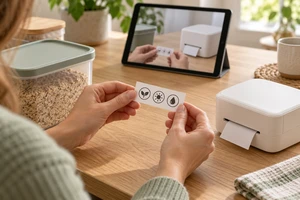
Consider a hypothetical magnetic storage box. A slowed detail could help viewers inspect approach, alignment and closure. But if the message is effortless, casual use, extending the entire action could undermine it. The product stays the same; the question the shot asks changes.
Nor should performers simply slow every gesture as a substitute for planning. A hand that hovers without completing an operation may suggest hesitation. Decide which change matters within the action before choosing how to capture and play it.
Another loss is less obvious: when everything is extended, the important detail may stop standing out. Concentrate slow motion on an experience worth entering. Calm can remain the tone of a whole film without slow motion becoming its only visual language.
Separate Felt Time From Performance Time
When viewers judge response, closure, recovery or task duration, playback speed is part of the information. Changing it changes the time they can infer from the image. Even without an explicit speed claim, consider whether the result could create an inaccurate impression.
An uninterrupted normal-speed demonstration can establish the action, followed by clearly identified slow playback for detail. Alternatively, an emotional ad and a functional explanation can be separate assets. One makes a moment worth attending to; the other establishes the rhythm of real use. Not every film needs both, but viewers should not have to guess when it serves both purposes.
Normal-speed footage is not automatically performance evidence either. Removing a wait or joining separate takes into an apparently continuous operation changes time information too. A duration comparison needs a defined start, finish and relevant conditions. An emotional shot does not need to pretend to be an experiment.
A tutorial has a different job again. Someone who already owns the product needs to follow an operation, not simply admire a moment. ONCE’s article on product tutorial videos develops that distinction. Keeping a speed reference here is a recommendation for understandable communication, not a legal conclusion replacing review of a particular ad.
High Frame Rates and Interpolation Provide Different Information
Section 9.2 of the ARRI ALEXA 35 / ALEXA 35 Live manual explains how a sensor frame rate above the project rate produces slow motion. For a simplified calculation, one second captured as 100 frames and played frame by frame at 25 frames per second, with none dropped, occupies four seconds: quarter speed. This is an arithmetic example, not a capability claim for every camera mode.
If that second contains only 25 recorded frames, stretching it to four seconds cannot create additional captured states. Adobe’s current time interpolation guide distinguishes repeating or removing frames, blending adjacent frames, and Optical Flow synthesis of intermediate frames. Its export documentation warns that large differences between frames can produce artifacts.
Interpolation is a creative tool, but synthesized intermediate states are not additional photographic records. When a shot explains precision fit, contact or deformation, compare it with the original capture rather than judge smoothness alone. An intentionally nonliteral emotional transition has a different purpose.
This is why “make it a little slower in post” is not always a small change. It can alter screen time, the character of an action and how images are formed. The moment that needs examining should determine whether higher-rate capture is useful, rather than equipment specifications leading the idea.
Compare Speeds to Learn What Viewers Actually Gain
If the team disagrees about slow motion, make a normal-speed and moderately slowed version from the same source. Keep grading, sound and copy as consistent as possible. Giving the slower version better music and a more polished palette makes preference impossible to attribute to speed alone.
There is an unavoidable trade-off: preserving the same complete action makes the slowed version longer; forcing equal duration may remove part of the action. A first comparison can preserve the action and explore impressions while acknowledging the changed exposure time. A second can compare complete creative executions at equal ad duration. They answer different questions and should not become one number claiming that slow motion is more effective.
Separate the questions too. Ask what the product is doing and how quickly it would operate in reality, then whether it feels composed, refined, drawn-out or effortful, and only then ask about interest or preference. A few interviews can reveal misinterpretations, not predict overall conversion. Formal media testing needs a defined objective; completion rate alone does not measure a premium impression.
For a product campaign, bring a recording of the real action, the feeling you want to create and the function that must remain clear to ONCE’s product video and brand advertising solutions. The reason to keep slow motion is not that it slows the film down. It is that it offers an experience normal speed cannot readily provide without distorting the product.
Sources checked October 14, 2026. The research discussion uses INSEAD’s official summary, not a review of all experimental materials. Technical explanations draw on ARRI and Adobe documentation. The cream, storage box and version comparisons are hypothetical examples or creative recommendations; no effectiveness test was conducted. The cover is an AI-generated creative illustration.