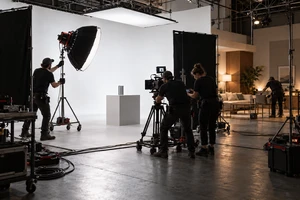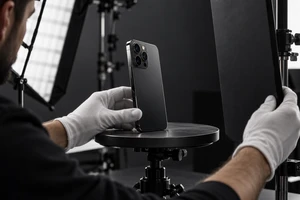
“One shoot, multiple platforms” is often treated as a post-production task: finish a 16:9 hero film, crop it to 9:16 and 1:1, then export several durations. The biggest risks, however, usually appear before the camera rolls. A composition that works in landscape may lose the relationship between the person, product and action in portrait. An opening that can unfold gradually on a website may feel empty in a fast social feed.
A more reliable production plan separates two decisions. First, define the job each platform version must do. Then classify every shot as directly reusable, reconstructable, or native to a specific format. That is how one production becomes a useful asset system instead of one master file forced into every channel.
Define the delivery matrix before the storyboard
A delivery list should say more than “one landscape film and three vertical cutdowns.” Before storyboarding, define each version’s use case, aspect ratio, target duration, opening task, key message, dependence on sound, caption language and call to action.
The website version may carry the full narrative. A sales presentation version may need natural pause points so a presenter can stop, explain or jump ahead. A vertical social version may need to reveal the person, product action or result much earlier. They can share one brand proposition without sharing one pace.
Google Ads currently supports 16:9, 9:16 and 1:1 video assets. Its YouTube Shorts guidance recommends vertical assets and notes that only the first 60 seconds play within the Shorts feed. LinkedIn video ads support 16:9, 1:1, 4:5 and 9:16. Technical acceptance does not mean one composition will communicate equally well in every format.
That is why the delivery matrix belongs before the director’s boards. It determines where a frame needs crop room, which actions need a short-form entry point, and which text must remain editable. ONCE’s brand film and campaign content service approaches the hero film and extendable assets as one production plan.
Classify shots instead of calling everything adaptable
Directly reusable shots
These shots keep the main person, product and defining action inside the shared safe area of landscape and portrait frames. A wider field of view, less essential information at the edges and sufficient source resolution give the editor room to recompose.
But a central composition does not mean stacking everything in the middle. The director still needs to check eye lines, movement and product orientation in both frames. A person moving from the left side toward a product on the right may become a person merely passing through the portrait crop, with the goal of the action removed.
Reconstructable shots
Some shots cannot be cropped directly but can be adapted by recording a second composition from the same setup, extending the head and tail of an action, or separating the product close-up from the environmental shot. The lighting, location, cast and performance remain shared; the visual emphasis changes.
The shot list should label “landscape primary,” “portrait pickup” and “clean plate without captions.” That language is more actionable than “adapt in post,” and it allows production to schedule the extra coverage honestly.
Format-native shots
Portrait may need its own design when an opening depends on a person entering quickly, a product moving vertically, a wide group blocking pattern, or a phone interface that must occupy most of the screen. Cropping the landscape frame can remove the cause of an action or make the product unreadable.
It is still one production because the set, lighting, cast and product are shared. It is not the same shot. Native coverage should be in the storyboard and schedule, not added as an emergency post-production request.
Different durations need different entry points
A 60-second film, a 30-second cut, a 15-second edit and a 6-second bumper are not simply the same sequence with progressively more shots removed. The shorter the version, the more work the opening must do. Does it establish a brand world, reveal the problem, or show the product action first?
Add a “short-form entry” marker beside the storyboard. A product reveal, human reaction or visible change within the hero film can also become the first shot of a 15-second version. Without a self-contained entry point, editors are left to repair the opening with speed ramps, abrupt jump cuts or oversized copy.
For each scene, capture three practical assets: a clean moment before the action, a hold after the action, and a product reaction shot that does not depend on dialogue. These give cutdowns, transitions and language versions room to breathe without turning the shoot into aimless extra coverage.
Captions and mute viewing begin on set
Captions are not just a layer added after picture lock. The composition needs room for lower-third captions, platform controls and calls to action. A gesture, product feature and required disclosure should not all compete for the same corner.
Plan both a sound-led version and a version that remains understandable without sound. This does not mean covering every shot with copy. It means the sequence of actions, product states and concise on-screen information can still carry the central idea when narration is absent. Deliver music, voice-over, effects and production sound as separate stems so a new language or shorter edit does not require rebuilding the entire mix.
Prices, dates, promotional claims and regional information should usually remain editable layers rather than being permanently embedded in props or screens. For a broader view of composition and version control, see ONCE’s guide to planning aspect ratios before production.
Archive for the next version, not only launch day
One final master is rarely enough for continuing multi-platform use. Before delivery, confirm:
- Each approved version’s aspect ratio, duration, language and caption status
- A clean master without captions, platform stickers or calls to action
- Separate music, voice-over, sound-effect and production-sound stems
- Editable copy, graphics, product interfaces and end-card templates
- Clear names for selected takes and important alternates
- Usage permissions, font and music licences, and the retention terms for project files
Not every item is included in every quote, but the scope should be agreed before signing. Otherwise, the brand may receive files for one launch rather than assets that remain useful.
Approve the plan with four questions
Does every platform version have a defined job, not only a size? Is each critical shot labelled as directly reusable, reconstructable or format-native? Do the short-form openings and mute-viewing logic exist on the storyboard? Will the agreed deliverables support the next version without searching for missing materials?
If those questions are unanswered, the production date is not yet the most important decision. Explore ONCE video strategy and production or send the brand, product, channels and expected version list for a content growth consultation. The delivery matrix should be clear before the conversation moves to shots and budget.