Investment promotion film planning often turns into a contest over whose material has not yet appeared. Location, master plans, industry clusters, incentives, available premises, anchor projects, talent support and contact details are all pushed into a three- or five-minute film. The narration becomes dense, yet an investor still cannot find the information needed for a decision.
A more durable approach is to separate the content into three layers. The hero film carries long-lived facts that the camera can verify. Policy terms and changing numbers sit in replaceable modules. Site visits, document downloads and project enquiries are handled through a separate action layer. This does not remove information; it puts each claim where it can be checked and updated properly.
Define the investor before ordering the shots
An advanced manufacturing company, an R&D headquarters and a professional-services firm should not receive the same story about a location being attractive, convenient and supportive. Before production, name one priority investor and the decision that audience is trying to make.
A manufacturer may first test whether the site can accommodate equipment, whether suppliers are accessible, and whether logistics and labour make sense. An R&D team may care more about laboratories, offices, talent and technical networks. An overseas investor also needs a clear institutional entry point, reliable bilingual information and a local service path. The audience determines what counts as useful evidence.
In June 2026, the Shenzhen Municipal Commerce Bureau published Chinese and English versions of its current investment guide. Shenzhen's official industrial-space platform separately presents premises, uses, floor areas and application entry points. Together they suggest a useful division of labour: the film creates understanding and interest, while detailed documents and live availability belong on updateable pages rather than being frozen into narration.
Build three delivery layers
Layer one: the durable hero film
The hero film should prioritise facts that are likely to remain valid and can be filmed: geographic relationships, real industry activity, R&D and manufacturing environments, public-service entry points, transport connections and the people responsible for investor support. It answers three questions: What is this place? Why is it relevant to me? What can I actually observe?
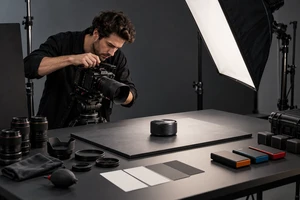
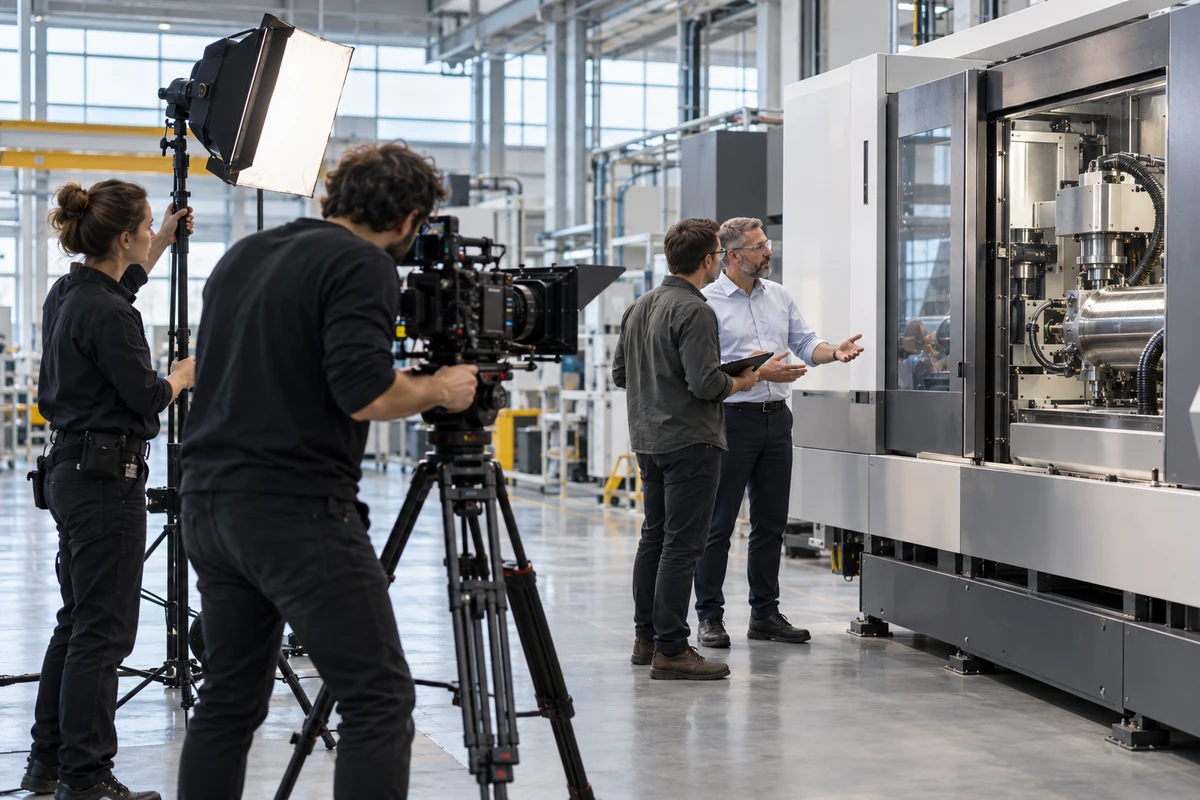
Not every claim needs another aerial shot. More useful coverage connects space with action: how equipment enters a facility, how engineers use a shared platform, how a prototype moves from laboratory to testing, or how a visiting team reaches the site from a transport hub. Real activity gives an investor more to assess than a generic claim about a complete ecosystem.
Layer two: replaceable evidence modules
Policy names, application windows, available floor area, lease terms, incentive figures, event dates and contact details can change. Shenzhen's 2026 rules for industrial and other industrial land expressly replaced an earlier 2025 version. That is a reminder to record version dates and owners for policy-related claims. It does not justify generalising one rule to every project or presenting possible eligibility as a guaranteed benefit.
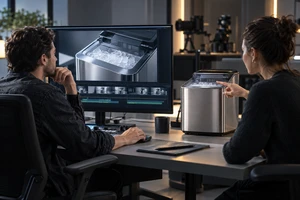
Changing information is better delivered through separate motion cards, short insert versions, web data panels or downloadable documents. Each item should retain its source, eligible audience, publication date, approver and next review date. The hero film explains where to check and whom to ask; it should not make promises on behalf of a policy document.
Layer three: the action route
The film should end with one primary action: book a site visit, submit a space requirement, download an investment guide or contact a project officer. QR codes, short links, email addresses and phone numbers should be replaceable without rebuilding a full animation and voice track.
For a short version distributed on a B2B platform such as LinkedIn, confirm the live specification again at delivery. LinkedIn's current video-ad page lists landscape, square and vertical ratios and requires a destination URL, but that is not a permanent universal standard for every channel.
Create an evidence ownership sheet before filming
The script needs more than copy and pictures. It also needs an evidence ownership sheet agreed by investment, legal or policy, park operations and production teams. For each claim, record:
- the decision it supports, such as “suited to a specific R&D use” rather than “a national leader”;
- the primary source, such as an official document, an operating record, a currently available space or a filmable site;
- the scope: location, industry, eligible entity and date;
- the visual method: live action, a verified map, a data card or an accountable speaker;
- publication permission for locations, companies, people, data and marks;
- the person who rechecks it before release and the asset that must be replaced when it changes.
A weak counterexample is a five-minute narration claiming the best policy, the lowest cost and the fastest approval without conditions, dates or a verification route. However polished the photography, the film will struggle under serious review and may become unusable as soon as a policy or vacancy changes.
Organise production around location, industry and landing
Location evidence is not a montage of landmarks. It is the real route taken by the target investor. Film the connection from a transport node to the site, the movement of people or goods, and the relationship between the location and customers, suppliers or the talent catchment. Map graphics should explain verified positions and travel relationships without overstating reach.
Industry evidence is not a logo wall. It can show observable R&D, testing, manufacturing, demonstration and shared technical services. If a company name, project status or capacity figure is not cleared for public use, explain the industrial relationship through authorised sites and processes rather than inferring business performance.
Landing evidence turns “service” into a next step: who receives the enquiry, what information is required, how a site visit is booked and which team answers which question. Shenzhen's official industrial-space service combines premises with a demand-submission route. That structure is much closer to the investor's task than a promise of end-to-end support.
If the project uses generative maps, future environments or synthetic industry imagery, label those assets clearly in the script and asset register. Generated scenes must not be presented as completed facilities. China's Measures for Labelling AI-Generated Synthetic Content took effect on 1 September 2025 and place explicit and implicit labelling duties on relevant service and distribution providers. The treatment of a specific investment film still needs to be confirmed against the production method, publishing entity and distribution channel.
Deliver an asset pack, not only one master
A maintainable investment promotion production can include:
- a Chinese hero film that does not depend on short-lived policy numbers;
- an English or market-language version with terminology reviewed by the business team;
- short modules for industry, space and investor services that can be combined by audience;
- replaceable cards for policy, data, events and contact information;
- clean masters, split audio, subtitle files and selected key frames;
- a source and rights register with review dates for every changing claim.
The ONCE corporate film production service shows how real people, operations and business capability can be organised into content that buyers can assess. For a wider comparison of production tasks, see ONCE video production solutions. The ONCE Shenzhen video production team also outlines its corporate and B2B scope, while locations, participants, policy materials and version counts still need to be confirmed for each project.
Use five questions for final acceptance
Before release, ask a colleague who was not involved in production to watch the film and answer five questions: Who is being invited? Why should that investor continue? What on-screen evidence supports the industry claim? Which policy and space details still require verification? Where does the viewer go next, whom do they contact, and what do they submit?
If the answers amount to “the city is attractive, opportunities are abundant, and people should get in touch,” the content remains at image-film level. A useful investment promotion film moves interest into verification and action. When policy, available space or contact details change, the corresponding module can be updated without rebuilding the hero film.
If you are preparing an investment campaign for a park, an industry group or a regional platform, share the target investors, current policy and space materials, filmable locations, distribution channels, language versions and target date with ONCE. We can first determine what belongs in the durable hero film and what should remain updateable, then scope the production accordingly.