The most crowded part of a 15-second product-video storyboard is rarely the shot count. It is the row where four items are all marked essential: the design must look premium, the size must be obvious, the function must be complete, and the use case cannot be missing. Give each task three or four seconds and the viewer sees plenty, but no buying question is properly answered.
First, 15 seconds is not a universal ecommerce platform rule. Amazon currently permits much longer product videos and advises sellers to surface an important feature early. Google Merchant Center accepts product videos between 6 and 240 seconds. This article treats 15 seconds as a deliberately short hero version chosen by the brand. The shorter the edit, the less it can behave like a compressed instruction manual.
Start with the mistake the buyer is most afraid of making
There is no fixed order for appearance, scale, function, and context. The order depends on the misunderstanding most likely to stop the purchase.
Lead with appearance when shape, material, finish, or color is the buying reason. The job is not to fill the edit with close-ups. Establish the complete silhouette, then let light, touch, or a small movement reveal how the material behaves. Texture without a whole-product view may look refined while leaving the item unidentified.
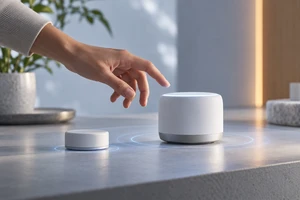
Lead with scale for portable devices, wearables, storage products, and anything that must fit a defined space. Specifications can remain on the product page. The video should use a hand, desk, bag, doorway, or real companion object to make scale legible. The reference must be truthful; a wide lens should not quietly make the product larger or smaller.
Lead with function when the buying reason depends on one visible action and result. Keep the product, target object, and result in one causal chain. The aim is not to cycle through every mode. Choose the function that removes the greatest buying risk and show its starting state, action, and completion.
Lead with context when “Will this fit my space, connect to my device, or match my routine?” matters more than a single specification. Context is not decorative set dressing. It must explain the relationship between the product and a person, space, interface, or task.
Amazon's official product-video guidance treats a 360-degree overview, action footage, dimensions, and other features as possible ingredients. It also frames video as a way to reduce buyer guesswork for products with several features. That is a production menu, not an instruction to force every ingredient into one short edit.
One portable projector can support four different 15-second answers
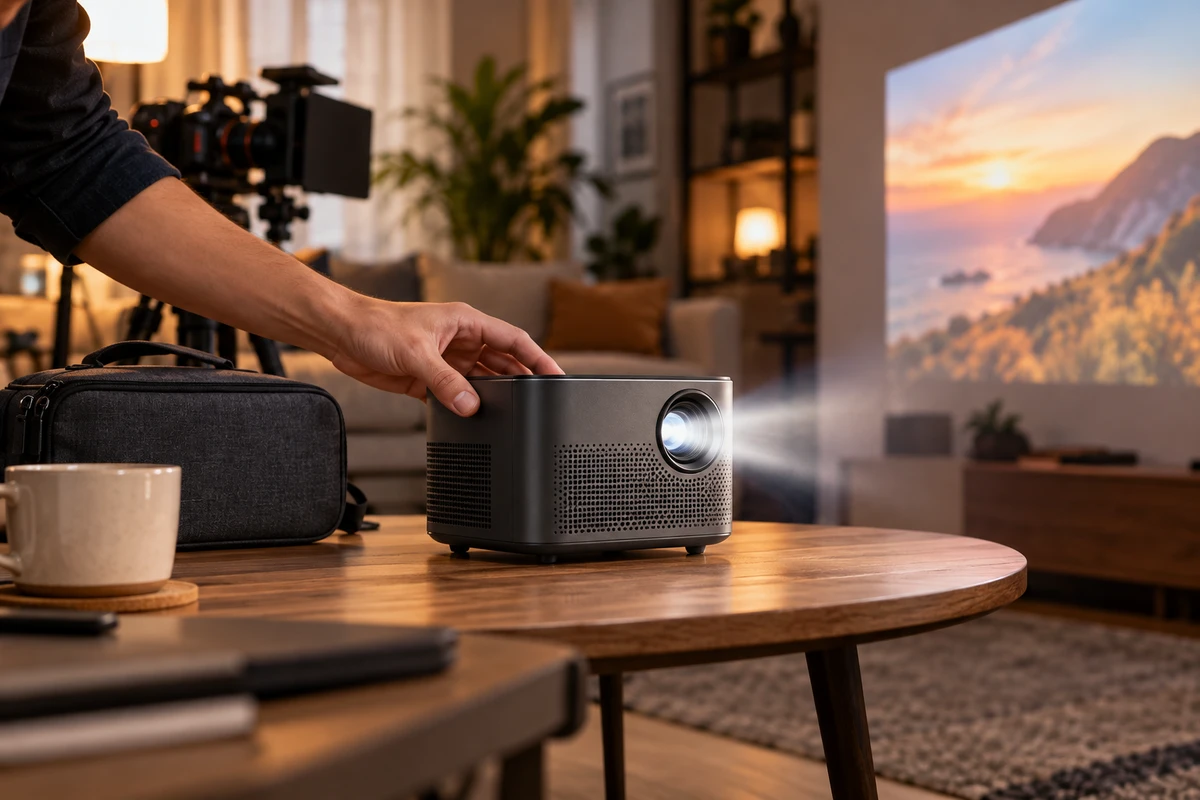
Consider a hypothetical portable projector with no claimed client results. If the main question is whether it belongs in a well-designed home, the edit can start with its complete form and material relationships. One power-on or lens movement is enough to keep the object alive; the room simply grounds the design.
If the question is whether it is genuinely portable, the order should change: hold it in one hand, place it in a bag, set it on a desk, then reveal one relevant port or stand action. A cinematic beauty shot at the start would delay the answer.
If the question is whether setup is understandable, the edit should follow one continuous task: position, connect or adjust, and reach a visible result. Appearance shots are still useful, but they preserve product identity instead of consuming the main duration.
If the question is what kind of room it suits, the relationship between product, wall, table, viewing distance, and person becomes the subject. Every frame must use real or clearly disclosed demonstration conditions. A concept environment must not be edited as if it were a verified performance result.
All four films can feature the same SKU, but they cannot use the same shot order. Decide the buying question before the hero edit, instead of filming a pile of attractive shots and asking the editor to discover the argument afterward.
Give the 15-second edit one main question
A short hero version can be divided into four production blocks, but this is an allocation method, not a platform template:
- Use the first two seconds to establish the object or the question.
- Give the next six seconds to one primary answer: appearance, scale, function, or context.
- Use four seconds for one supporting relationship, such as a scale reference inside a function-led film.
- Keep the last three seconds for the completed state, a clean product view, or a natural ending that can feed other versions.
The real bottleneck is usually not duration. It is a storyboard that never names a priority. If all four information types receive equal weight, the edit relies on continuous captions to announce selling points. Once the sound is off or the viewer skips, the images have no causal structure.
Google Merchant Center's product video specification permits multiple video links for one product and recommends product-specific footage that shows the item in use or from different angles. Production teams do not need to compress every job into one master. Each version can answer one clear question.
Scale is a relationship, not just a number
A caption that says “18 cm high” does not necessarily make size intuitive. Scale needs a familiar reference and disciplined cinematography.
Lock three conditions before shooting: the lens must not exaggerate perspective into a misleading size claim; the reference object and its position must remain consistent; and any contact between the product and a hand, body, surface, or accessory must not be reshaped in post simply to improve the composition. If a 3D or AI-generated environment is used, review silhouette, color, ports, included parts, and relative size frame by frame.
TikTok Shop US's current AI-assisted product content requirements require product attributes, video, imagery, and SKU-level claims to stay aligned. AI content must not contradict material, volume, thickness, length, quantity, or supported compatibility. Even outside TikTok Shop, the principle is useful: a scale shot is a product fact before it is a composition.
Information left out of the hero edit should still be captured
Choosing one main question for the 15-second version does not mean filming only that answer. A more useful ecommerce production should leave behind several independent asset groups:
- one 15-second hero version for the highest-priority buying question;
- clean appearance, scale, function, and context clips for detail pages and sales use;
- full takes containing the start, process, and result of each key action;
- protected compositions for landscape, vertical, and square versions;
- clean masters without captions or music, plus product stills or key frames.
Shopify's product media documentation treats images, videos, and 3D models as complementary product media. It notes that 3D models can help shoppers understand scale, proportions, and details. The hero film is not the only container. A production package should be judged by the buying questions the entire asset set can answer, not by the number of claims squeezed into one cut.
Rewrite selling points as shots that can be approved
Turn “premium appearance” into “the complete silhouette, material response, and one defining detail work in the same shot group.” Turn “compact and portable” into “the product remains true to scale against a hand, bag, and desk.” Turn “easy to use” into “the continuous action from initial state to visible result is understandable.” Turn “made for the home” into “the space, person, interface, and action do not contradict one another.”
This translation changes the required sample, props, location, lens choice, and shooting order. It also turns feedback from “It does not feel premium enough” into something the team can inspect.
For a related method, see ONCE's guide to showing product features clearly in ecommerce videos. For production scope and deliverables, visit our ecommerce product video solution.
Return to that crowded 15-second storyboard. The answer is not to discard three information types. Give one question the lead and turn the other three into supporting shots and reusable assets. If you are preparing a launch, contact ONCE VISUAL for an ecommerce video production checklist; we will first decide which buying uncertainty the short film must remove.