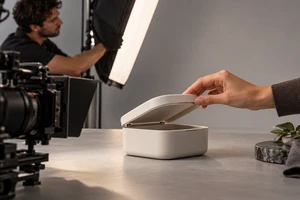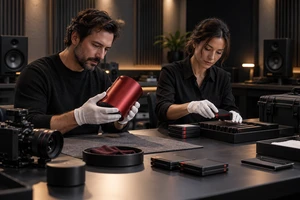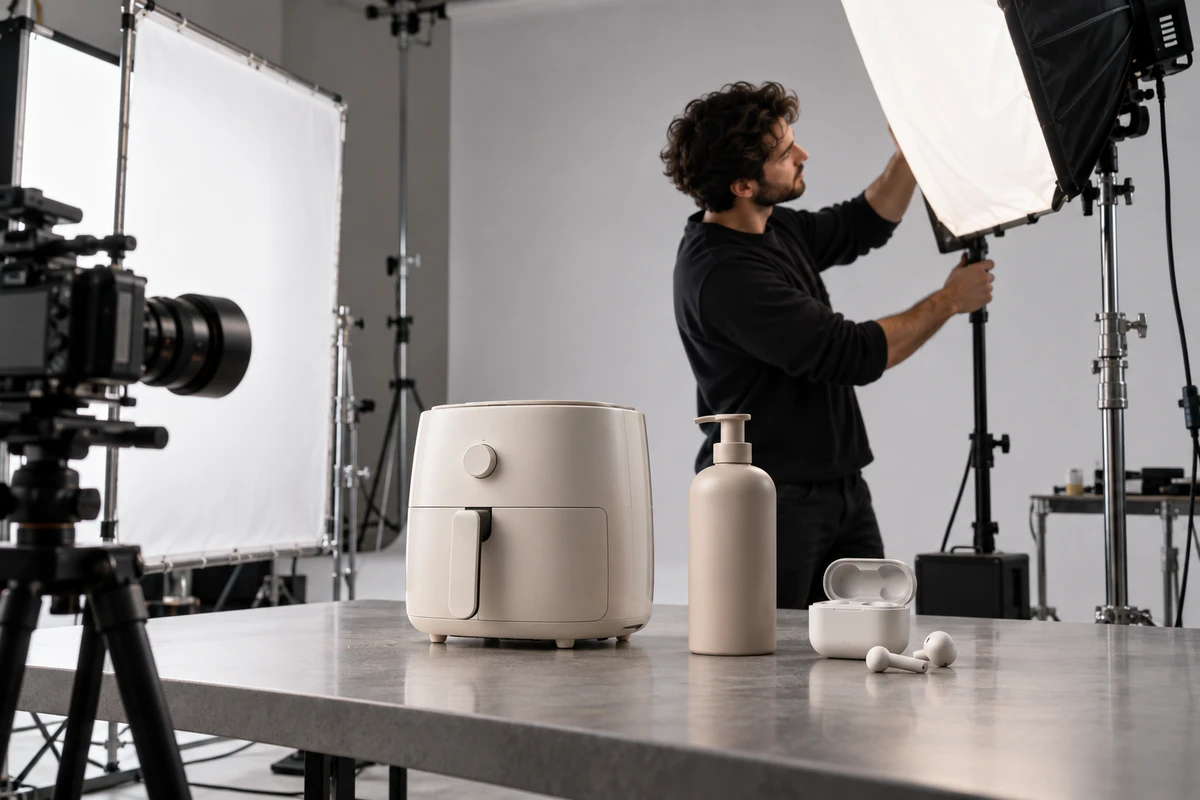
If a brand plans to entrust a growing product catalog to one long-term partner, choosing an ecommerce video production company should not begin with the glossiest reel or the lowest per-video quote. A portfolio shows what a team has completed before. It does not necessarily show whether that team can understand an unfamiliar product quickly, reproduce the quality of its first sample across a batch, or deliver versions that are ready for the intended platform.
A more revealing approach is a clearly scoped, paid single-SKU pilot. This is not an invitation to pitch for free, nor a way to fragment a real project and squeeze the budget. It is a controlled test of how a team moves from product understanding to filming, repeatability, delivery and change management.
Give every candidate the same input and compare their judgment
A pilot brief cannot stop at “make it feel premium.” Give each candidate the same minimum input: the product and accessories, the target buyer, the primary sales channel, three approved claims, factual mistakes that must never appear, reference content and a real launch date.
Include at least one demonstration with execution risk. A charging device must show the correct port and connection state. A cleaning product needs a visible action path. A folding mechanism needs a readable start, transition and completed state. The action most easily hidden by beautiful lighting is often the most useful test.
Before reviewing a moodboard, ask the team to return five items on one page: what the viewer needs to confirm first; how each claim will be shown; sample and production risks; which shots could be reused across other SKUs; and which platform versions will be delivered. The real comparison is whether product language becomes filmable tasks.
Test one: does product understanding become visible action?
Understanding a product is not the same as repeating its specifications. Check whether the team separates appearance from physical truth, defines what counts as a successful demonstration, and identifies states that can invalidate the next take—fingerprints, reflections, firmware screens, liquid residue, accessory revisions or the need to reset the sample.
The pilot does not need to cover every selling point, but it should explain one feature completely. ONCE's guide to showing product features clearly connects buyer questions with visible actions. For vendor evaluation, ask the candidate to build one minimal evidence chain using the same logic.
Test two: can the first success be reproduced across a batch?
Batch capability is not a verbal claim about daily output. It becomes visible when a second SKU enters the plan and the team can explain what stays fixed and what must be rebuilt.
Ask for an SKU reuse map after the pilot. The fixed layer may include lighting references, shot naming, color standards, caption rules and the acceptance sheet. The variable layer covers size, material, ports, actions, accessories and the leading claim. The risk layer flags changes that require different lighting, props, talent or camera positions.
Simply replacing one object after another on a turntable may be fast, but it does not prove the resulting content will be useful. Similar-looking SKUs may share a set and lighting. Different action logic needs a revised demonstration. Reflective, transparent, liquid-filled or screen-based products each require their own control tests.
AI workflows should face the same test. Alibaba Cloud's current ecommerce video documentation describes using product reference images as a source of truth and checking color, pattern, outline and structural changes. Whether a vendor uses live action, CGI or generative tools, it should explain how product fidelity is checked and what happens after a failed output—not only show a successful example.
Test three: platform delivery is more than three export sizes
Platform requirements point to different communication tasks, not just different dimensions. Amazon asks sellers to classify uploaded videos as product overviews, unboxings, how-to, setup, troubleshooting, brand stories or other types, and to select the video's language. TikTok's current performance-ad guidance recommends 9:16, at least 720p, UI-safe composition and an early content proposition. Google Merchant Center's video_link guidance asks for content tied to the specific product, encourages in-use footage and supports multiple video links for one item.
For a pilot, require at least four deliverables:
- a primary-use version whose sequence fits the intended product page or placement;
- a clean version without burned-in text, ready for localization or promotional changes;
- a target-aspect-ratio version in which the hand, product and visible result remain intact;
- a delivery manifest listing filename, aspect ratio, duration, language, caption state and mapped SKU.
A supplier that hands over horizontal, vertical and square files without explaining what each version is meant to do may leave the brand with a large folder of content that still cannot go live.
Test four: expose the change-management process
A smooth first sample does not prove operational reliability. Keep one controlled variable in the pilot: swap to another color SKU, revise one claim, add a vertical deliverable or provide a sample with an unstable state.
Observe how the team handles the change. Does it explain impact before updating the storyboard, schedule and price? Are earlier versions retained instead of being overwritten by “final_v2”? Can it identify what genuinely needs to be reshot instead of hiding missing footage in the edit? Does it verify uncertain platform rules before making a promise?
The goal is not to manufacture chaos. It is to see whether decision rights, records and responsibilities remain clear when the work changes.
Make the final decision from four concrete outputs
A useful pilot should leave the brand with four outputs: one sample that fully explains a product benefit, a reusable product-understanding card, an SKU reuse-and-change map, and a platform delivery and exception list. These are easier to compare than the statement “we have extensive experience.”
The scorecard can remain simple: Are product facts accurate? Is the key action understandable? Can the process extend to a second SKU? Are the platform files ready to use? Does every change leave a clear record? Creative taste still matters, but it should be judged after these operational basics pass.
This method suits brands with frequent launches, multiple SKUs or cross-platform delivery needs. It is less useful for a one-off brand film, an idea still in open creative exploration, or a concept whose value depends on a complete narrative and performance. In those cases, a full treatment and production plan are a fairer test.
To prepare a pilot, review ONCE's ecommerce product video production service, then send one real SKU, the target platform, three approved claims and the expected batch size through ONCE VISUAL to request an ecommerce video production checklist.