When planning a brand film crew, the question “How many people do we need for a two-minute video?” is usually the wrong place to start. Duration controls the length of the finished film, not the number of decisions that must happen at once. A 30-second commercial may involve talent direction, detailed product shots, set construction, motion-control work and several delivery versions. A three-minute interview may need only one location and a compact camera setup.
A better procurement question is whether the project has dense creative decisions, parallel on-set tasks, demanding environment control or many delivery branches. People can cover more than one role, but every responsibility still needs a named owner.
Assess four kinds of complexity before counting crew
Creative decision density comes first. Does the script require performance direction? Can the brand voice emerge naturally from an interview, or must the team control performance, product angle and sound shot by shot? The more creative calls the director must make, the less sensible it is for that person to manage call sheets, transport and location logistics at the same time.
Parallel on-set work is the second factor. In a simple interview, camera, lighting and sound tasks may happen in a stable environment. When product movement, talent blocking, a second camera and location sound all happen together, one multi-skilled person cannot monitor every risk. The UK Government Digital Service has described the same practical trade-off: roles may be combined, but separating camera and sound duties reduces the number of tasks one person must juggle.
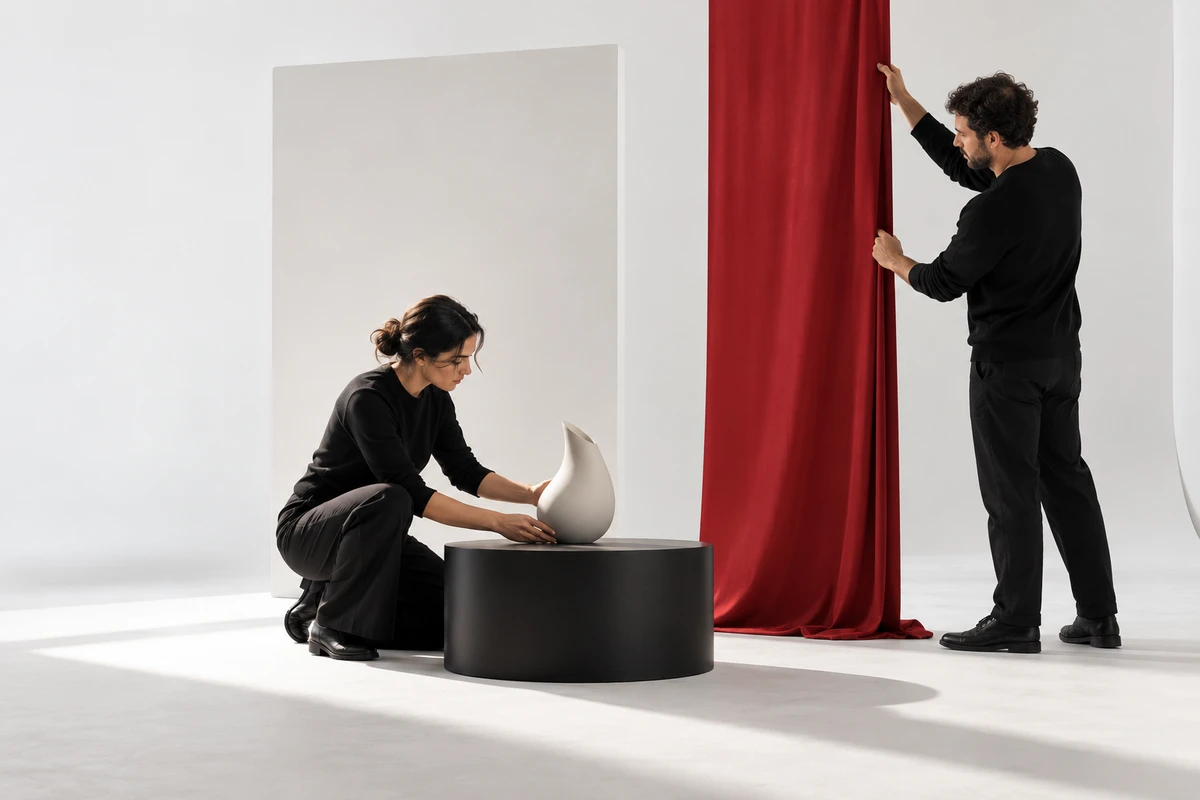
Environment control is the third factor. An interview in an existing office is not the same job as a staged brand scene. A controlled set requires decisions about colour, surfaces, props, wardrobe, product condition and reset paths. Production design is not decoration; it turns the director’s intent into a space that can be filmed consistently and reset between takes.
Delivery branching is the fourth factor. One landscape master has a very different production footprint from landscape, vertical, clean, subtitled, multilingual and multiple cut-down versions. Amazon Ads’ public production guide places channel specifications, aspect ratios and formats in the pre-production scope. For buyers, the lesson is simple: the more versions you need, the earlier production and post-production leads should join the conversation.
What the four core roles protect
Director: why the film is made this way
The director turns the brief, script and visual references into one coherent expression. They decide how talent should move, when the product appears, how shots connect and which shot takes priority when time is tight. The director’s value is not simply asking for another take; it is making creative priorities explicit when trade-offs occur.
For a stable interview-led project, the director may also conduct interviews or work as part of a compact director-camera partnership. Once a production includes ensemble performance, complex blocking, detailed product action or heavy VFX continuity, the director should not also carry production logistics.
Producer: how the work is completed on time and within scope
The producer translates creative choices into schedules, locations, crew, equipment, transport, permissions and risk plans. The director owns creative judgement; the producer makes those decisions executable in real conditions. Public role descriptions from the U.S. Bureau of Labor Statistics and the Texas Film Commission distinguish the producer’s budget, schedule and staffing responsibilities from the director’s creative responsibilities.
The client side should also nominate one project owner: who consolidates feedback, approves scope changes and confirms extra shooting or additional versions. If four brand stakeholders give separate instructions to camera, art and edit teams, even a complete crew will lose a common direction.
Director of photography: how the image works
The director of photography designs the camera, lighting, framing and movement system that serves the script, working with the director and production designer on colour and space. For reflective products, complicated movement, multi-camera work or specialist lighting, distinguish the DP from a camera operator: one owns the visual system, while the other executes a specific camera position within it.
Production design and styling: what appears in front of the lens
Production design covers the environment, props, surfaces and spatial order; when people appear, it also connects with wardrobe, makeup and performance direction. A simple office interview may need only basic dressing coordinated by the producer and director. A built set, controlled brand palette, several connected environments or precise product presentation needs a dedicated owner.
Three crew levels are three ways of dividing responsibility
Lean: stable setting, single task, limited versions
This model fits one or a few interview subjects, a straightforward office location, basic lighting and a modest amount of B-roll for a website or internal channel. The director may conduct interviews, the camera lead may handle lighting, and the producer may manage the call sheet and location. Sound must still have an explicit owner, and post-production should confirm capture specifications before the shoot.
Lean does not mean “whoever is free does it.” Before the camera rolls, decide who has final creative authority, who checks sound, who manages media and who approves the final film.
Standard: brand story, people and product, multiple deliverables
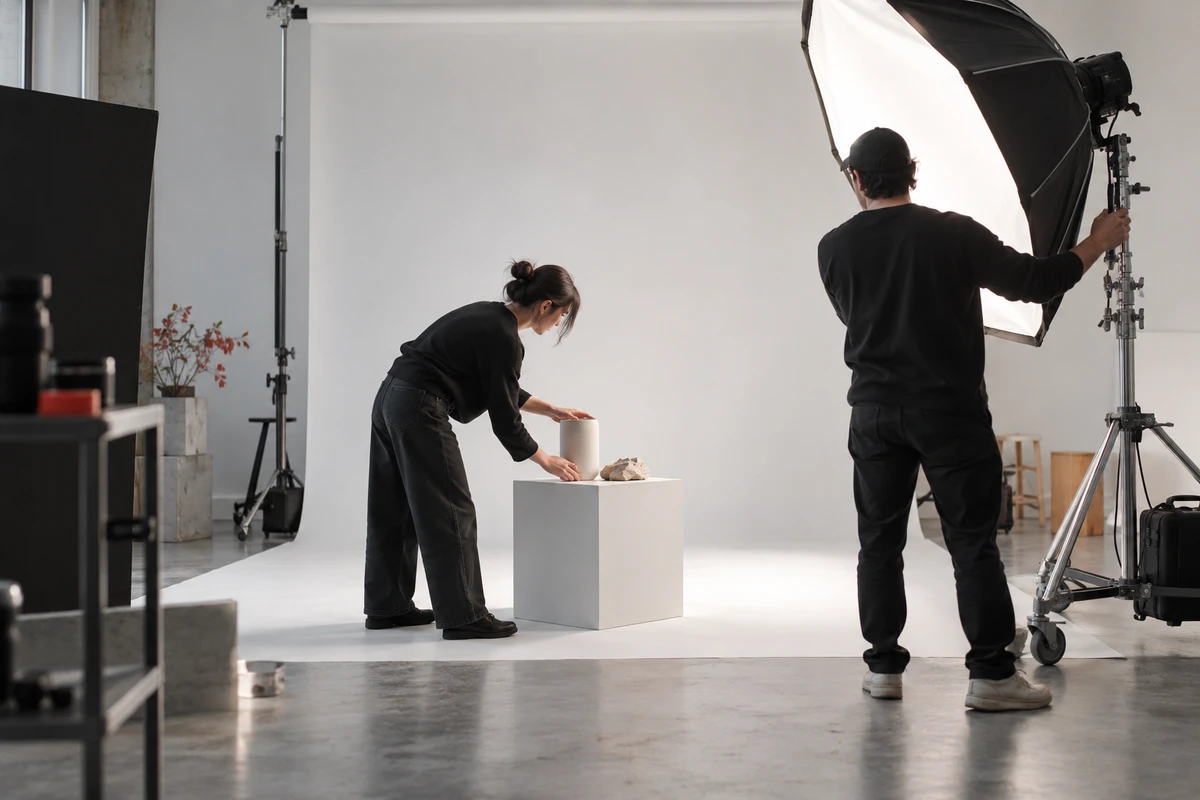
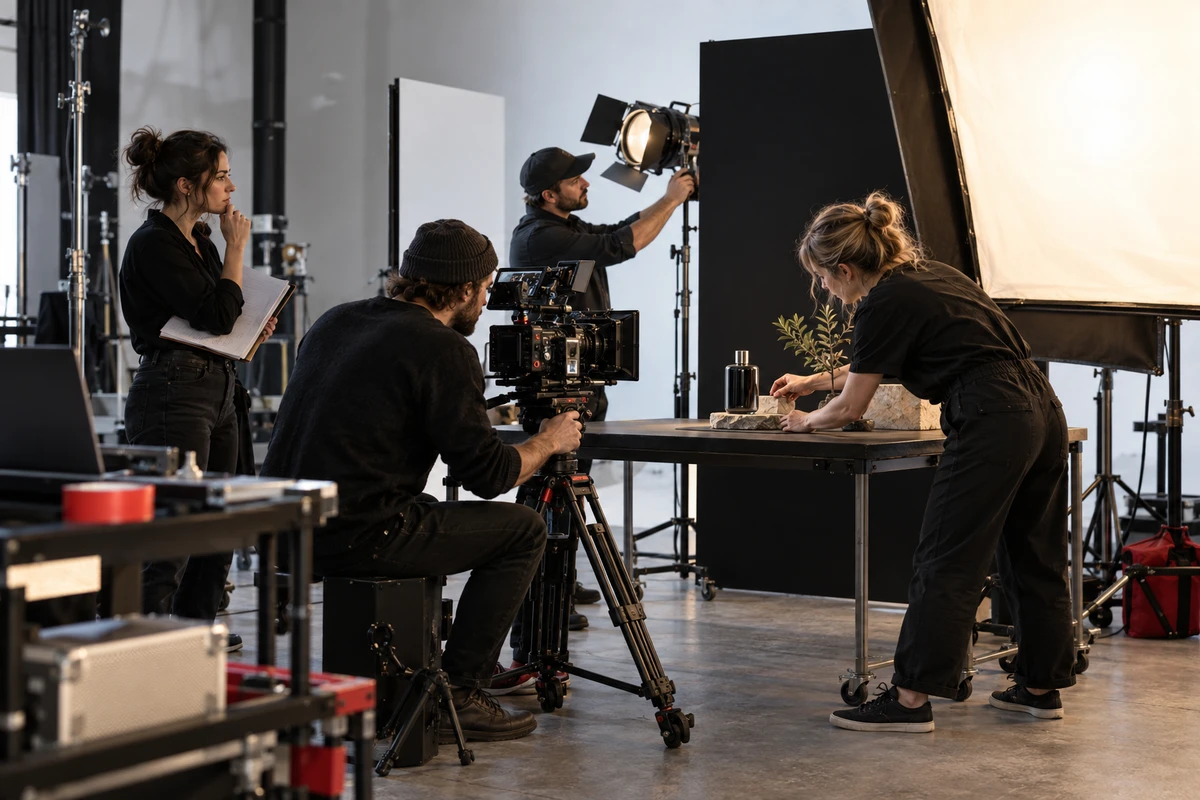
This is a common structure for brand and corporate video production: director and producer are separate, a DP owns the image system, lighting and sound have named operators, production design controls the filmed environment, and post-production joins early to plan versions and media. Headcount may change, but these responsibilities should not disappear.
The value of this structure is that simultaneous tasks remain covered. While the director adjusts performance, the DP can protect movement and focus, the producer can prepare the next setup, and the art team can reset the product.
Complex: multiple environments, high control, VFX or multilingual assets
Built sets, several performers, children or animals, mechanical rigs, high-speed photography, multi-city production, VFX previs or a large version matrix require further separation. An assistant director may run floor timing; camera gains assistants and technical roles; art separates props and set dressing; production adds coordinators; and post/VFX supervisors complete technical checks before principal photography.
The risk is adding execution staff without adding decision clarity. The larger the crew, the more useful a simple responsibility map becomes: what the brand approves, what the director decides, what the producer coordinates, what camera and art deliver, and who raises a scope change.
Lock four handoffs before the shoot
Brief to director: The brand provides the communication task, audience, core message, exclusions and intended channels. The director returns an executable narrative, visual direction and priorities. Avoid approving the work with adjectives such as “premium,” “young” or “international” alone.
Director to departments: A storyboard or shot list should show more than shot size. It should identify performance, product state, lighting difficulty, props and post-production dependencies. Public production guidance uses storyboards more often for complex work because they let departments see the same sequence of actions before the shoot.
Producer to brand: Call sheets, samples, locations, people, permissions and weather plans need one current version. Any additional location, performer or delivery format should be assessed for preparation impact before schedule and scope are approved.
Set to post: Selected takes, media naming, framing safe areas, sound status, usage restrictions and the version list should be recorded before wrap. A useful director communication checklist connects those pre-production decisions to final review.
Use one question to test the configuration
Instead of asking “How many people does this film need?”, ask: “During the busiest ten minutes of the shoot, which decisions must happen at the same time?” If the answer includes performance, product state, camera movement, set reset, location sound and preparation for the next setup, one person should not own three or four of them.
If the setting is stable, the task is narrow and the brand can make fast decisions, combined roles can work well. The goal is not a longer crew list. It is having a clear owner protecting the result at every critical moment.
If you are planning a brand or corporate film, send your brief through ONCE VISUAL with the environments, people, product actions and delivery versions. We can use those details to propose a more appropriate crew and production structure.
Production examples and next steps
Connect the brand story to people, products and work the camera can show. The Baseus supply-chain partnership film is a brand-film reference.
Review Brand film production and Baseus: Brand Film That Works Hand in Hand with Supply Chain Partners. To discuss your project, send the audience, central story, visual references and planned versions through the English project enquiry form.