The first step in budget breakdown is defining deliverable scope, not negotiating the total price.
Most TVC budget disputes arise from unclear deliverable boundaries. Brands often assume quotes cover all revisions, while producers assume responsibility ends at the rough cut, leading to misalignment during acceptance. To prevent this, deliverables must be broken into verifiable units during project initiation, each tied to a specific budget line item and approval milestone.

Specifically, the brand should first list all required final files, including master copies, platform-specific versions, subtitle files, color-graded versions, audio stems, and project source files. The production team then estimates workload and cost structure based on these deliverables. Both parties confirm each item in the contract, specifying format, quantity, revision limits, and copyright scope. With this breakdown, the budget becomes the sum of costs tied to specific deliverable boundaries rather than a vague lump sum.
If a quote lists only a total price and final video duration without an itemized breakdown, the scope of deliverables is likely unclear. The risk involves recurring revision fees or the inability to obtain source files for future edits. An exception applies to simple TVCs with very short turnaround times, such as single-location talking-head videos, which allow for simplified budgeting but should still separate production and post-production costs.
Budget allocation during project initiation must align with communication objectives, target audience, and core selling points.
Budget priorities are derived from communication goals. Brands must first define the TVC's purpose, whether building brand awareness, launching a new product, or driving sales conversions. Different goals require entirely different budget allocations. Awareness-focused videos may prioritize art direction and set design, while conversion-focused videos may emphasize product demonstration and calls to action.
Target audience and core selling points also influence the budget. TVCs targeting younger demographics may require faster pacing and extensive visual effects, whereas B2B content often relies on live-action details and functional demonstrations. During project initiation, brands should provide a brief including audience personas, key selling points, visual references, competitor examples, distribution platforms, and KPIs. The more specific this information, the more accurately the production team can estimate the workload.
The production team must verify whether the creative direction is feasible based on the brief, check reference materials for copyright issues, and confirm that shooting conditions meet creative requirements. If a client requests only a "premium feel," the team cannot accurately estimate costs and must quote for high-end production, risking budget waste or bid rejection. A key benchmark is whether the client can articulate the target audience, core message, and distribution channels within 30 seconds. If not, pause budgeting and revisit the strategy.
A risk arises when clients omit deliverables to reduce costs, such as skipping music licensing, leading to copyright claims upon release. An exception occurs when clients have in-house creative teams and outsource only production and post-production; in this case, budgeting focuses on execution, though creative ownership and revision rights must still be clearly defined.
Production budgets must be itemized by location, talent, equipment, and schedule.
Production accounts for the largest share of TVC budgets and is most prone to overruns. Budgets should be broken down by scene rather than total shoot days. Each scene involves location rentals, set construction, lighting, camera stabilization, talent fees, crew labor, catering, and transportation. Clients should request line-item quotes for each scene instead of a lump-sum package.
Verify whether the quote specifies shoot days per scene, crew size, equipment lists, and rental durations. A generic "production fee" indicates insufficient cost detailing, suggesting the vendor may cut equipment or shooting time later, compromising quality. Clients should proactively request a location list covering interiors, exteriors, studios, and practical locations, along with maximum shooting hours for each.
Talent fees must distinguish between lead actors, supporting roles, extras, and specialty performers, and specify the term and scope of likeness rights. Multi-platform campaigns exceeding one year significantly increase talent costs. For equipment, confirm camera models, lens sets, lighting gear, and grip packages, including backup units. For locations, verify needs for set construction, special permits, and night-shoot surcharges.
Risks include weather-related outdoor shoot delays or actor scheduling conflicts requiring reshoots; the contract must assign liability for these issues. If the brand provides its own locations or talent, the budget may be reduced accordingly, but the production company must still assess whether the location meets filming requirements.
The post-production budget breakdown must cover editing, color grading, audio, subtitles, and version adaptation.
Post-production involves the most complex delivery scope in TVC projects, as each stage has independent acceptance criteria. Editing fees are typically billed across three phases—rough cut, fine cut, and final cut—with a set number of revisions allowed per phase. The brand should define a revision cap, with additional changes billed separately to prevent budget overruns from unlimited revisions.
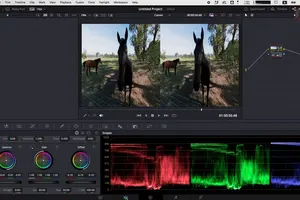
Color grading costs should distinguish between basic correction and creative grading. Basic correction ensures color consistency, while creative grading adjusts tone and mood per the creative brief. The brand must provide reference images or color charts to clarify the desired style. Audio services include dialogue recording, sound design, background music, and mixing, each requiring a separate line item. Music licensing is often overlooked; the brand must confirm whether rights are bought out or licensed, specifying the term and platform scope in writing.
Subtitle costs should differentiate between burned-in subtitles and soft subtitles; burned-in subtitles are embedded in the video, while soft subtitles are separate files that facilitate multi-language switching. Version adaptation costs cover platform-specific aspect ratios, durations, bitrates, and file size limits, such as landscape, portrait, square, 15s, 30s, or 60s formats. Each version should be priced individually, and the brand should confirm required platform versions upfront to avoid additional charges later.
The key criterion is whether the post-production quote lists deliverables and acceptance standards for each stage. For example, editing deliverables include an EDL and master files; color grading deliverables include graded versions and LUTs; audio deliverables include mix masters and stems. If the quote only shows a single “post-production” line item, the brand cannot assess quality or conduct proper acceptance. Risks include project delays from excessive revisions or a color grade that mismatches the brand identity, necessitating rework. An exception applies if the brand uses an in-house editor and outsources only color and audio, allowing the budget breakdown to focus on external services.
The acceptance budget breakdown should verify each deliverable individually rather than reviewing only the final video.
TVC acceptance requires independent standards for each deliverable. The brand should create an acceptance checklist and verify items one by one. The checklist should include the master file, platform-specific versions, subtitle files, graded versions, audio stems, project source files, raw footage, editing project files, and VFX project files. Each item must specify format, resolution, codec, duration, and file size.
The acceptance process should be phased, covering rough cut, fine cut, color grading, audio, and final master approvals. Each phase requires written sign-off before proceeding to the next, preventing major late-stage changes by maintaining clear feedback and revision records. The brand should appoint a single project lead to consolidate feedback and avoid conflicting inputs that leave the production team without clear direction.
The key criterion is whether the acceptance checklist covers all deliverables and includes format and parameter specifications. If the brand accepts only the final video and neglects source files and assets, future re-edits or extended versions may lack necessary materials, requiring reshoots or extra costs. A key risk is discovering issues in the final video during acceptance while missing source files make fixes impossible. An exception applies if the brand purchases only the final video rights and does not require source files; acceptance can then be simplified, provided the contract clearly defines ownership and reuse restrictions.
Budget breakdowns must also account for exclusions to avoid paying for unnecessary deliverables.
Not all TVCs require full-service production. If a brand is running a temporary campaign, such as an event teaser, it may not need long-term rights or source files and can license only the final video. If the brand has an in-house editing team, it can outsource only filming and color grading to avoid redundant costs. If the concept is simple, such as a single-shot product display, complex VFX and set construction may be unnecessary, significantly reducing the budget.
The key criterion is for the brand to clearly define the TVC’s lifecycle and usage scope. A one-time placement requires neither multi-format adaptations nor source files. However, multi-platform or long-term use requires purchasing the full deliverable package. The risk arises when brands opt for the minimum package to save money, only to face additional costs later if they wish to expand versions after a successful launch. An exception applies when brands sign long-term framework agreements with production companies, allowing cumulative project discounts or annual stock library licenses.
Additionally, if the TVC involves specialized technologies like CGI, AIGC, or virtual production, technical development and rendering costs must be itemized separately in the budget. These technologies typically require extra pre-testing and post-adjustment and cannot be estimated using traditional workflows. Brands must provide detailed creative briefs and technical references so the production team can accurately assess the workload. If technical requirements are unclear, it is better to conduct prototype testing before committing to full production.
The next step is to prepare a detailed deliverables scope checklist before requesting quotes.
Before contacting any production team, brands should spend a day compiling a deliverables scope checklist. This list should include communication objectives, target audience, key selling points, visual references, shooting locations, talent requirements, equipment specs, post-production tasks, delivery formats, platform versions, licensing terms, and revision limits. The more detailed this checklist, the more accurate the quotes and the clearer the budget breakdown.
Then, send this checklist to at least three production teams and request line-item quotes based on it. When comparing quotes, look beyond the total price; evaluate whether each unit cost is reasonable and check for missing items. If a quote is significantly lower, ask why—it may indicate missing deliverables or different quality standards. If a quote is higher, confirm whether it includes additional services such as creative strategy or project management.
Finally, clearly define acceptance criteria, revision limits for each deliverable, and breach penalties in the contract. This ensures a clear basis for resolution should disagreements arise during the project. The goal of budget breakdown is to align both parties under the same standards, reducing communication overhead and improving delivery efficiency. It is recommended that brands hold an alignment meeting with the production team before project kickoff to review the checklist line by line before formally signing the contract.
If you are preparing a TVC project, gather your brief, visual references, product or company materials, delivery platforms, and licensing scope before reviewing ourTVC Services page, translating abstract preferences into actionable production boundaries.