Lock in communication objectives and acceptance criteria during the project initiation phase.
The TVC on-set execution sheet is primarily a decision-making framework established from project initiation. When launching a project, brands must first answer three questions: What is the communication objective? Who is the core audience? What is the key selling point? These answers determine trade-offs across all subsequent stages. For example, if the goal is a new product launch, the execution sheet should prioritize product detail shots and functional demonstrations; if the goal is enhancing brand image, emotional atmosphere and brand tone take precedence.

Brands must prepare a written brief including project background, target audience profile, key messages, reference video links, competitor analysis, distribution platforms, and expected final duration. Upon receiving the brief, the production team should provide preliminary feedback within one business day, covering creative feasibility, shooting complexity, post-production workload, and risk factors. If the brief is incomplete, the production team has the right to request supplementary information; otherwise, accountability for subsequent deviations becomes difficult.
Acceptance criteria must be clearly defined in advance, specifying whether the final deliverable will be judged by the script's original intent, storyboard visuals, or reference video quality. It is recommended to create an acceptance checklist during project initiation, listing expected outcomes and minimum acceptable standards for each key shot. For example, product shots must clearly display the logo and material texture, while mood shots must convey the designated emotional tone. This checklist should be jointly signed off by the brand and production team to avoid later disputes.
Risk assessments must be specific; for instance, outdoor shoots may face weather issues, indoor shoots may encounter venue limitations, talent schedules may conflict, and equipment failures could necessitate reshoots. The execution plan should include contingency measures for every risk, covering backup locations, alternate talent, spare equipment, and schedule buffers. Without a contingency plan, any issue can lead to project delays and cost overruns.
As an exception, if the project timeline is extremely tight and the budget limited, the initiation phase can be simplified, but communication goals and core selling points must still be confirmed. Otherwise, the production team may create visually polished but ineffective content, and the brand may receive assets that fail to meet expectations.
Creative breakdowns must translate into actionable shot language.
TVC concepts often originate from a single idea or tagline, but the execution plan must break this concept down into a specific shot sequence. Each shot must specify framing, camera movement, visual content, audio elements, and estimated duration. For example, an opening shot might feature a drone view of a city skyline rapidly pushing into the protagonist's car interior; it must be clarified whether this is live-action or CG composite, and whether VFX tracking markers are required.
The production team should create storyboards based on the creative concept; they need not be polished but must clearly convey composition and action logic to all participants. Storyboards should indicate shot numbers, shooting order, required props, actor blocking, and lighting direction. The brand must review the storyboards to ensure every shot supports the core selling point, removing any gratuitous technical displays. If the storyboard contains unfeasible visuals, such as highly complex CG scenes or dangerous stunts, alternative solutions must be proposed during pre-production.
Visual references are powerful communication tools; brands can collect ads or film clips with similar styles, highlighting preferred shots, color grading, pacing, and sound design. The production team must analyze the feasibility of these references and translate them into specific technical parameters, such as focal length, aperture, shutter speed, lighting color temperature, and post-production grading direction. References should serve as a stylistic benchmark rather than being copied directly, which poses copyright risks.
During the creative breakdown, clearly identify which shots require live-action, CG, or AIGC generation. Live-action shots require assessment of locations, talent, props, and weather conditions; CG shots require evaluation of modeling, rendering, and compositing timelines; AIGC shots require verification of asset licensing and style consistency. If methods are combined, the execution plan must specify the production workflow and handoff points for each shot.
A key risk is an overly ambitious creative vision exceeding the budget; while cutting secondary shots or simplifying scenes is common, this may undermine core selling points. It is advisable to prioritize during the breakdown, concentrating budget and effort on the three to five most critical shots while executing the rest using cost-effective solutions.
The production execution plan must assign a responsible person to every task.
The production schedule is the tactical map for on-set shooting and must include a timeline, location arrangements, crew assignments, equipment lists, and contingency plans. The timeline should be precise to the hour, covering call times, makeup, set dressing, rehearsals, and principal photography, with specific time slots and responsible persons for each phase. For example, call time at 8:00 AM, makeup wrapped by 8:30 AM, set dressing at 9:00 AM, rehearsal for Scene 1 at 10:00 AM, and filming begins at 11:00 AM.
Crew assignments must designate specific individuals: the Director oversees creative vision and shot blocking; the DP handles framing and camera movement; the Gaffer manages lighting design; the Art Director supervises sets and props; and the Line Producer controls logistics and scheduling. Each role requires a backup contact in case of unexpected absence. The brand must appoint a single point of contact for on-set decisions and approvals to prevent repetitive changes during filming.
Equipment lists must be tested and confirmed in advance, covering cameras, lenses, lighting, audio, stabilizers, monitors, and storage media. Every piece of gear needs a backup, especially memory cards and batteries. Before shooting, check firmware and settings to ensure consistent color space and frame rates. Audio equipment must be tested separately to avoid on-set noise interference.
Locations require advance scouting to verify power capacity, network signal, parking availability, and restroom facilities. For exterior shoots, monitor weather forecasts and prepare rain and sun protection. For interiors, confirm soundproofing and lighting control capabilities. If the venue has specific restrictions, such as drone bans or noise limits, note them in the schedule and communicate them beforehand.
During production, log script supervisor notes for every shot, including scene numbers, take counts, quality markers, and remarks. These records are vital for post-production editing; missing data causes editorial chaos. Use a slate or digital logging software to sync information with the post team in real time.
Risks include on-set changes like poor performances, unsatisfactory set designs, or equipment failures. The schedule must include at least a 20% time buffer and define a change protocol: the Director proposes modifications, the Producer assesses feasibility, and the Brand approves acceptance. Unregulated changes lead to loss of control and increased costs.
Exceptions apply when filming involves animals, children, or stunts, requiring additional safety measures and guardian consent forms. These requirements must be documented in the schedule beforehand, or the shoot may be halted on the day.
Post-production requires separate approvals for each shot and workflow stage.
TVC post-production includes editing, color grading, sound design, subtitles, VFX, and mastering, each with independent acceptance criteria. During editing, the brand reviews pacing, transitions, and message clarity. In color grading, confirm the style aligns with brand identity and that skin tones and product colors are accurate. For sound, check dialogue clarity, musical tone, and sound effect layering. For subtitles, verify text accuracy and timing.
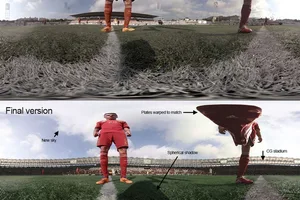
VFX is the most error-prone post stage, particularly for CG and AIGC-generated imagery. Acceptance checks must ensure seamless integration with live-action footage, consistent lighting direction, and realistic textures. Teams should provide pre-composite comparisons to help the brand understand the VFX contribution. For complex effects, deliver previews in stages, such as low-resolution versions to confirm creative direction before final rendering.
The post-production schedule must specify deliverables and deadlines for each phase; for example, the initial edit is due within three days of wrap, and the color-graded version within two days of edit approval. Each deliverable requires a designated feedback channel, and the brand must submit revision notes within the stipulated timeframe or approval is assumed. Feedback must be specific, such as "the pacing at 0:10 is too slow," rather than "it feels off."
Master outputs should be prepared in multiple versions tailored to distribution platforms, including landscape and portrait, long and short cuts, and subtitled and non-subtitled variants. Each version must be verified for resolution, codec, frame rate, and file size against platform specifications. As platform specs change frequently, the production team should remind the brand to check the latest official requirements before publishing and not rely on outdated data.
Source file management is a critical part of acceptance; the brand should require delivery of all source assets, including project files, raw footage, color-graded versions, audio stems, and font files. These files are brand assets essential for future revisions or re-edits. Upon delivery, verify file integrity and confirm copyright ownership, especially for music and font licenses.
A key risk is endless post-production revisions driven by the brand's continuous new ideas. The schedule should define the number and scope of revisions, such as allowing two rounds after the initial cut, with each round limited to specified shots. Revisions beyond this scope incur additional fees. This ensures timely delivery and protects the production team's interests.
As an exception, if the project includes AIGC video, post-production acceptance must additionally verify copyright compliance of generated content to ensure no unauthorized assets or models were used. The stability of AIGC content must also be assessed to prevent distortion or deformation.
The acceptance checklist must cover every detail from visuals to copyright.
The acceptance checklist serves as the basis for the brand's final approval and should encompass six dimensions: visuals, audio, subtitles, versions, formats, and copyright. The visual dimension requires checking clarity, exposure, focus, and color for every shot to ensure no technical defects. The audio dimension covers volume consistency, background noise, and sound effect synchronization. The subtitle dimension checks for typos, punctuation, and timeline accuracy.
The version dimension confirms delivery of all required edits, such as 15-, 30-, and 60-second cuts and various aspect ratios for different platforms. The format dimension verifies that file codecs, resolution, and frame rates meet requirements and includes playable preview files. The copyright dimension validates licensing for all assets, including music, fonts, images, and video clips, and clarifies the brand's usage rights, such as modification permissions and territorial restrictions.
During acceptance, the brand is advised to organize a group viewing with relevant internal stakeholders, record individual feedback, and consolidate it into a single revision list. The list should be prioritized: critical issues must be fixed, while minor ones are negotiable. The production team should respond to each item with a proposed solution and timeline. Final delivery proceeds only after mutual confirmation.
All communication records, including emails, chat logs, and meeting minutes, must be retained throughout acceptance as evidence for dispute resolution. If the brand is dissatisfied with certain shots but cannot articulate the issue, the production team can provide technical analysis, such as color comparisons or pacing curves, to aid understanding.
The risk is vague acceptance criteria, leading to disputes between both parties. It is recommended to attach an acceptance checklist to the contract during project initiation, clearly defining minimum standards for each dimension. If the brand requests items outside the checklist during acceptance, the production team may refuse or charge additional fees.
An exception applies if the project is for overseas distribution; the acceptance checklist must include language and cultural checks, such as subtitle accuracy and whether visuals contain elements inappropriate for the local culture. These checks must be scheduled in advance and cannot be deferred until after delivery.
Applicability boundaries of execution sheets across different project types
On-site execution sheets for TVC commercials are not universal; they apply to commercial video projects with clear creative concepts and shooting plans, such as brand ads, product TVCs, and campaign videos. For these projects, execution sheets effectively control quality and progress. However, for certain specialized projects, the execution sheet requires adjustment or simplification.
For pure CG or AIGC productions without live-action filming, the execution sheet should focus on creative design, modeling, rendering, and compositing stages. The filming execution section may be omitted, but the post-production acceptance sheet must be more detailed, especially regarding visual effects. For example, in projects like the Lexus CG Dark Ride, where the core involves CG environments and vehicle rendering, the execution sheet must prioritize lighting, texturing, and animation accuracy.
For social media short videos with tight schedules and low budgets, the execution sheet can be simplified to a single page covering only key shots, essential personnel, and delivery timelines. However, acceptance standards must not be reduced, as short videos still require accurate brand messaging. For overseas marketing videos, the execution sheet must include steps for translation, cultural adaptation, and time zone coordination.
For AIGC video projects, the execution sheet must specifically address the controllability of generated content and copyright risks. Since AIGC tools may produce unpredictable results, workflows involving multiple generations and selection processes must be established. Additionally, copyright ownership of generated assets must be confirmed to avoid using controversial models or datasets.
Inapplicable scenarios include projects lacking clear creative direction or objectives, where the brand cannot provide references, or where the production team lacks sufficient experience. In such cases, the execution sheet becomes merely procedural and fails to effectively guide the project. It is recommended that brands complete creative development before initiating the execution sheet.
Another inapplicable scenario involves projects with extremely tight deadlines that preclude pre-production preparation, such as urgent PR videos. In this case, the execution sheet may be condensed into an emergency checklist containing only critical filming and delivery requirements, provided the brand accepts the risk of potentially compromised quality.
The next step is to start with a simplified execution sheet
When launching a TVC project, brands and production teams need not pursue a perfect master schedule from the start. Instead, they can create a simplified execution sheet covering five sections: project confirmation, key shot breakdown, shooting schedule, post-production acceptance checklist, and copyright clearance. This simplified sheet can be refined as the project progresses, but critical decision points must be confirmed in advance.
It is recommended that brands and production teams complete the simplified execution sheet together during the kickoff meeting, clearly defining the person responsible and deadline for each task. This ensures mutual understanding of the project and reduces future communication costs. The production team can also prepare resources in advance based on the execution sheet, avoiding last-minute scrambling.
Finally, the execution sheet is not static; it should be updated as the project progresses. After every shoot or post-production meeting, review the sheet to mark completed items and adjustments. If deviations are found in any phase, correct them promptly rather than waiting until delivery to discover issues. This approach keeps the TVC project on schedule and ultimately delivers a final product that satisfies the brand.
If you are preparing a TVC project, start by organizing your brief, visual references, product or company materials, delivery platforms, and copyright scope before reviewing theTVC Service Pageto translate abstract preferences into actionable production parameters.