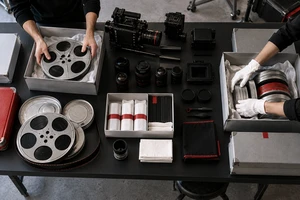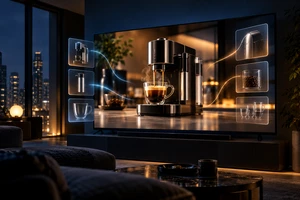
Until recently, allowing a YouTube Shorts remix mostly meant letting another creator sample audio, cut a few seconds, use the video as a green-screen background or appear beside it in a Collab. An eligible Short can now become something more: a creator can enter a prompt, add up to three reference images, and generate a new video and audio from the source before editing and publishing it.
The strategic change is not simply “more AI video.” A public brand Short can become an input to someone else’s generation workflow. Brands therefore need a new production decision: which images should invite transformation, which facts must stay fixed, and which assets should never enter a remix surface?
What YouTube has actually changed
YouTube announced the upgraded Shorts Remix on May 19, 2026. Its current help documentation says creators can use a custom English prompt or suggested prompt on an eligible Short, optionally add up to three reference photos, preview the generated result, and continue editing it with Shorts tools. The system also creates new audio from the prompt and context. Availability is still rolling out and the feature currently supports English interfaces and prompts.
The generative option sits beside the existing Cut, Green Screen, Collab and audio-remix tools. Remixes attribute the source and link back to it. Source creators receive summary notifications and can inspect “Remixed video” traffic in Reach reports. YouTube also says Shorts and long-form videos are available for remix by default, although channels can change video-remix settings and eligible partners using Content Manager can control both audio and video remixing.
Settings have downstream consequences. If a source is restricted or deleted, YouTube says video remixes are deleted. Audio remixes are muted, made unlisted and scheduled for deletion after 30 days. That makes an opt-out an operational intervention, not merely a preference toggle.
None of this proves that AI remixing increases reach, sales or brand search for every advertiser. ONCE’s analysis is narrower: if a source can be transformed by prompts, brands should commission a purpose-built remix seed instead of exposing every finished ad by default.
A generative remix is not just another edit
A conventional remix stays visibly constrained by the source clip. Another creator can sample, juxtapose or replace a background, but the brand-supplied pixels remain the core material.
A generative remix can change scene, action and audio. The source contributes objects, people and visual relationships; a prompt can place them into a new context. An automatic AI label helps with transparency, but a viewer may still associate the generated product appearance, behavior or character attitude with the original brand.
The risk is therefore broader than copyright. A remix might imply a feature the product does not have, alter packaging beyond recognition, place talent in an unlicensed situation, separate a regulated claim from its qualification, or extend a harmless joke into a sensitive context.
The ONCE three-zone brand seed
A binary “allow or block” decision is too coarse for production. Divide the source concept into an open zone, a guarded zone and a closed zone.
Open zone: actions that can survive reinterpretation
The open zone supplies participation value. It works best for visual actions whose factual meaning is unlikely to change when the setting changes: an unboxing, rotation, splash, assembly, texture interaction, storage transformation or a clearly observable physical response.
Shoot a clean subject, one readable action and a separable background, with enough handles before and after the motion. Do not burn the key claim, price and dense captions into the same frame. This should behave like a creative building block, not a severed piece of an ad.
Guarded zone: variation with brand constraints
The guarded zone includes environments, languages, music, nonessential props and emotional styles that may vary. Give creators a concise instruction sheet: the correct product name, immutable pack elements, prohibited implications, and any markets requiring special disclosure.
For a brand-led remix initiative, offer three to five safe prompt directions instead of saying “be creative.” A prompt may change season, color palette or location while prohibiting changes to product dimensions, functions or intended users. This leaves room to participate without turning every review into a subjective argument.
Closed zone: facts and rights that should not be generative inputs
Keep regulated claims, promotional prices, warranties, medical or efficacy statements, third-party marks, narrowly licensed music, celebrity endorsements, minors and sensitive scenarios outside the open seed. Deliver them in a non-remixable hero asset or add them later in a brand-controlled layer.
One product can have both a closed hero ad and an open remix seed. The hero communicates the official position precisely. The seed invites community interpretation. Separating those jobs is more manageable than forcing one file to be a legal master, campaign message and unlimited creative prompt at the same time.
Commission five deliverables from one shoot
A remix seed is not a 9:16 crop of a TVC. Ask the production team for at least five outputs:
- A three-to-eight-second single-action master: complete subject, clear start and finish, understandable without voice-over.
- Clean audio stems and a silent version: isolate brand music, dialogue and ambient sound so one license does not block the whole seed.
- A prompt safety card: list mutable elements, prohibited implications, approved product nouns and factual limits.
- A rights map: identify whether each person, track, location, typeface and product asset permits in-platform remix, generative transformation and republication.
- A source and exit record: store the source video ID, launch setting, first-use date, monitoring owner and the expected effect of turning remix off.
These deliverables serve a different purpose from an ordinary short-form master. They allow outside creators to make new expressions within a known operational envelope.
Calculate the cost of openness before promising “free reach”
YouTube does not invoice a brand each time the community remixes a source, but openness still has operating costs:
Remix program cost = seed-specific production and edit + derivative-use clearance + prompt and fact-card preparation + notification review and version logging + exit and source replacement.
This is a procurement structure, not an industry rate card. If talent, music or a location was licensed only for the original commercial, a default-enabled platform button does not automatically expand that agreement. The brief should separately address in-platform remixing, generative transformation, republication and paid amplification.
An exit can also affect creators who already published. YouTube’s process means restricting or removing the source can delete video remixes and push audio remixes toward mute, unlisted status and deletion. The exit decision therefore needs an owner, a trigger and communication steps before launch.
Decide whether a seed is the right experiment
| Condition | Good candidate for an open seed | Better kept closed |
|---|---|---|
| Product story | Physical behavior is visible and hard to misread | Benefit depends on qualification or regulated claims |
| Rights | Talent, music and location cover derivatives | Licenses cover one finished ad or one territory |
| Brand posture | Community humor and reinterpretation are acceptable | Every frame must remain centrally controlled |
| Operations | Someone monitors notices, attribution and exceptions | Nobody owns the channel after upload |
If three of four conditions land on the left, start with one seed. If two or more land on the right, keep remixing off and use a brand-managed creator collaboration instead. The test is not meant to prove that AI always drives distribution. It should determine whether the brand can provide transformable material with low friction and identify exceptions quickly.
Make remix settings part of release approval
Before upload, the content owner, producer, legal reviewer and social team should answer five questions together: Is video remix allowed? Is audio remix allowed? Which markets are in scope? When do the underlying rights expire? Who reviews summary notifications, and what event triggers a restriction or deletion?
The platform default does not make those decisions for the brand. It only opens a technical pathway. As our guidance on creator procurement explains, a platform authorization code is not a copyright contract; a Remix button is not a substitute for talent, music, location and claim clearance either.
Teams coordinating global Shorts, creator programs and AI variants from China can use the ONCE video marketing workflow to plan the hero asset, remix seed, prompt card and rights map in the same production cycle—before the source goes public.
Source note
This article uses YouTube’s May 19, 2026 announcement, Create YouTube Shorts with remixed content, and Create content for Shorts using AI-generated features, checked on October 21, 2026. The three-zone framework, deliverable list and cost structure are ONCE’s production and procurement analysis. YouTube has not promised a general performance lift from this workflow.