An overseas brand with a recognizable character and a Chinese manufacturing partner may see Roblox as the next place to build its world. But a whole branded game is not always the right first commission. If the audience wants to wear one distinctive piece of that character’s identity, the more useful initial question may be whether an authorized virtual item has a reason to exist.
ONCE recommends evaluating that narrower route when the brand already has meaningful IP but has not established a gameplay proposition or an operating team. This is not a claim that small projects are automatically cheaper. It is a way to avoid buying an entire destination before understanding what someone wants to take from the brand into their own virtual identity.
A different unit of participation
Roblox announced self-serve IP licensing for eligible rights holders on November 11, 2025. Its current documentation makes the choice of collaboration scope particularly useful to revisit.
The Creator Hub’s IP licensing for creators and License Manager, checked on October 21, 2026, distinguish full-game licenses from Marketplace licenses for IP-based virtual items. Requests remain subject to rights-holder review; an available licensing option is not automatic approval.
The creator guidance also states that Marketplace fees apply before sharing revenue with the rights holder. A negotiated share is therefore not simply the same percentage of the listed retail price, and it is certainly not evidence of reliable income. No general rate or payback forecast is proposed here.
Our inference is strategic: a brand can investigate contributing something creators and users want to adopt, rather than immediately funding a place they must visit. The platform capability alone does not establish that a particular brand has that demand.
Three commissions with three different questions
An awareness campaign asks what the audience should remember. A game asks what players will do and why they will return. A virtual item asks why someone would want to wear or use it. These are different commercial decisions, not successive levels of visual ambition.
If the actual objective is a near-term product announcement, advertising or a content partnership may be more direct. If the idea depends on a sustained interactive activity, development and operations deserve their own case. If the value lies in adopting an element of the brand’s identity, an item-led licensing discussion may be a proportionate starting point.
A supply chain is not a substitute for ownable IP. Nor should an agreement for virtual items be assumed to cover physical merchandise, off-platform promotion or another platform. Have appropriate professionals assess the actual rights, eligibility, markets, audience-age considerations and content requirements.
ONCE’s smallest licensable unit
“Smallest” means a scope sufficient to investigate one real question, not a platform-mandated item count. Before asking for a large creative universe, prepare a short brief with four decisions.
| Decision | What the brand should explain |
|---|---|
| User purpose | What the item expresses: taste, humor, affiliation or affection for the character—not merely brand exposure |
| Recognizable features | The silhouette, colors, behavior or personality that must remain legible, with visible examples |
| Creative freedom | Which proportions, wearable forms and details can change, and what must not appear |
| Ongoing responsibility | Who answers questions, approves changes, maintains references and handles later revisions or the end of a collaboration |
Roblox’s rights-holder guidance calls for ownership evidence and authorization documentation. License Manager provides scope, content-standard and brand-guideline settings. Our brief does not replace those arrangements or legal review; it helps a brand articulate the creative intent that professionals must implement.
A campaign poster may leave too much unexplained. A creator may need the back view, examples of acceptable exaggeration or a clear answer about behavior. Content production can make those decisions understandable without pretending to replace a specialist development team.
A hypothetical outdoor character
Suppose a brand owns an original fox character, already shown in its content wearing a distinctive expedition backpack. This is an illustration, not an ONCE project or a claim that the brand qualifies for Roblox licensing.
An adventure-game proposal needs a player activity, a reason to return and a team responsible for updates and the intended audience. A spectacular launch film does not answer those operating questions.
An alternative is to discuss a virtual backpack with a suitable creator. The first question becomes whether that object has appeal outside the advertisement, and whether it can become a useful wearable within the agreed creative scope. Supply the relationship to the character, identifying features and permitted adaptations. Do not commission the whole campsite universe merely to explain one item.
If people like the character illustration but cannot explain why they would use its backpack on their avatar, the product idea still needs work. More color variants may not resolve that. If a focused collaboration instead reveals a specific fit or design issue, address that issue before using the project as a reason to fund a complete game.
Define what would justify another investment
Scope concept/reference preparation, specialist feasibility, approved publication and limited support separately. Agree costs, responsibilities and stopping conditions. Do not assume a prospective revenue share means a creator will finance every task.
Evidence should answer the original question: does a relevant creator understand and want to adopt the IP; do intended users have a clear use for it; and do subsequent usage and sales justify the next step? Favorable concept feedback, free claims, paid purchases and physical-product orders are different outcomes. If evidence is immature, keep the decision open rather than declaring success.
Repeated lack of creator interest should prompt a review of the IP’s appeal, collaboration terms and reference material—not an automatic increase in development spend. A sustained game can still be the right project, but it needs a separate proposition. A promising virtual item does not prove that proposition.
For production businesses, maintaining a clear character system, creative examples and communication assets is a possible ongoing service. Licensing representation, game development and platform operations remain separate capabilities. Being able to produce CGI does not establish all three.
Make one thing worth adopting
Start with an identifiable, rights-cleared element that serves an actual user purpose. If it does not exist, neither open licensing nor a branded game is an obvious next investment. Waiting can be a sound decision.
For a discussion about establishing a character’s identity through brand content, share the brief with ONCE: existing IP, audience, references and the question to investigate. Licensing advice, platform eligibility and specialist development require separate confirmation.
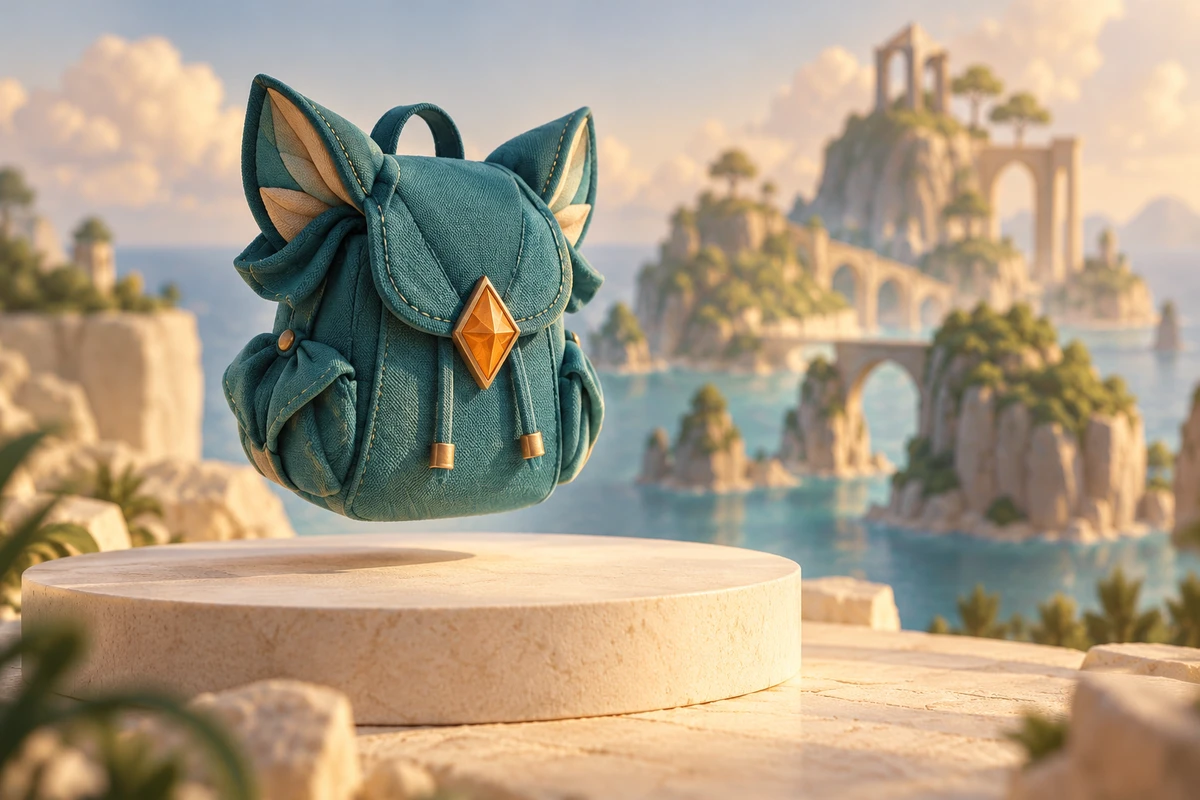
The smallest-licensable-unit brief and investment sequence are ONCE’s proposed method, not legal advice, a revenue promise or a report of Roblox development work. The original AI cover is a concept illustration, not a platform screenshot or a published item.