A creator publishes the sponsored YouTube video. The link is live, the invoice is approved, and the team assumes the job is finished. Only later does the brand discover that its media agency cannot see the expected metrics, the video is not cleared for paid amplification, or the product was never eligible for a shopping tag.
That gap matters more now because YouTube is connecting creator content, measurement, advertising and commerce more tightly. The practical response is not to buy a bigger bundle. It is to contract four permissions separately and give each one a named owner.
One video can now serve four jobs
On March 23, 2026, YouTube announced that Creator Partnerships, formerly BrandConnect, would be integrated into YouTube Studio, Google Ads and Display & Video 360. Its current help documentation says Brand Partner Access can let a brand or its agency see organic and paid performance metrics and use the video with Creator Partnerships Boost. On September 23, YouTube also described a one-click access code that creators can share after posting a brand partnership.
The important caveat appears in the same official workflow: creators and advertisers still need to discuss usage rights and obtain the required agreements independently. A platform link is an account permission. It is not a universal copyright, likeness or media licence.
Commerce is another layer. At Brandcast on May 13, YouTube announced Affiliate Partnerships Boost for organic content in which products are already tagged. In September it also said the Shopping affiliate programme would expand to more countries by year-end. Those announcements establish the direction of the product; they do not prove that every creator, product, market or account is eligible today.
ONCE's four-permission handoff
Treat each permission as a separate receipt. A line item is complete only when the team can show the agreed record, not when someone says the creator has approved it.
1. Publication permission
Define the channel, format, publication date, minimum live period, paid-promotion disclosure, review rounds and what happens to the title, description and pinned comment. If the creator submits an unlisted video for approval, name the person who changes it to public and the deadline for doing so.
Also state whether the brand may merely share the public URL, embed it, repost the file on a brand-owned channel, or create cut-downs. Those are different uses. Publication on the creator's channel should not silently grant all of them.
The receipt is the live URL, timestamp, final version identifier and disclosure status.
2. Data-access permission
Name the Google Ads account, brand entity or agency that needs Brand Partner Access. Record whether the creator initiates the link during upload, shares a code after upload, or accepts a brand request. YouTube says the access can expose organic and paid metrics; removing the association removes the brand's ability to view those metrics and promote the video.
The contract therefore needs an access start date, expected duration, revocation notice and an internal reporting owner. A screenshot proves a connection existed at one moment. It does not replace the brand's own data archive.
3. Paid-amplification permission
Google Ads explicitly says advertisers are responsible for securing sufficient rights to use a creator video as an ad, potentially through a separate agreement with the creator or other rights holders. That is the clearest reason not to treat Brand Partner Access as a perpetual media licence.
Write down platforms, territories, duration, campaign types, budget ceiling or spend band, editing permissions, landing-page changes and whether the creator's name, voice, likeness and channel identity may appear in the ad. Re-clear music, stock material, artwork, locations and third-party appearances for paid use. A track that was acceptable in an organic upload may not be licensed for an advertiser's campaign.
The receipt is a short rights schedule tied to the exact video and version.
4. Shopping and tagging permission
Product tags, affiliate compensation and paid amplification are separate operating choices. Confirm which products can be tagged, who owns price and inventory accuracy, which market and account are eligible, how commissions or incentives are set, and what happens when a SKU is out of stock.
If product tagging is not available, the script should not depend on a tag as the only path to purchase. The receipt is the eligible product list, tag status, commercial terms and fallback destination.
Choose the rights stack before the camera rolls
Not every campaign needs all four permissions. The point is to choose the stack before creative development.
- Organic collaboration only: optimise for creator fit, disclosure, timing and the public-live period. Do not assume the brand can later run the file as an ad.
- Organic first, optional boost: agree on an observation window and a pre-priced paid-use option. This protects both sides from renegotiating under pressure if the post earns interest.
- Boost planned from day one: clear the media rights before production. Frame for ad placements, preserve subtitle safe areas, capture clean product demonstrations and deliver replaceable endings.
- Commerce-led collaboration: include product eligibility, tags, stock, pricing and affiliate administration in the publishing checklist.
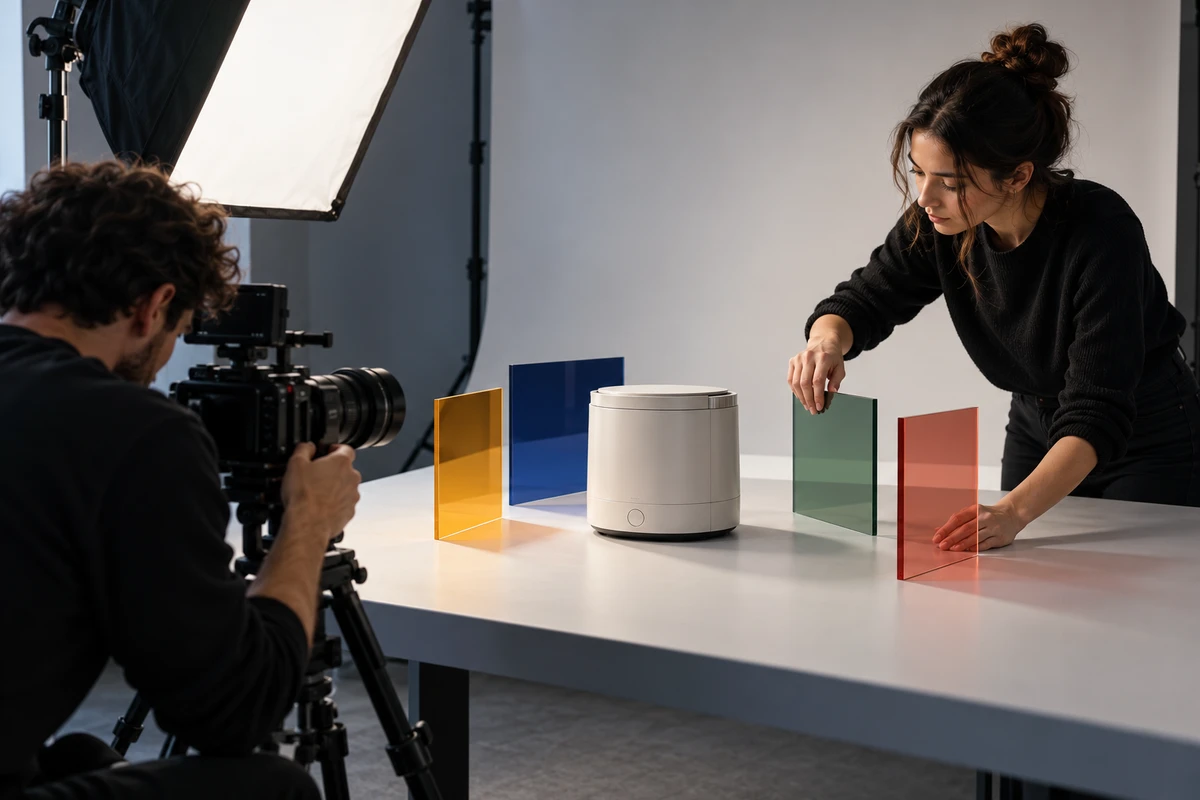
For teams producing in China, this decision also changes the shoot. A purely organic creator edit may be tightly authored. A future paid version benefits from clean dialogue, separable proof shots, cleared music, editable captions and a call to action that can change without rebuilding the whole film. ONCE's ecommerce product video production approach can help organise those production assets, while the brand retains ownership of creator contracts, media accounts and commerce operations.
Replace the single-video quote with six cost variables
Use this internal model:
Total collaboration cost = creative and production + organic placement + access and reporting work + paid-use licence + commerce or affiliate operations + renewals and version updates
This is not a benchmark and does not imply that every creator charges each item. It is a scope model. Its purpose is to prevent teams from hiding five different obligations inside one line called "creator video" and then comparing quotes that do not include the same rights.
Ask suppliers to mark which variables they own. Does the producer manage creator sourcing and releases? Will it deliver a clean ad-ready version? Who completes account linking and version naming? Who handles localised captions, product links and replacements? Who responds if the creator removes access, a product goes out of stock, or the paid-use term expires?
A lower production fee can become a more expensive programme if those handoffs are missing. Conversely, an organic-only pilot may not need the administrative weight of a full paid and commerce package.
Run the permissions once before launch
Use a test or unlisted video to rehearse the handoff. Check that the correct advertiser account can identify the correct creator channel; the access request goes to the intended legal and operational owner; the media team can locate the video; the planned campaign type and market are supported; music, likeness and product claims are cleared for the paid version; and the product can actually be tagged with a live destination.
The final delivery folder should contain four records: the publication URL, Brand Partner Access status, the paid-use rights schedule and the shopping or affiliate instruction. If a permission was not purchased, label it "not included". That is more useful than a vague assurance that the creator is comfortable with future use.
For overseas teams working with Chinese product and production partners, this four-permission brief creates a cleaner division of labour. The production team can design the required proof shots and versions; the creator can protect channel and likeness rights; the media team can operate the correct account; and the commerce owner can maintain products and links. ONCE can turn that rights stack into a China-based shoot and delivery brief once the brand supplies its target markets, product and media plan.
Official sources and scope
The platform facts in this article were checked on October 20, 2026 against YouTube Help, "Sharing brand partner access to your video" and "Get started with YouTube Creator Partnerships"; Google Ads Help, "Creator partnerships boost" and "About YouTube Creator Partnerships"; and the YouTube Blog posts "Discover a new era of brand and creator partnerships on YouTube" dated March 23, "Everything we announced at YouTube Brandcast 2026" dated May 13, and "Bringing brands and creators together to help you earn more" dated September 23, 2026. The four-permission handoff and cost variables are ONCE recommendations, not a YouTube methodology or claimed client result.