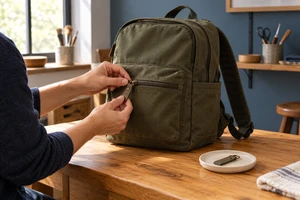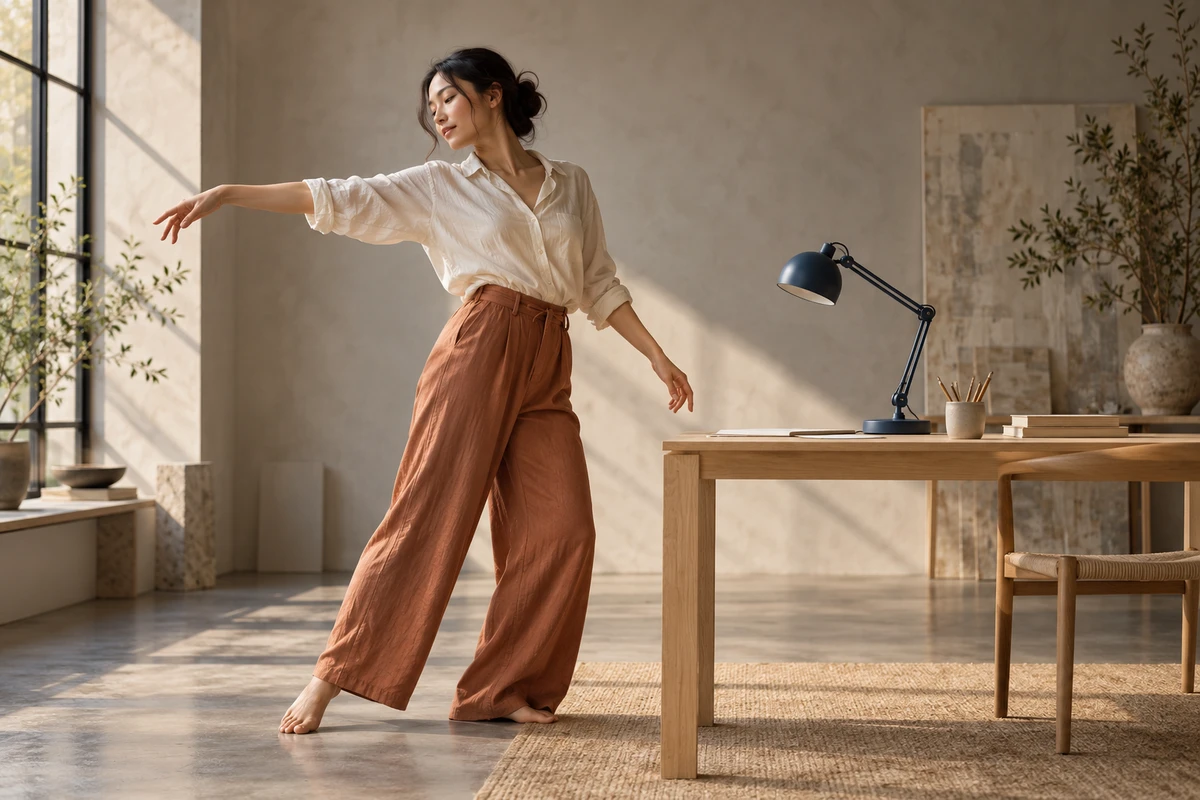
Imagine an original, fictional task-lamp commercial. Someone turns the shade towards a sheet of paper. After releasing it, their wrist continues along the same arc, followed by the arm and shoulders. The lamp stays on the desk; an ordinary adjustment has become the beginning of a dance.
Another version might feature an impressive routine, followed by the performer holding the lamp towards the camera. Either could look good, but they create different relationships between product and performance. The first tries to grow movement from use; the second places dance beside a product presentation. Before choosing a dancer or track, decide why the dance belongs here.
Dance can express more than a function
The product need not cause every step. Clothing, fragrance and service brands can use the body to explore a situation, relationship or imagined world. A film about letting go does not have to explain a garment feature by feature. But after saying “freedom, youth and energy”, what specific choice has the brand made?
Burberry’s campaign announcement of 10 November 2020 describes a historical advertisement featuring four dancers and choreography by (LA)HORDE. In the accompanying creative account, Megaforce connects the idea of characters facing the elements with the brand’s history, and describes changing a solitary story into one about friends facing adversity together. These are stated creative intentions, not evidence of advertising effectiveness or garment performance.
Project participant Cinelab Film & Digital also records that rationale in its Burberry Festive case study, published on 24 December 2020. It concerns the same project, not a second independent example. This article has not viewed the film and does not reconstruct shots or assess the dancing from those written accounts.
The useful lesson is how specific a proposal can become. Rather than simply asking people to dance happily, it identifies what they face, who is with them and why they respond through movement. Brand relevance can come from use or from the character’s world. Choosing the latter does not require every gesture to prove a selling point as well.
An everyday gesture is a seed, not yet a dance
Return to the fictional lamp. It is manually adjustable; the actual model’s permitted movement would have to be confirmed from the selected sample. Start small: hold an appropriate part, direct the light towards the paper and let go. So far, this is ordinary use.
The body carries the next change. The wrist retains the turning arc, the arm lengthens it, and the shoulders and weight shift continue it. An adjustment made to see the paper becomes the beginning of a brief departure from work. The lamp need not sway along, and it must not be forced beyond its actual range to accommodate the choreography.
That differs from repeating the adjustment many times. Turn, release and turn again may produce an operation montage on the beat. A movement phrase needs development: a shape can travel from a small gesture to the whole body, expand from compact to open or stop abruptly. The development should serve this particular expression, not merely fill more counts.
Bigger movement need not mean acrobatics. This concept looks for an undeveloped possibility within an ordinary gesture, not a performer running with a lamp or making the product withstand unrelated actions. Complexity belongs to the creative idea and professional rehearsal. Physical risk is not a substitute for an idea.
The ending remains a choice. The performer could draw the body back along the original arc, sit down and continue drawing under the lamp. Or the dance could pause before returning to everyday life, with a separate product image closing the film. One describes a brief expansion away from work and back; the other preserves the imagined state. Do not demand dreamlike freedom and a complete operating demonstration from the same ending.
Let the camera show how the movement develops
Cutting from the hand touching the lamp to feet, a face, fabric and product details may yield attractive images while obscuring where the movement began. For this concept, retain a view of the desktop, arm and body together during rehearsal.
A single take is not obligatory. Preserve the essential handover: the hand has released the product, but the body continues in the same direction. When that connection is visible, viewers have a chance to relate the everyday action to the dance. Keeping only the fullest pose may return the idea to someone dancing beside a product.
Camera position also changes the readable shape. An arm arc that is clear from the side may disappear behind the torso from the front. As the performer moves away, a desk edge or arm may obscure the lamp. Choreography and photography should address those questions from a shared viewing position, not finish separately and leave the editor to assemble them.
Music can provide rhythm without making every action finish on a strong beat. A touch, a pause before continuing or a sound arriving after the movement ends can each be an expressive choice. Keep it for what it contributes to the viewing experience. More frequent beat-matched cuts are not a universal answer.
A shorter version need not become a selection of the prettiest poses. Reduce the phrase to one lamp adjustment, one bodily extension and a clear endpoint. It contains less technique but retains its origin. A stand-alone dance excerpt can instead carry mood; do not expect it to explain the whole product interaction.
Ask for development from a gesture, not imitation of a routine
Bring the choreographic team a real sample, permitted operations, the character’s immediate task and a desired change: perhaps compact to expansive, or hesitant to decisive. References can establish a direction without transplanting another film’s signature steps beside a different product.
Retain one ordinary use of the object, then develop a single gesture. That may make the differences easier to discuss than asking for a fully occupied routine at the outset. This is a rehearsal proposal, not a test conducted for this article. Look at how the shape develops, when the product recedes and when the person resumes their task. If the connection exists only in the presentation, adjust those specific moments.
Separate bodily imagination from product promises. Stretching beside a lamp does not establish that it relieves physical tension. A turn continuing after the hand releases it should not be edited to suggest automatic tracking. Actual operations and performance claims require accurate images and information of their own; dance cannot prove them.
Not every brand needs to dance. If removing the routine loses nothing distinctive, the problem may be the absence of a clear expressive task rather than insufficiently impressive choreography. Conversely, a specific phrase need not represent the entire brand. Give this film one thing to express, and leave the body room to develop it.
For a dance-led brand film, bring the product’s real actions and the change you want the character to express. Explore choreography, performance and camera together through ONCE’s brand film production service.
Source note: the Burberry historical announcement and Cinelab production account were consulted on 20 October 2026; the latter was updated on 3 February 2022. No case film was viewed, and no choreographic rehearsal, product test or audience study was conducted. The lamp scenario and original AI-generated cover are independent fictional concepts, not ONCE client work or shoot records.