A person eating alone in a food ad does not have to begin in sadness and be rescued by someone arriving. A solo meal can be a deliberate choice: a flavour they want today, eaten at their own pace, without explanation. Its completeness need not come from a full table. It can come from the food and portion fitting what this person wants at this moment.
That leaves a useful creative question for food brands. If the character is not waiting for anyone, there is no video call and the doorbell never rings, can the meal still feel worth looking forward to? A line about self-love will not do all the work. The person needs to eat, and the food needs to play a part in what happens.
A meal for one is not a gathering with chairs removed
Keep the composition of a group meal but leave only one person, and the image can suggest that everyone else is late. An untouched second place setting, repeated glances towards the door and a conspicuously vacant seat all raise the same question: who is missing? Viewers begin waiting for a relationship to be completed. The food becomes a consolation prop.
This does not mean a solo composition cannot contain empty space, or that eating alone can never feel lonely. The space should belong to this person's present life rather than automatically reserve a place for someone absent. A small window table can accommodate a bowl, a drink and a book being read. It does not need to imitate a miniature banquet to qualify as a meal.
VML's official Wheel for One case page describes KFC connecting its Bucket for One with a single-cabin Ferris wheel experience: time alone becomes something to enjoy without interruption. This is the agency's account of the idea, not evidence of audience response. The useful principle is the agreement between a single-person product and a single-person space, not the attraction itself.
Show a portion for eating, not a sample for the camera
A solo-meal ad can contain beautiful food close-ups. But making food look abundant and making it look right for this particular meal are different tasks. An oversized plate may make an ordinary portion seem meagre. Adding more food to fill the frame may turn the advertised product into something else. The relationship between food and tableware should clarify the serving, not rewrite it.
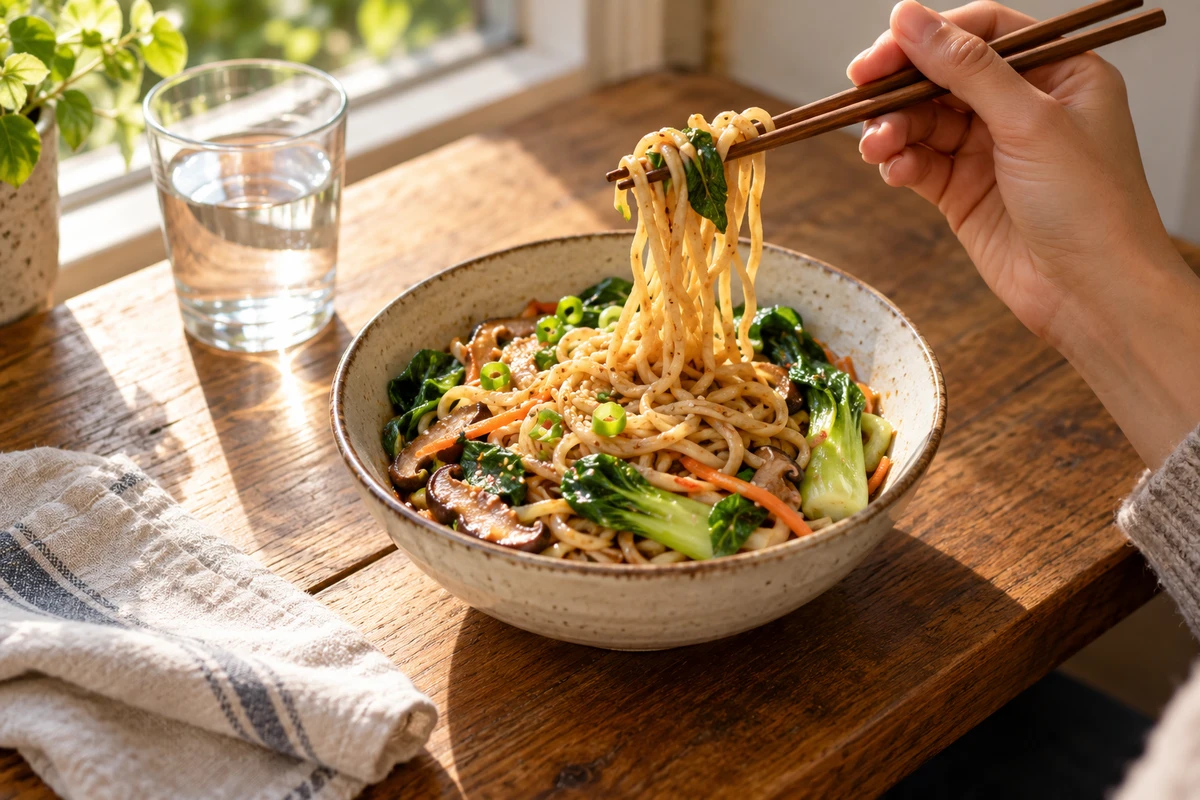
Consider a bowl of noodles. What goes into it, and how much of each ingredient appears, should follow the actual product and a genuine serving combination. If vegetables and an egg are additions, the images and copy should make that relationship clear. A richly assembled meal should not imply that every element comes from the same packet.
Completeness does not require flowers, wine glasses, candles and linen in every shot, either. That ritual may suit one brand, but it should not become a lifestyle standard every solo diner must meet. On an ordinary weekday, sitting down and finishing a flavour you enjoy can be enough of a destination for the story. This is a discussion of how advertising portrays a meal, not a judgment about nutritional completeness.
Let the character finish an eating action
The following noodle-ad concept is fictional. It is a way to discuss creative choices, not an ONCE client project, production record or performance test.
The character puts the mixed noodles in their usual spot, tries a mouthful, then mixes the sauce a little more thoroughly. The chopsticks return to the bowl, pick up a manageable bite, and the person settles into eating. Instead of rushing to a stock expression of delighted surprise, the camera lets that adjustment finish. The noodles have become the way this person wants them.
The product has to participate. The sauce being mixed through, noodles being lifted and an actual serving gradually being eaten give the character's choices a visible object. If any prop could replace the food without changing the scene, the story may be about taking a break but has not yet explained why this food belongs in it.
Not every movement needs to remain in the edit. Waiting and repetition can go, while the connection between tasting, adjusting and continuing to eat stays intact. Close-ups show the food; a slightly wider frame explains the relationship between body and bowl. If both are pursued only as attractive images, the result may become one sequence of food shots and another of portraits. The person never quite inhabits the meal.
Quiet does not mean switching off the world
Sound can keep this person within an inhabited city. A car passes outside, chopsticks touch the bowl, and eating continues. The scene need not use a sad song to explain solitude, or suddenly remove every environmental sound to announce an exclusive private experience. Sound should fit this particular character. Being alone is not enough information to prescribe an emotion.
The same applies to screens. IKEA's 18 February 2026 announcement of its Cooking & Eating Report says 54% of respondents watch TV when eating alone, compared with 40% when eating with people they live with. YouGov surveyed 31,339 people across 31 markets in August–September 2025. These figures describe behaviour, not loneliness or what respondents want in advertising.
A creative team therefore need not automatically remove a television to improve the character's life, or insert one merely to signal realism. What holds their attention now? If the product idea calls for a moment of attentive tasting, let attention return naturally to that mouthful. If the meal accompanies an easy evening watching a programme, the food can be enjoyed without demanding all of the person's attention.
End the meal without having to rescue it
A solo-meal ad can lose confidence at the end. After following an individual's rhythm, it introduces a partner, friend or phone call, as though the meal only becomes valid when someone else remembers the diner. If connection is the brand's subject, that can be a different story. If the intended idea is satisfaction in eating alone, the added resolution may undo it.
The fictional noodle scene could stop somewhere smaller: the person picks up the last piece of a favourite topping and carries on eating, without lifting a phone to prove to the world that they are doing well. This ending will not suit every ad. A sharing product can still celebrate sharing, and a story about exhaustion or sadness need not pretend to be cheerful. What matters is retaining the person's choice about this meal rather than casting them as someone waiting for the brand to save them.
For another market, that choice needs a plausible local setting. Whether a portion, utensil or pace of eating makes sense should be discussed against the actual product, its use and its audience, not deduced from nationality. There is no need to replace one sweeping lifestyle slogan with another. A person's freedom to eat according to their own needs is already a clear creative starting point.
If you are developing a dining story for a food launch, bring the real product, its serving combination and the moment you want to portray to a conversation with ONCE about advertising creative and product imagery. First give the food a convincing place in a meal. Then make that meal worth anticipating.
Sources consulted on 19 October 2026. This article uses public text from VML and IKEA; the remaining discussion is creative analysis. No case film was viewed, and no food shoot or audience test was conducted. The original AI-generated cover is a fictional illustration, not a representation of a product for sale.