Before approving a branded game, ask for the next playable update as well as the launch plan. What would bring someone back? Who would build that change, support it and tell players it exists? The answers help determine whether you are commissioning a temporary activation or an experience your team can continue to run.
For an overseas brand working with a Chinese supply chain, this is also a coordination decision. A product launch calendar, a creative studio's delivery schedule and a game developer's release plan need to meet in a funded program. ONCE recommends budgeting for a defined operating period before committing to a persistent destination.
A persistent project comes with another production schedule
In its October 5, 2026 announcement, Super League described the Panda Express Obby on Roblox as becoming a standalone, ongoing destination. The disclosed program included six monthly content updates involving characters, seasonal courses and menu themes.
That establishes the supplier's published project arrangement. We have not verified each update, played the experience or obtained the complete research behind the release's performance claims. Those claims do not supply a return forecast for another brand.
Roblox's official LiveOps essentials documentation distinguishes regular content additions, major updates, usability improvements and bug fixes. It also distinguishes additions using existing systems from larger work that introduces or expands systems. An “update” therefore needs an actual scope before it can have a useful price.
ONCE's interpretation is that a persistent experience brings ongoing operating decisions into the creative commission. The approval should cover a credible next period of work rather than assume that a finished build will sustain itself.
ONCE's cycle budget
Choose a planning horizon that includes the launch, a meaningful subsequent update and time to observe its use. The horizon should fit your project; the monthly schedule in one announcement is not a universal requirement.
Use this proposed budget model:
Full program budget = initial build + the sum of operating periods + closeout.
The model organizes real quotations and internal work. It supplies no industry prices or assumed savings. Assign each task once, including tasks already bundled into a supplier's fee.
| Budget component | Work to specify | Question to settle before approval |
|---|---|---|
| Initial build | Design, development, art, testing and release preparation | What can support later updates, and what exists only for launch? |
| Content updates | Tasks, routes, characters or event materials | Does this use existing mechanics or require new functionality? |
| Technical and player operations | Fixes, compatibility checks, feedback and event execution | What ongoing support is included, and who handles exceptions? |
| Discovery and evaluation | Update trailers, creator content, paid distribution and analysis | Which costs are media, which are production, and who owns the review? |
| Closeout | End-of-program information, project handover and remaining destinations | What still needs to happen when additional spending stops? |
For a team coordinating across markets, include the brand's own approval time and product inputs. Overseas marketing may need to confirm the message while a China-based team supplies assets or product information. Decide who can authorize changes before the update reaches a release deadline.
Do not assume a cinematic 3D asset is automatically suitable for an interactive game. Have the developer confirm what can be used and what requires adaptation. This is a scoping task to resolve before the creative and engineering quotations are compared.
Give the next update a player purpose
Consider a fictional outdoor brand planning a campsite experience. Players collect objects and arrange a shared camp. A later product release gives the brand something new to display, but it does not by itself give a returning player a new activity. This is an illustrative planning scenario, not an ONCE client project or a claim about real equipment.
A possible second period could add a cooperative route using the existing interactions. The developer would need to determine whether that is truly a content addition or requires new rules, interface work and testing. Two proposals both called “refresh the camp” could contain very different amounts of work.
For each period, write what a player can do on returning, how that activity relates to the brand, what will be observed afterward, and who is responsible for making and approving it. A limited activation may be sufficient if the only clear objective is a single launch moment.
An update can also improve what already exists. If players cannot understand the goal or a device has a technical problem, a focused correction deserves a place in the budget. Requiring a new map every period can make important maintenance invisible to procurement.
Match the observation window to the decision
Roblox's Retention documentation, checked October 18, 2026, groups users by their first play date for D1, D7 and D30 return measures. Recent groups need time before their seven- or thirty-day results exist. Compare groups over equal observation windows.
For a brand program, track entry, completion of the intended activity, return visits and any subsequent brand action as separate observations. An acquisition campaign running alongside an update can change the player mix. Total visits alone will not show whether established players are returning more often.
These observations can identify experience problems. They do not establish additional physical-product sales. If a purchase outcome matters, plan a measurement method capable of supporting that claim and state what remains unobserved. We have no Panda Express dashboard data and propose no universal retention target.
Keep the original objective visible. A temporary experience designed for an event should be assessed against that event's purpose; it need not be relabeled a failed permanent world after its planned ending.
Reassess the next period after launch
Once the build has been paid for, compare the future work and costs of three options: another update, limited maintenance, or closeout. Keep past spending in the project review, while asking what the next optional commitment will achieve.
List unavoidable commitments separately. Costs payable under all three options are common costs; stopping new production does not automatically remove them. This prevents both “we already spent so much” and “closing costs nothing” from substituting for a real decision.
Approve another period when there is a clear player purpose, a capable team and a defined observation plan. Approve a bounded repair when the obstacle is technical or experiential. If there is no continuing content need or operating capacity, complete the intended activation and handover.
For ONCE, a possible role is to connect brand storytelling, imagery, 3D content and update communications with specialist game development and operations. That is a direction to explore, not a claim that ONCE already has Roblox engineering capabilities or proven game results. The commercial opportunity depends on work clients continue to need and teams can reliably perform.
Prepare the first objective, the next player task, the responsible parties and the intended end of the operating period. Those inputs make a much more useful commission than a promise to keep a world online indefinitely.
Sources and scope
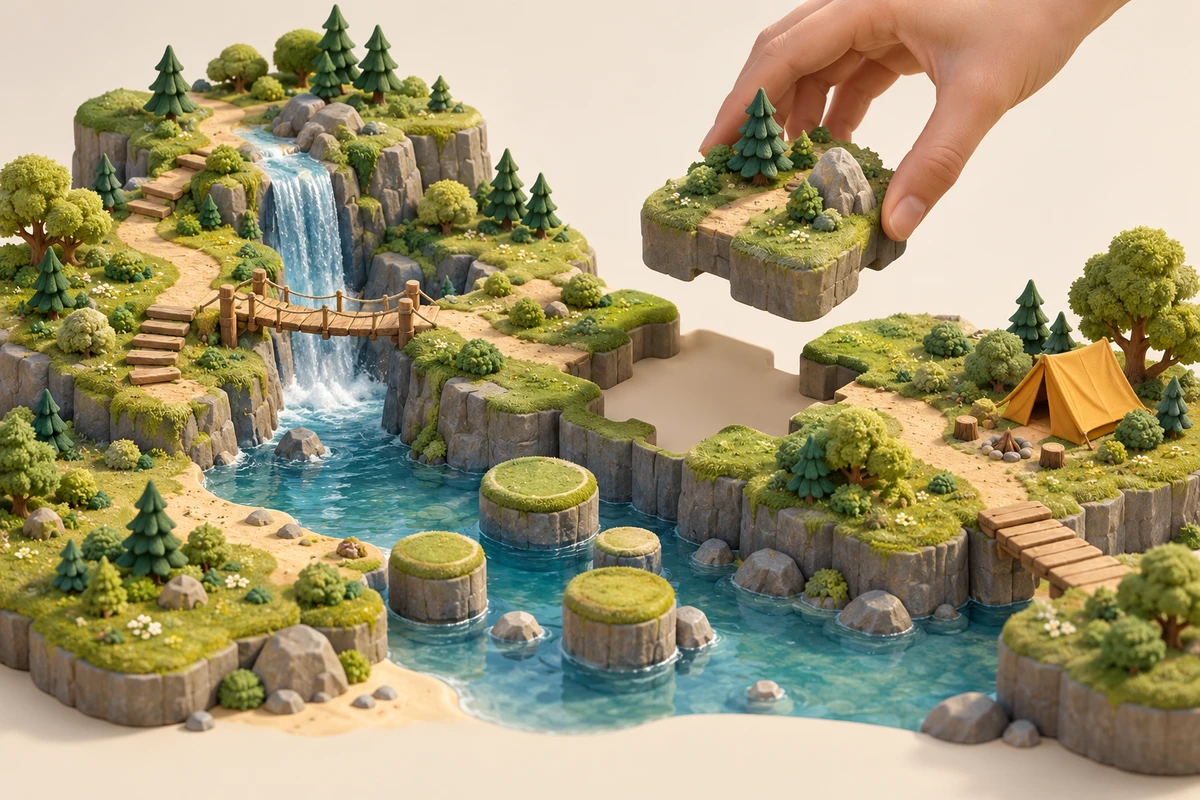
The Super League release is dated October 5, 2026. The two Roblox documentation pages are living sources checked October 18, 2026; no publication date was confirmed. The cycle budget and commissioning choices are ONCE's original analysis. No game operation, audience experiment or sales attribution was performed. The cover depicts a fictional modular world.