A brand can commission six episodes and still be unclear about what it is buying. One proposal puts the product inside a creator's established show. Another develops a new, creator-led series around the brand. Matching the episode count does not make those equivalent purchases.
The useful distinction is not simply reach versus ownership. Joining a show means working with a viewing experience people may already recognize. Starting one means taking greater responsibility for developing that experience—and giving anyone a reason to return. Neither an export folder nor a brand account supplies an audience by itself.
A concrete signal, not a universal offer
TikTok's September 14, 2026 announcement, TikTok and Amplify launch new creator-led content series for brands, describes The Next Episode. It distinguishes Creator Content Series, where brands enter a creator's episodic world, from creator-led Brand Content Series where the brand takes a central role. It also mentions production support linked to media investment for eligible brands.
That announcement comes from TikTok's Australia and New Zealand business context. It does not establish a global entitlement, an ONCE client's eligibility or a guaranteed business result. We checked it on October 18, 2026.
YouTube's September 23 announcement about its living-room features says Shorts Series began rolling out across web, mobile and TV, with seasons, episodes and sequential playback. Better organization can support a series. It does not guarantee that a brand's viewers will encounter every episode in order.
ONCE's interpretation is a commissioning question: should the brand adapt to an existing show, or fund the development and ongoing work of a new one?
Buying into a show means respecting what makes it a show
Look beyond a creator's follower count and a single hit. Review several relevant installments. What are people watching for: the host's judgment, a guest's unpredictable response, a recurring joke, or a changing relationship? Ask whether the proposed series already exists or is itself a development project. A recognized creator can still be launching an unproven format.
Then examine the requested changes. Accurate product information can be a legitimate requirement. Rewriting the host's voice, removing every awkward outcome and replacing every ending with the same sales script is a different proposition. The collaboration may still be possible, but it should be discussed as development rather than priced as access to an unchanged show.
Existing familiarity is not a sales guarantee. Confirm the relevant market, content samples, available audience information and publication arrangement. Where evidence is missing, keep it missing; a headline follower number does not resolve product fit.
A brand-led series buys more responsibility, not automatic fandom
A new series can start with the brand's world and select talent to suit it. That gives the team more room to shape characters, setting and tone. It also creates work: someone has to develop the format, direct performances, generate future stories and manage release. These are not incidental extras to a shoot.
For teams producing through a China-based partner, assign those jobs explicitly. A production team may deliver the episodes while the overseas marketing team manages the channel; alternatively, a broader engagement may include development and ongoing editorial work. Neither arrangement should be assumed from the phrase “series production.”
Here, building your own describes the commissioning model, not automatic legal ownership. Confirm the actual arrangements for using episodes, returning talent, adaptation and future production. Paying for filming does not by itself answer every one of those questions.
And a series is not always the right purchase. A time-limited offer may need a clear standalone ad. An ongoing situation that the brand is prepared to nurture may justify development. Greater creative control is useful only if the team is willing to do the work it creates.
The ONCE Change-List Comparison
Use the same brand task to compare both proposals before negotiating equal episode counts. ONCE proposes four headings: what must be communicated, what can be negotiated, what should not be forcibly changed, and what capability is still missing. This is an editorial method, not a reported client test.
| Question | Enter a creator's series | Develop a brand-led series |
|---|---|---|
| What must come through? | Product information that fits the show; separate demonstrations where needed | Information worth integrating without overwhelming the story |
| What can change? | Placement, timing, production arrangements and agreed expression | Characters, setting, tone and the brand's role during development |
| What must be protected? | The mechanism that makes this particular show recognizable and worth watching | The story rules and character behavior established for the new show |
| What is still missing? | Product references, a workable integration, or confirmed market and release conditions | Format development, casting, future stories, release and audience work |
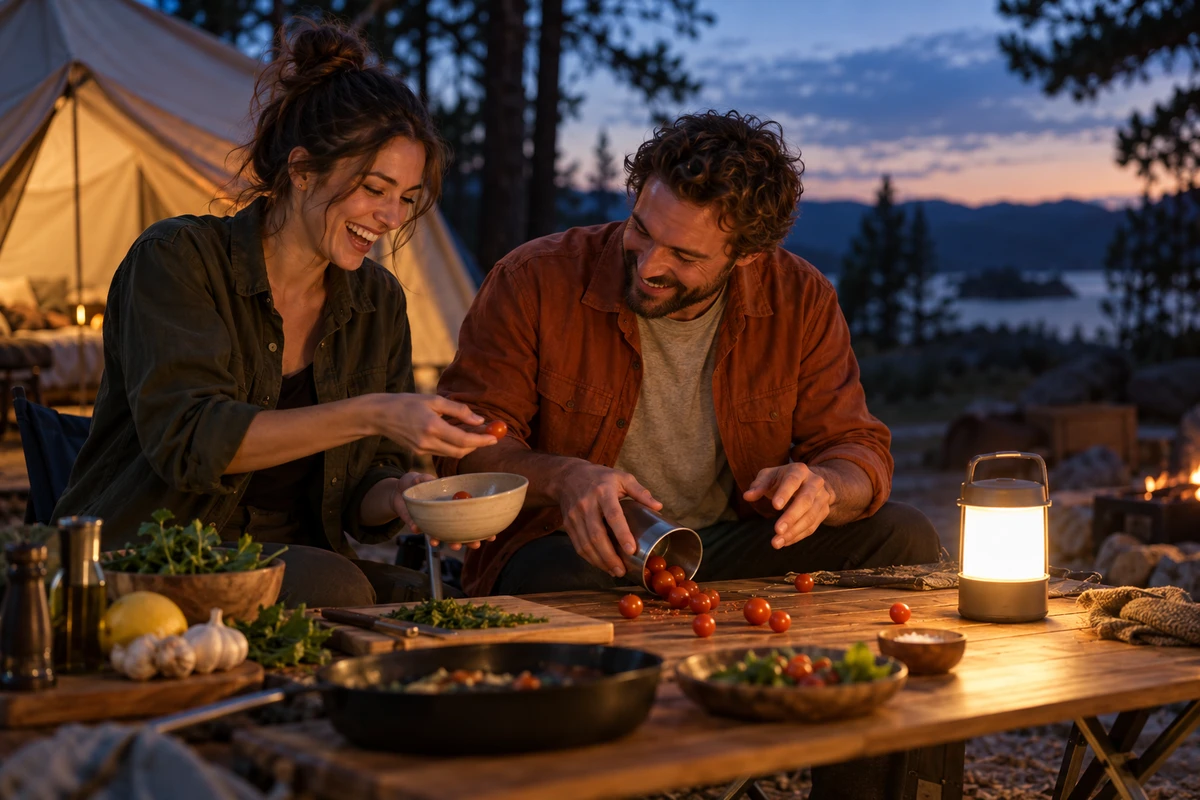
Consider a fictional outdoor-light brand. The task is to make the lamp a natural part of preparing dinner together at a campsite—not to claim a particular brightness, runtime or protection rating. One proposal joins an established camp-cooking show. Another creates a comedy about unlikely camping partners. This is not an ONCE project or a claim about any real product.
Ask each team to write the short scene where the lamp first matters. In the existing show, can it participate in the preparation, or does the interaction stop for a specifications recital? In the new comedy, why do these people stay together, and does their behavior remain believable when the product appears?
If the real task is a performance demonstration, specify the supporting material and demonstration separately. An atmospheric dinner scene cannot prove runtime. A companion product film may serve the requirement better than forcing the show into a different genre.
The scene comparison reveals adaptation work, not future virality. Agree whether the proposal work is paid, what it may be used for and what further development involves. It is not an invitation to demand unlimited free scripts.
Compare the work behind the price
For an existing series, ask what the fee includes for participation, creator work, brand adaptation, production and publication. For a new series, identify format development, casting, sample scenes, filming, continuing editorial work and channel operation. Either model can generate additional work; neither is inherently the cheaper option.
Keep production, publication and paid amplification visible as separate responsibilities. An average episode price becomes useful only when duration, scope, creative responsibility, release work and agreed uses are comparable. One quote may include an opportunity to reach an existing audience; another may end at file delivery.
After a bounded engagement, assess natural integration, delivery, repeatability and the viewing or business feedback actually available. Use reliable returning-viewer information where it exists. Do not divide one episode's views by another's and call the result audience retention across episodes. Creative fit and sales effectiveness remain separate questions.
Discuss those responsibilities through ONCE's video production solutions with a brief that says what the brand must communicate, what the creator can preserve, and who will sustain a new show. For ONCE, the potential durable asset is better judgment about fit and development—not a claim that we already own a successful series or recurring revenue.
Before asking for six episodes, decide whether you want to be a good guest in an existing world or take responsibility for opening a new one.