A scuff can be a visual flaw—or part of the reason someone cannot quite replace an object. The difference is not how attractively it has aged. It is whether the advertisement helps us understand what it has been through and why someone still picks it up today.
Product imagery is good at presenting the newly unboxed moment: intact surfaces, clean outlines and attention directed toward acquiring something. A used product introduces another subject: how people live with it after ownership begins. A brand film can explore value beyond novelty, but doing so requires a more specific idea of what “old” means.
Give a mark a past—and somewhere to go
In its May 18, 2026 announcement of For a Lifetime of Lives, RIMOWA describes a trumpet and its protective case passing from father to son through a continuing musical life. Dents, stickers and travel marks become part of the object's character. This analysis draws on the campaign text, not a shot-by-shot viewing of the complete films.
The useful creative idea is that the marks belong to an ongoing relationship. The case carries not only past journeys but the next departure; the handover includes the person who will keep using it. Isolated close-ups of dents, accompanied by a line about the passage of time, may not establish any relationship with the person on screen.
Patagonia's historical material offers a different entry point. Its September 10, 2013 announcement of Worn Wear invited customers to submit photographs and stories about old clothing. It featured a pair of 1994 surf trunks that had been altered and remained in use. The object was presented alongside its owner's continued use, not simply displayed as something old. This is not evidence of the program's present scale, product lifespan or environmental results.
The approaches differ: one passes an object between generations in a campaign narrative; the other starts with customers' existing possessions and experiences. Both suggest that wear benefits from a connection to something still happening. Remembrance can matter, but continued participation in life takes the story beyond nostalgia.
Give the person something to do today
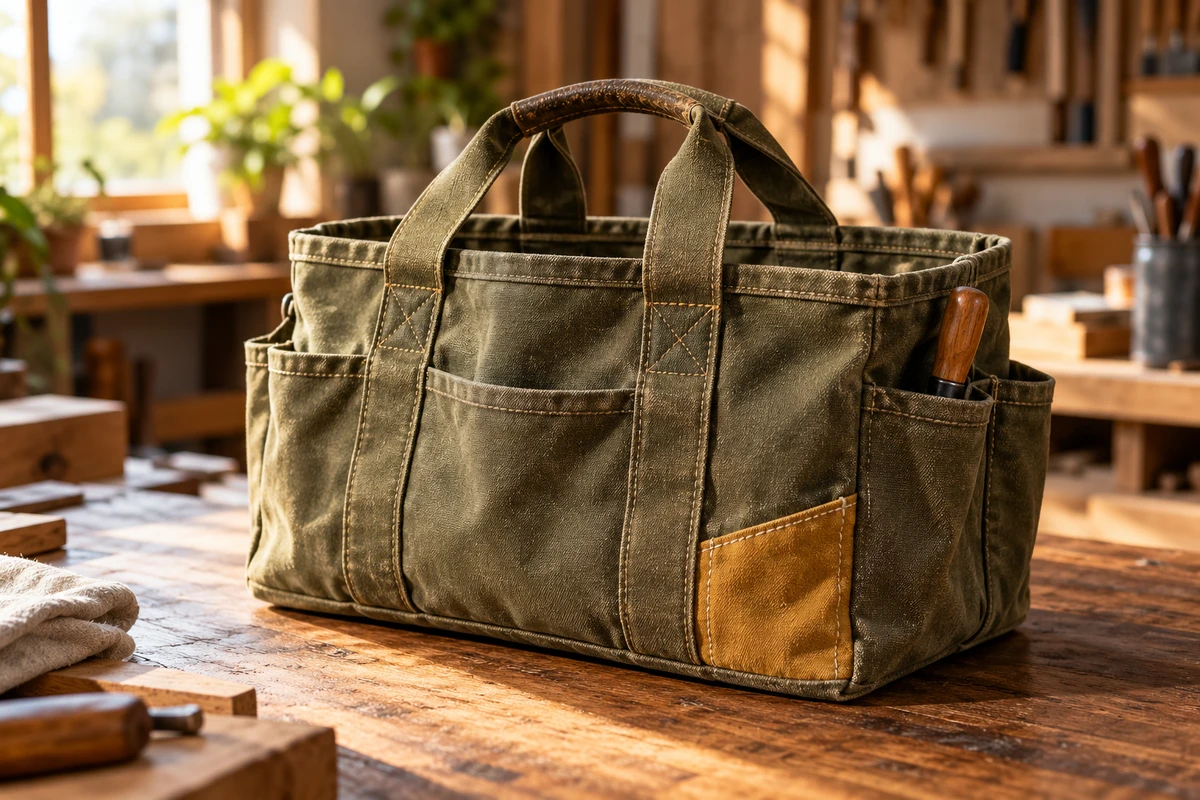
Imagine a film for a fictional canvas tool bag. This is not an ONCE client project, and no durability test has taken place. One corner has a patch, and the handles have darkened. A sequence of close-ups praising the years could probably be transferred to an old suitcase, shoe or jacket with little change.
Try a different scene. Someone is preparing to repair a chair: they find a familiar tool in the bag, finish packing it, pick it up and leave. The bag first matters because it still has a place in this action. The patch need not receive an opening close-up; it can enter our attention as the person straightens the corner. We understand what the object does before being asked to care why it was kept.
With a real owner's account, questions can become more specific. When did they consider replacing it? Why did they decide otherwise? What did they do with it after a particular repair? Questions should help the person remember, not lead them toward a prewritten declaration of lifelong companionship. An ordinary answer can be worthwhile: knowing where the tools are, or liking how the bag feels to carry. A relationship does not require an extraordinary adventure.
One action can express familiarity better than a montage
Familiarity might appear in retrieving something without searching, knowing how to set the bag down, or tidying it after use. These are possibilities for a writer and director to consider, not claims about every long-term user. Observe the actual person's habits before deciding which detail belongs in the film.
Performance need not stop repeatedly to caress the marks. If every touch of a patch prompts a nostalgic expression, an everyday object can become a memorial waiting to be explained. Let it participate naturally in something happening now. Some feeling can remain in the audience's interpretation rather than being written into every expression.
Choose marks according to what the story says
More wear does not necessarily produce a deeper story. One change connected to use may matter more than a surface covered in scratches. A distracting stain has no obligation to become the hero simply because it is real. Select details for this particular expression rather than applying the same faded aesthetic to every old object.
Distinguish changes in appearance, repairs and functional problems. A film can appreciate a carefully sewn patch without using gentle music to turn unresolved damage into a claim that older is always better. If repair matters to the story, show how use resumes afterward. Without the relevant record, a polished outcome shot should not stand in for the facts of what happened.
Brand identity also needs more than a closing logo. Real construction, a way of using the object or a recognizable design can explain why this particular product belongs in the relationship. Yet not every mark is the brand's achievement. Some reflect the owner's care, a repairer's work or an accidental event. Keeping those roles distinct prevents the object from appearing to take credit for someone's entire life.
Let time pass without losing the same object
For a film spanning several periods, choose a recognizable feature that can persist through use. Every shot need not enlarge the same patch; shape, position and condition can provide enough continuity. If a corner repaired in one scene appears never to have been repaired in the next, production design or editing may inadvertently disrupt the passage of time.
Before shooting, discuss that detail's initial state, the action that changes it and what later use retains. Other marks need not receive equal screen time. A short version could preserve a single act of picking the object up again, with only the necessary context in a line of explanation, rather than rushing through a montage of decades.
A genuinely old object, a prop aged for a story and a generated concept image serve different purposes. Present a reconstruction or concept as what it is; aged texture should not impersonate a record of years of use. Nor can an older sample's experience be silently transferred to a similar-looking new model. An affecting story and the product-generation facts it can establish are separate questions.
What is worth retaining may ultimately be not “this is old,” but “this still belongs in someone's life.” That is neither a durability test nor an automatic calculation of environmental benefit. It offers a particular creative viewpoint: beyond the first day of ownership, toward the moment someone still wants to use the object today.
If you are developing a product or brand film, bring an actual object, an experience its owner is willing to share and a use that still takes place to a creative discussion with ONCE. Find the part of that relationship worth putting on screen.
Sources were consulted October 18, 2026. This article develops creative analysis from the two dated official brand texts above; the complete films were not reviewed, and no audience or product testing was conducted. The tool-bag scene and AI cover are fictional concepts, not RIMOWA or Patagonia products or records of a real user.