Your production team in China can build an inviting room on set. It cannot inspect the room where your customer lives. That distinction matters when the missing reason to buy is not another product benefit, but something the customer needs to discover at home.
For an overseas marketing team commissioning product content, the useful addition may be an action-led companion edit: a video that helps someone make one practical observation, keep the result and use it in a purchase decision. That is a different brief from putting a stronger button on the final frame.
A platform argument, not an industry verdict
In “Why intention matters more than attention”, published on October 13, 2026, Pinterest CMO Claudine Cheever argues for judging value through people's progress and designing experiences that lead into life beyond the screen. It is a current statement of the platform's perspective—not independent evidence that advertising has collectively changed, or that shorter viewing automatically produces better outcomes.
ONCE's narrower proposition is this: where a useful decision depends on information from the customer's own environment, a video can help the customer obtain it. The objective is not departure itself. It is a better-informed return to the choice. This is a creative hypothesis, not a reported ONCE campaign result.
A familiar retail example shows why such preparation can matter. IKEA US's sofa buying guidance advises checking the intended space and the doorways, halls and stairs along the delivery route. The page has no stated publication date; accessed October 18, 2026, China time. It demonstrates a preparation task, not the commercial effectiveness of any particular video treatment.
Commission the observation only when it earns its place
An off-screen task is useful when its result could change the decision: noticing a room constraint, sorting existing belongings or identifying a real use situation. It should be safe, possible with readily available materials and available later—not an instruction to act immediately wherever someone happens to be watching.
Do not add work merely to manufacture engagement. A brand film may properly seek recognition, feeling or recall. It does not fail because the viewer did not inspect a cupboard afterward. Nor should a marketing interaction ask consumers to attempt electrical work, dismantling or activities requiring professional judgment.
Keep the hero film if it serves its purpose. Scope a companion edit only after identifying a worthwhile task.
The ONCE Off-Screen Handoff
For this article, ONCE proposes a five-field handoff sheet. It is a planning tool, not a platform requirement or a claim to have invented user-task design.
| Field | What the brief must specify | What production needs to show |
|---|---|---|
| Situation | When and where the viewer can reasonably act | A recognizable context, not a supposedly universal home |
| Available materials | What the viewer already has | No need to buy the advertised product first |
| One action | An observable activity with an endpoint | Enough of the start and finish to make it usable |
| Retained result | A note, discovery or unresolved question | What is worth keeping after the video closes |
| Return path | Where that result informs the choice | Relevant product information, not a restart at the homepage |
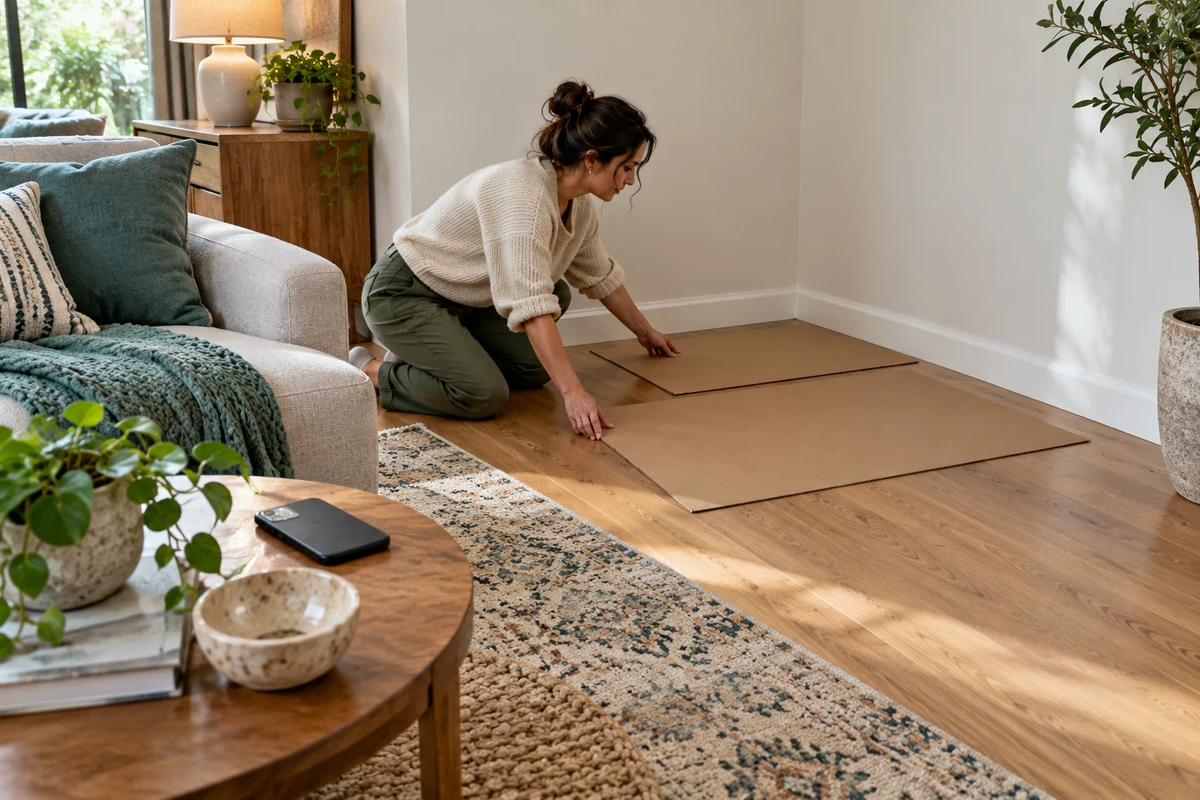
Consider a hypothetical storage-furniture launch. Instead of ending every edit at “shop the collection,” one companion version could invite viewers to place an existing empty carton where they imagine the unit, notice interference with a door or everyday movement, and note the obstacle before consulting approved product dimensions. This is not an ONCE client example. A carton is an observation aid, not an accurate measurement method, installation instruction or fit guarantee.
The production question becomes more interesting than “Which CTA sounds energetic?” Can viewers see what to inspect and what to retain? Would the action survive without the director explaining it? A reference frame that can be paused or saved may help. Replaying instructions is legitimate use, not a failure of memory.
For teams coordinating a China-based shoot with an overseas website, divide the responsibilities early. Product colleagues confirm the relevant information and limitations; the creative team demonstrates the observation; the destination-market team checks that the return page and wording make sense locally. A new language track alone does not establish that the task works in another household context.
Test the handoff, not the participant's enthusiasm
An internal rough-cut review can catch obvious gaps. Ask a colleague what they would do, what they would need and what they would keep afterward. If the explanation only becomes clear after the director intervenes, revise the material. Do not report this internal check as customer research.
If further validation is warranted, invite actual or likely users to attempt the task in suitable conditions. Obtain consent and avoid collecting unnecessary home images, addresses or personal details. Give a neutral goal without embedding the answer in the moderator's instructions. Watch where the person hesitates and whether the observation can be used with the intended product information.
This borrows from the task-observation approach in the GOV.UK Service Manual's “Using moderated usability testing”, published February 21, 2017, and updated October 3, 2017. Its guidance supports clear, believable tasks without giving away the answer. It is not evidence of advertising lift.
Keep the conclusions separate. Explaining the task shows comprehension. Saying “I would do that” is stated intent. Completing it under observed conditions is evidence of execution under those conditions. None, by itself, establishes a purchase or incremental sales caused by the video. Those questions need their own appropriate evaluation.
Buy a usable transition, with a defined scope
Bring the missing customer information, permitted activity, approved product references and destination page into the production discussion. Ask whether existing footage is sufficient, which start-and-finish shots are missing, whether a reference aid is needed and who maintains it when the product changes.
Do not assume a fixed number of edits or an invented standard price. The companion version has its own creative and production work. Research recruitment and commercial-effect evaluation should also be explicitly scoped, not quietly included in an editing fee. ONCE's video production solutions provide a starting point for discussing the production brief; this article does not announce a new package.
For a production business, the longer-term opportunity is to retain useful methods for understanding purchase obstacles, not simply accumulate more exports. Whether that becomes a sustainable service depends on actual use, maintenance effort and willingness to pay—not a platform statement or a forecast of automatic margin growth.
Before commissioning the next companion edit, complete one sentence: “After doing ___ at a suitable time, the viewer will keep ___ and use it to decide ___.” If the blanks are weak, do not burden the customer. If they are concrete, you have something worth filming beyond the button.