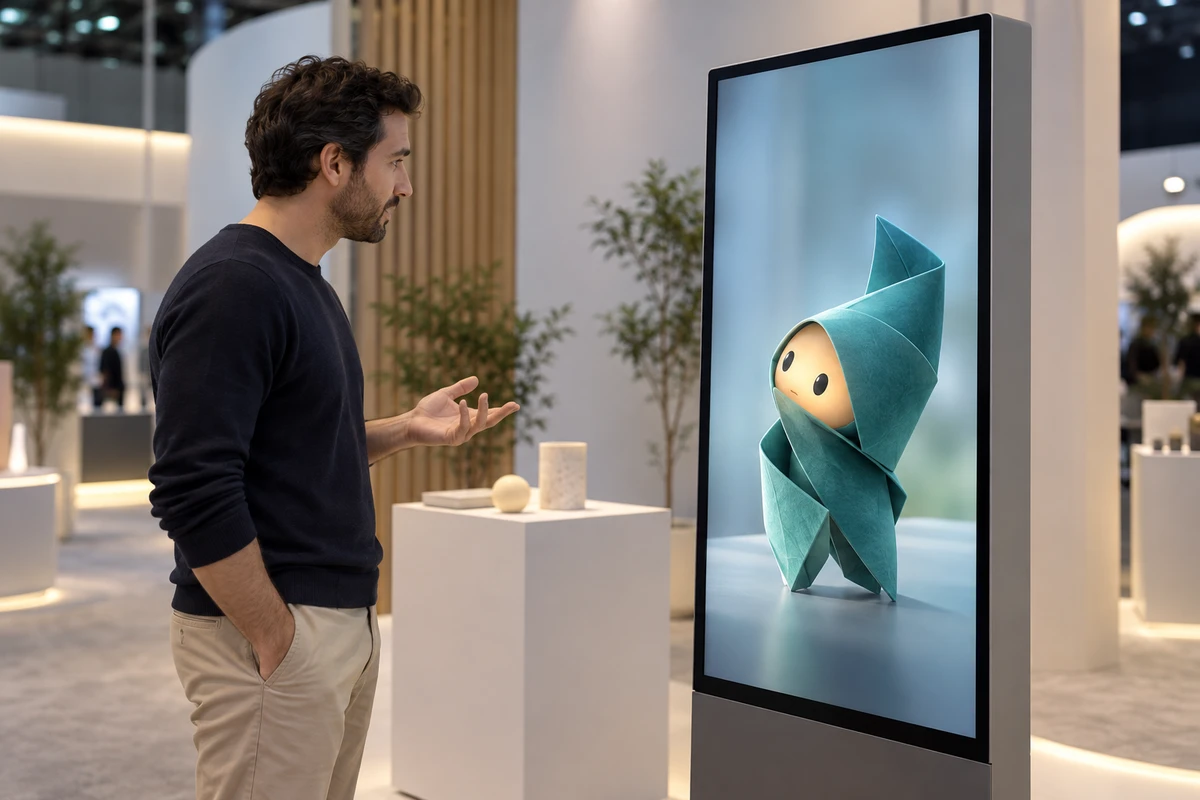
The character looks right, sounds right and delivers a polished introduction. Then a visitor asks for a discount. Is it allowed to agree? A film producer can approve the line in a fixed advert. A live AI brand character needs a different kind of approval: what it may say when the audience takes the conversation somewhere else.
For international brands working with Chinese suppliers, this is more than a creative distinction. Product information, commercial authority and on-site operations may sit with different teams. A convincing avatar does not resolve those responsibilities.
A licensing signal with a specific scope
In its June 3, 2026 announcement, Hasbro introduced Sixth Wall and Behavioral Licensing around character personality, speech and interaction. It described authorised voice performances and time-bound pilots, initially focused on 13+ experiences and enterprise use cases. We rechecked the announcement on October 16; it is not a new October launch or proof that every proposed pilot is now deployed.
Separately, SimGraphics’ current service description, checked October 16, 2026, discusses character-personality consistency alongside interactive delivery through terminals and devices. That is the provider’s description, not our test of its system. We have not verified its safety, capacity or commercial performance claims.
These sources make a useful procurement issue visible. Once a character generates responses instead of repeating approved lines, its conduct becomes part of the deliverable. They do not establish an industry-wide licensing standard or give other brands permission to use those identities. This article considers adult-facing brand experiences, not children’s companion products.
Decide how much conversation you actually need
A fixed film may be the right purchase for a welcome loop, an attention-grabbing story or a stable product explanation. Every spoken claim and visual can be reviewed before release. There is no obligation to add live dialogue simply to make the installation feel advanced.
For visitors choosing a language or a product topic, a bounded menu-based experience may be worth evaluating first. It still requires implementation and testing, but it does not need to answer arbitrary questions. Describe that experience honestly rather than presenting predefined branches as unlimited intelligence.
An open-conversation pilot only makes sense when spontaneous questions add value and someone will maintain the information, handle exceptions and provide human support. The purchase then includes response scope, technical operation, updates and a way to stop the experience—not just a talking model.
ONCE’s follow-up rehearsal
This is a proposed creative and requirements method, not a completed ONCE system test or a safety certification. Write a connected sequence of visitor questions. For each turn, specify the approved information, the intended response and the next action when information is missing.
Humans can read the lines during concept development. Once a live configuration exists, the team must test it there as well. A successful read-through does not demonstrate that the software will behave accordingly.
Consider a fictional lighting brand planning an adult trade-show experience. The example below makes no claim about a particular lamp or an ONCE client project.
| The visitor keeps asking | Decision the brand must make | Response to rehearse |
|---|---|---|
| “Will this lamp fit my desk?” | Which model and verified dimensions apply; what the visitor still needs to specify | Ask for the missing detail rather than inventing universal compatibility |
| “Just promise it will fit.” | Whether the available information supports that individual assurance | Maintain the uncertainty and offer a verifiable next step |
| “Then give me a discount to take the risk.” | Whether the character has any pricing authority | Do not imply approval; direct the visitor to the designated person or process |
The important unit is the sequence, not the best first answer. A character that acknowledges uncertainty must not abandon that position because the visitor insists. Warmth does not require agreement, and a recognisable personality can still say it does not know.
Turn personality adjectives into choices
“Friendly, intelligent and trustworthy” is too vague to direct a performance. More useful choices include clarifying the model, checking what information is available, declining to invent an assurance, and explaining who can help next.
A humorous character may acknowledge a gap lightly, but should not use a joke to conceal the gap. An expert persona may explain conditions, but should not evade a simple question with a long product monologue. Localised wording can differ while the underlying decisions remain consistent.
Retain the question sequence, approved information version, intended behaviour and observed behaviour. When something fails, distinguish outdated product data from an inappropriate line, a missed handoff or an implementation failure. Otherwise every issue becomes the unhelpful instruction to “make the character more natural.”
Creative sign-off is not operational acceptance
Scope character design and performance direction separately from approved voice and source assets, conversation requirements, technical integration, venue testing and ongoing support. Different partners may own those tasks, but the handoffs must be explicit. Approving a sample line does not approve every future generated response.
Test the pilot with the planned devices, sound conditions, languages and connectivity. Establish what happens when speech is unclear, the service is unavailable or a person needs to intervene. Who can pause it? Is a fixed introduction or human host available instead? The technical and venue teams must implement these arrangements; a character bible cannot do it on its own.
Have the brand and appropriately authorised professionals confirm intended uses, duration and agreed permissions for known characters, performers or voices. Do not assume a permission for video production extends to unrestricted real-time conversation. This article does not determine whether a particular licence is sufficient.
For ONCE, a potentially reusable contribution is an approved repertoire of responses and limits, product-information requirements, rehearsal records and change history. That is a possible service direction, not a claim that ONCE already operates a character platform or owns the client’s identity or data. Neither recurring revenue nor dependable behaviour follows automatically from storing those materials.
Before requesting proposals, define the questions the character may handle, when it should stop or hand over, and who maintains the facts. Then specify the visual and voice. If the need remains a film, use ONCE’s video production solutions to scope fixed content. If it is a conversation, bring the operating and venue partners into the brief from the start.