Before asking a factory for a larger run, decide what the object is being hired to do. A spectacular campaign prop, a desirable giveaway and a viable retail product can begin with the same sketch. They require different evidence—and different people responsible after the camera stops.
For international brands working with Chinese suppliers, a convincing sample can arrive before the commercial question has been answered. A supplier can establish how to make something. The brand still has to establish why an audience should want it, what the audience believes it will receive, and whether the delivery operation is ready.
An attention-getting object is not yet a merchandise business
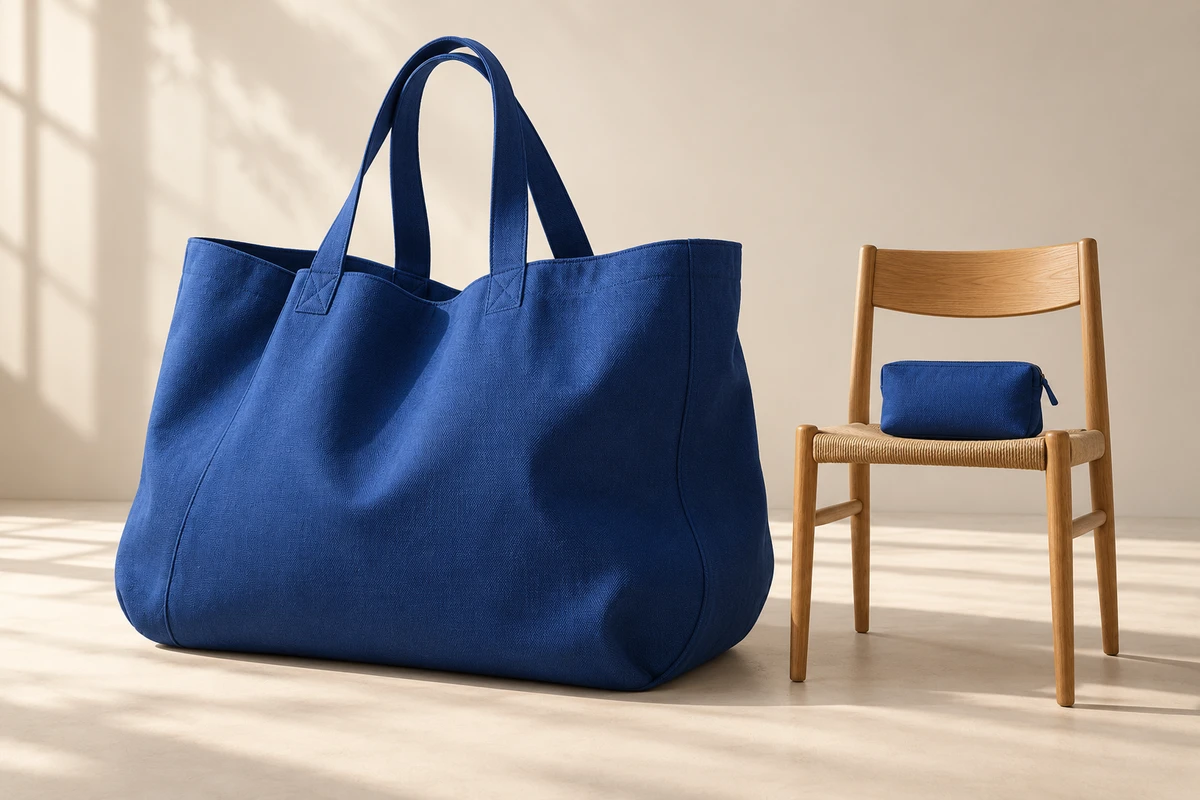
On October 13, 2026, Chipotle announced an oversized takeout bag promoting Family Meals. It features in a campaign with GUT and is offered through a US Rewards sweepstakes, with a no-purchase entry option noted in the announcement. The announcement establishes a campaign and prize mechanism—not profitable retail demand or attributable sales lift.
The useful strategic question is not whether another brand should enlarge its packaging. It is whether the object brings attention back to the business it is meant to support. An audience might love an unusual accessory without understanding the core offer. That is a hypothesis to investigate, not a judgment about this campaign's results.
A counterexample helps set the boundary. In its Jockey Skimmies case study, Evolve Media describes a custom Solutionary Guide book used as a recurring comic device. The maker explains its role in the films; the page does not establish a retail role. An object can do excellent creative work without becoming inventory.
ONCE proposes a three-prototype decision method: test the image, the use and the fulfilled order. These are three approvals, not necessarily three separately manufactured objects. Passing one does not automatically authorize the next.
Prototype one: does the image do the right creative work?
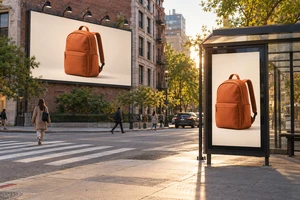
Place a sample—or a clearly labeled concept visualization—inside the proposed framing and sequence. Show it to people from the intended market without first explaining the concept. Ask what happened, which brand they remember and what they think is being promoted. Record misinterpretations before discussing whether they liked it.
Consider a hypothetical portable-lighting brand planning an outdoor campaign. An enormous equipment pouch might create a memorable visual joke. A normal-sized pouch that organizes the light, cable and mounting accessories might explain a useful ownership benefit. Both can be good executions; they are not interchangeable answers to the same brief.
If viewers remember only the pouch, revise the connection to the light: the action, product presence or sequence may need to change. Do not commission a production run to compensate for an unclear idea. Small exploratory interviews can expose misunderstandings, but cannot establish a population-level demand rate. An AI visualization likewise cannot validate seams, load capacity or handling.
Prototype two: does anyone want the object off set?
Give an intended user the relevant equipment and a functional sample. Have them pack, carry and unpack it without a stylist arranging the contents. Watch where instructions are needed and what they would change before using it again. A collectible need not solve an everyday utility problem, but collecting, displaying or taking it to a specific event should still be a credible audience behavior rather than an internal assumption.
Keep the extravagant version as a prop if its value disappears outside the image. Consider a limited giveaway if a usable version earns a place in the audience's life. Before charging for it, investigate willingness to buy against an explicit specification, price and delivery offer. Requests for something free are not equivalent to purchase intent.
A limited run reduces quantity, not responsibility. The relevant product, quality and destination requirements still need competent review. This article supplies a planning method, not product compliance clearance.
Prototype three: can the promise survive a real delivery?
Use the intended specification, packaging and shipping route to rehearse a complete fulfillment cycle. Record the packed dimensions and weight, arrival condition, missing parts and recipient communication. Have the responsible team confirm destination restrictions, responsibility for charges and the process for problem shipments.
This can change the design. A functional pouch that creates an oversized shipping carton might need a folding structure. A gift dispatched separately from the main order creates a separate shipping and support task. Neither issue is visible in a hero photograph.
| Intended role | Approval needed before commitment | Sensible stopping point |
|---|---|---|
| Campaign prop | Clear brand connection, camera performance and safe planned handling | Retain it for filming or a controlled display; do not imply consumer availability. |
| Limited giveaway | Image, real use and complete delivery checks | Restrict the scope to the audience and locations the team can actually serve. |
| Retail merchandise | Those checks plus a credible paid offer and product economics | Do not order inventory merely because a free sample attracted attention. |
The table is a commissioning tool, not a universal ranking. A prop-only decision can be the strongest commercial outcome when the campaign needs one striking moment rather than another product line.
Keep the content budget separate from the delivery budget
For a filming object, the cost scope covers creative development, fabrication, camera tests, handling, resets, transport, storage and agreed content use. For an item going to customers, add the product-development and fulfillment work. One undifferentiated “merch package” conceals the moment responsibility changes.
A practical planning expression is:
Merchandise delivery budget = fixed development and validation + planned units × production and packaging cost per unit + destination-specific fulfillment + provision for problem orders.
Populate it with actual specifications and quotes. It is not an industry rate card. A smaller quantity will not remove fixed costs, while a lower unit cost at a higher quantity does not establish a reason to buy more. Unsold or undistributed stock still consumes cash and space. Do not assign it an invented media value based on hypothetical impressions per item.
For a retail offer, assess net revenue against all relevant costs and also review the overall project, including content spending already incurred. For a giveaway, judge the spending against its stated marketing purpose and recipient experience rather than expecting the object itself to earn a retail margin.
Separate the partner scopes as well: brand-connection testing, sample photography, campaign production and specification handover are distinguishable deliverables. Product engineering, manufacturing quality and customer fulfillment need named owners. For a production company, reusable validation records may support a broader service model; they do not automatically confer manufacturing or logistics capability. That distinction matters for both pricing and liability allocation.
Shoot the creative promise and the actual offer deliberately
If the campaign prop and customer item differ, plan two image requirements. The first expresses the creative idea. The second accurately shows the obtainable version: dimensions, material, included items and handling. A specially reinforced filming sample should not silently become evidence of the delivered product's construction.
Keep acquisition messages out of reusable footage until the offer is confirmed. A clean brand sequence can outlive a giveaway; a baked-in promise of a gift with every order cannot safely do so when the mechanism changes. Align the final video and landing page with the same approved version.
After launch, separate three observations: brand understanding, interest in actual use and the quality of fulfillment. Reach is useful information about distribution, not proof that the merchandise caused core-product sales. Without a suitable comparison or attribution design, report the behavior observed rather than a causal lift.
For the next brief, bring the main product, the object's narrative role, intended acquisition route, real use situation, delivery markets and an owner for each prototype approval. ONCE's video production solutions provide a starting point for discussing the creative and filming scope. The first useful decision is not how many units to order. It is which job the object deserves to keep.
Sources checked October 15, 2026: Chipotle Newsroom, “CHIPOTLE GOES BIG FOR FAMILY MEALS WITH THE BIG ASS CHIPOTLE BAG,” October 13, 2026; Evolve Media, “Jockey Skimmies,” identifying the campaign year as 2015, with no page publication date stated. This analysis uses the public written accounts; it does not claim film viewing or measured campaign results. The lighting-brand example is hypothetical. The original AI-generated cover is a concept, not a Chipotle or ONCE client image.