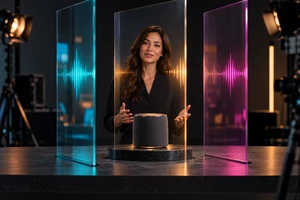
A creator sponsorship used to come with a simple assumption: once the host delivered the integration, the message stayed inside the video. YouTube’s dynamic brand segments pilot changes that assumption. Eligible creators can insert a separate, creator-led sponsor segment into new or already-published long-form videos, then update or remove it by market and campaign period.
As of October 10, 2026, this remains an invite-only pilot—not a universally available inventory product. It is also not a loophole for inserting a conventional commercial. YouTube requires a 30-second to three-minute creator-led segment and prohibits third-party or pre-produced ads and announcer reads. The procurement implication is larger than the product feature: a brand is no longer buying one indivisible “integration.” It is buying production, finite host-video inventory, and possibly paid-media rights.
The buying unit has split into three layers
A permanent integration bundles creation, placement, duration, and audience delivery into one fee. A dynamic segment separates them:
- Creator production: the host makes a standalone segment that can be reviewed, localized, replaced, and measured separately.
- Host inventory: the videos, countries, and dates in which that segment appears. YouTube currently allows one segment to be attached to as many as 20 long-form videos, but available slots are not automatically valuable slots.
- Media rights: whether the brand can run Creator Partnership Boost, where and for how long, and whether ad usage requires a separate license.
Two deals described as “one creator sponsorship” can therefore deliver very different assets. A polished segment placed on weakly related videos is not equivalent to the same segment deployed across high-intent evergreen hosts, rotated by country, and licensed for paid amplification.
ONCE’s three-route procurement decision
Buy a permanent integration when the product must carry the story
If the demonstration, experience, or conclusion needs to be part of the video’s argument, permanent integration still has the advantage. It suits durable propositions, detailed reviews, and products that need context to earn trust. The trade-off is that price, promotion, availability, and market-specific claims are difficult to change later.
Buy a dynamic segment when creator context matters but the offer changes
Dynamic placement fits brands that need the creator’s voice and channel environment but expect launch windows, offers, territories, or contract terms to rotate. It becomes especially useful when one creator owns several evergreen host videos with continuing search or recommendation traffic.
Buy a conventional ad when media control is the primary job
If the brief depends on audience bidding, frequency control, attribution, and rapid scale, a conventional ad remains the media foundation. The current pilot does not support Brand Lift or third-party measurement. Google is not a party to the creator payment either, so Ads cost, budget, and bidding fields cannot replace the brand’s own commercial ledger.
Do not buy “swappable.” Require a five-part delivery pack
- Host inventory map: proposed videos, topic fit, publication date, priority markets, and brand relevance. Channel-level views are not enough.
- Creator segment master: approved claims, script version, disclosure language, visual safe zones, and localizable elements for a genuinely creator-led 30-second to three-minute unit.
- Territory-term deployment sheet: the start and end date for every host-video and country combination, plus approval ownership for each replacement.
- Rights and disclosure schedule: separate organic placement, boosting, editing, archival use, and expiry. YouTube’s paid-promotion disclosure does not replace any disclosure required by local law.
- Measurement and exit ledger: segment version, policy status, impressions, views, engagements, live weeks, removal confirmation, and archive location.
This package turns production from a one-off deliverable into an auditable content operation. Every master, version, right, and deployment should resolve to the same record before a brand expands across markets.
Price qualified deployments, not uploaded segments
A useful denominator is neither “videos produced” nor “segments uploaded.” ONCE recommends:
Fully loaded cost per qualified creator-host-video-country-week deployment = (creator fee + production and localization + rights and disclosure review + platform approval and operations + paid amplification + measurement and archiving) ÷ approved, live creator × host video × country × active-week combinations.
A deployment is qualified only when the approved segment is visible on the contracted host video, in the contracted country, for the contracted period, with the correct disclosure and reconcilable reporting. This is not an industry benchmark, and it does not prove incremental sales. It gives procurement a comparable unit across creators, territories, and terms.
Run a four-week pilot that is allowed to fail
Start with one eligible creator, three to five strongly relevant host videos, one country, and one four-week window. Freeze the segment version, rights boundary, disclosure copy, and exit conditions before launch. Then answer four operational questions:
- Did brand and platform approvals complete within the planned lead time?
- Did the segment appear reliably in the contracted country, host videos, and supported viewing environments?
- Could segment impressions, views, and engagements reconcile to the brand’s cost ledger?
- At expiry, could the team replace or remove the segment and preserve an audit record?
Expand only when all four pass. If the business question is incremental sales rather than inventory operations, add a separate conversion experiment. Platform view metrics alone are not evidence of revenue causality.
What is confirmed, what is not, and what brands should change now
Confirmed:YouTube’s current creator guidance describes the 2026 invite-only pilot, country targeting, use on new and existing long-form videos, and separate segment measurement. Google Ads guidance lists impressions, views, engaged views, and view rate, while noting that Brand Lift and third-party measurement are unsupported and that boosting requires appropriate rights. YouTube’s branded-content policy requires paid-promotion disclosure and prohibits burning advertiser-created pre-roll, mid-roll, or post-roll ads into creator content.
Not confirmed: those pages establish product mechanics and policy. They do not establish a market-wide conversion lift, lower creator pricing, or the end of permanent integrations.
ONCE’s conclusion: the procurement sheet should change before the creative template does. Quote creator production, host inventory, territory and term, paid rights, measurement, and exit separately. Whether the pilot expands or contracts, the brand then keeps a portable master, a rights trail, and a comparable cost baseline—instead of another sponsorship fee that cannot be audited against the next one.
Sources
YouTube Help, “Add dynamic brand segments to your YouTube videos”, accessed October 10, 2026; Google Ads Help, “About dynamic brand segments”, accessed October 10, 2026; YouTube Help, “Branded content policies”, accessed October 10, 2026; YouTube Official Blog, “Made on YouTube 2025”, September 16, 2025. The procurement structure, cost unit, and pilot design are ONCE analysis, not platform commitments.