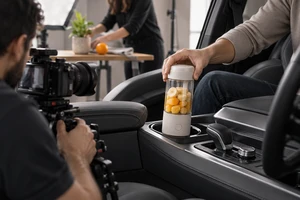
A retailer sourcing appliances from China may have one product family, several regional SKUs and a creator video that keeps attracting shoppers after its launch campaign ends. The footage is fixed. The merchant, availability and purchase destination are not.
That creates a practical buying decision: should the creator-content contract end at publication, or include a limited period of product-match maintenance? ONCE recommends the latter when a video is intended to support continuing sales across changing inventory or regional variants. The service should have a defined scope, an accountable product reviewer and a price separate from production.
What YouTube's rules actually cover
On September 23, 2026, YouTube announced plans to expand its Shopping affiliate program to 35 countries by year-end and update cross-border shopping. The announcement is a rollout commitment, not proof of availability in every named market today. See the official creator monetization announcement.
The auto-tagging help page, checked October 10, 2026, says opted-in eligible affiliates may have expired or out-of-stock product tags replaced with relevant available items. Studio notifies creators, who can review or remove replacements. Regional availability varies. Paid-partnership videos are excluded; active existing tags also prevent auto-tagging, although expiry of all original tags may make a video eligible for replacement.
YouTube's product-tagging guidance also describes localization to local retailers selling the same product. It says tags on sponsored content designated Paid Product Placement will not be altered or localized.
Keep three briefs separate: organic affiliate posts with automatic tagging enabled; sponsored posts with accurate disclosure and agreed manual maintenance; and brand-owned videos whose store setup must be checked independently. Disclosure must follow the real commercial relationship. These documents establish platform mechanisms, not the prevalence of mismatches or a universal shift in creator procurement.
Start with the demonstration, not a product name
Consider a hypothetical appliance demonstration showing a particular container capacity and plug. A similar-looking regional model has a smaller container or a different connector. This is an illustrative scenario, not a reported YouTube failure or an ONCE client project.
If that second model becomes the purchase destination, the important question is whether the original demonstration still supports the purchase promise. A matching photograph or family name cannot settle it. Neither can an AI-generated product description.
For teams working with Chinese suppliers, factory model numbers, retailer SKUs and consumer-facing names should therefore be mapped rather than treated as interchangeable identifiers. The production team identifies what the footage demonstrates. A product owner verifies which sellable variants satisfy it. Marketing decides whether the difference changes what a reasonable viewer expects to receive.
The ONCE product-match maintenance card
Attach one record to each continuing video–market relationship. It connects evidence to commerce without pretending that the platform's own tagging decisions belong to the brand.
| Field | Record | Accountable owner |
|---|---|---|
| Demonstrated product | Video ID, actual model, claim and relevant timestamp | Content lead |
| Current destination | Market, merchant, product and variant IDs, check date | Commerce operator |
| Required match | Capacity, connector, included accessories or other purchase-critical properties | Product owner |
| Permitted differences | Verified merchant changes or approved variants that preserve this demonstration's meaning | Product and marketing leads |
| Change history | Previous and current destination, notification, decision and completed action | Maintenance owner |
| Access and action | Who receives alerts and who can edit or ask the creator to edit | Account holder |
A color change may be acceptable for a mechanical demonstration but material to a styling video. The boundary depends on the actual claim. A brand's approved variant list is an internal decision tool; it does not override platform policies or authorize arbitrary substitutions.
Give each check an actionable result
Green: verified match. The destination meets the demonstrated conditions for the target market. Record the check; keep the asset running.
Amber: insufficient evidence. The model is unclear or specifications are missing. Ask the product owner to confirm. Until then, the authorized operator should remove an uncertain tag or restrict traffic the brand controls. A reassuring comment does not repair a misleading purchase destination.
Red: a material difference. An essential capacity, compatibility condition or bundle has changed. Correct the destination first, then decide whether the demonstration needs replacement. A caption cannot turn footage of one feature into proof of another.
These are ONCE management categories, not YouTube moderation labels. Save the resolution, including who acted and which destination was checked afterward.
Buy a bounded service, not indefinite vigilance
A short campaign with stable inventory may need publication acceptance and one agreed follow-up. Evergreen demonstrations, frequent retailer changes and multiple regional versions justify a maintenance allowance. Without access to notifications or an agreed creator handoff, no supplier should promise immediate correction.
Use a simple quotation structure:
Maintenance allowance = initial product mapping + scheduled checks × fee per check + expected change events × fee per resolution.
This is a budgeting model, not an industry price benchmark. Define whether resolution includes contacting the creator, editing a tag, recording evidence and confirming the result. Re-edits, new filming and additional markets need separate allowances. If change volume is unknown, agree capped hours and an overage rate instead of implying unlimited free support.
Notifications, a supplier's model-change notice, a merchant switch and a new target market can trigger review. Add periodic sampling according to the project's risk. Coverage, response times and the end date are contractual choices, not platform requirements invented by this article.
Test maintenance on one continuing product family
Begin with existing videos that still have commercial value. Ask the supplier or product team to establish the required match, have commerce identify live destinations, and have creators confirm the notification and correction path.
Review verified matches, time to resolve discrepancies and the share of changes requiring new footage. Analyze clicks and sales separately: correct matching is not proof of incremental revenue, and revenue is not proof of correct matching.
For teams expanding creator distribution, ONCE's guide to capturing creator-led demand covers the next destination after discovery. Product-match maintenance addresses a separate question: whether that destination sells what the demonstration promises.
For ONCE, the strategic opportunity is a reusable map of regional variants, demonstration evidence and resolved changes. Whether that service improves margins depends on actual labor, tightly defined scope and buyer willingness to pay. For the brand, the first purchase is simpler: an identified person who can keep the buying promise attached to the right product after the launch team moves on.
The two help pages above were checked October 10, 2026 and do not display publication dates. The card, budgeting model and recommendations are ONCE analysis; no client results, mismatch rates or cost averages are claimed.