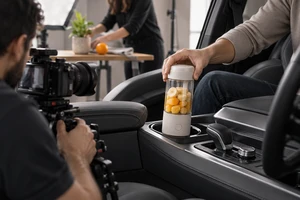
Buying hundreds of creator videos is not the same as building hundreds of useful marketing assets. The volume may create attention quickly, but value appears only when the brand knows which questions that attention will trigger, where people will search next, and which creator posts can legally and operationally move into paid media.
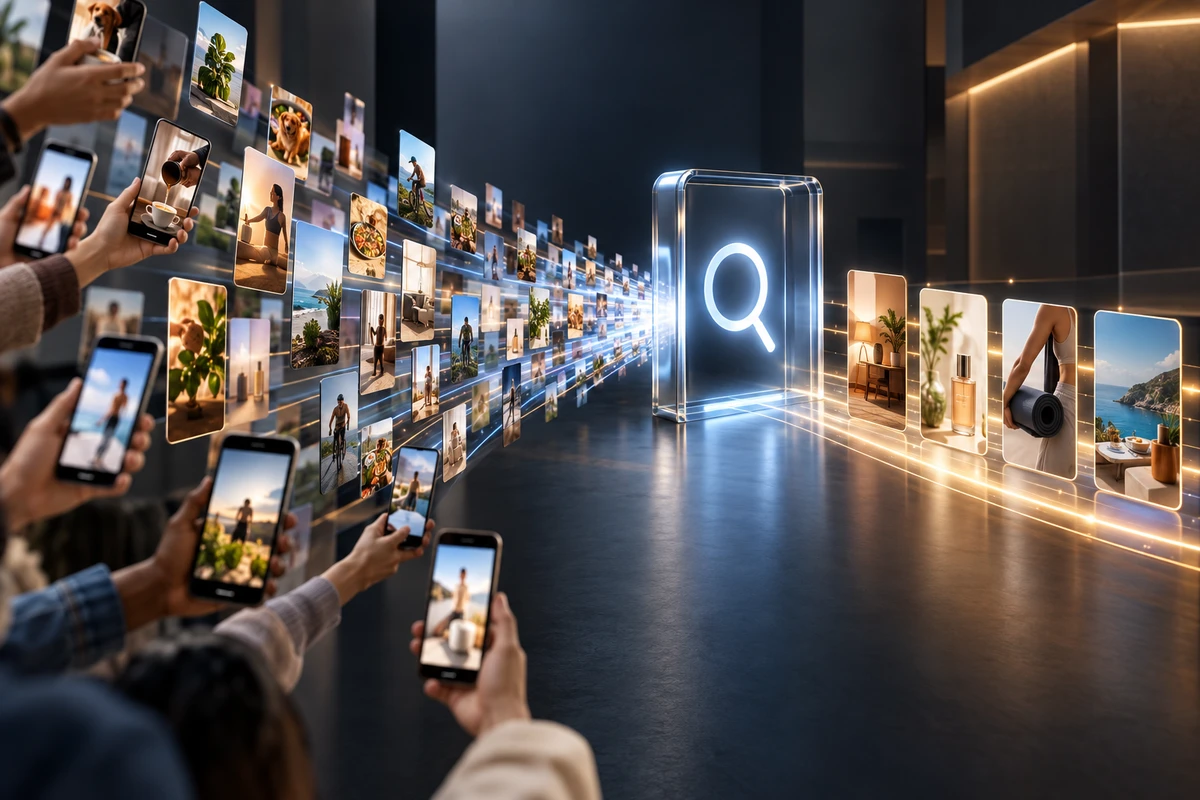
That is the structural signal behind TikTok's latest creator products. Branded Buzz, Search Hubs, Keyword Amplifier and Spark Ads authorization form more than a content-sourcing workflow. Together, they point toward a demand system: distributed creator expression upstream, a brand-controlled search destination in the middle, and selective paid amplification downstream.
For brands connected to Chinese supply chains, the procurement question is therefore changing. The deliverable should not be “creator count × video count.” It should be a working path from a shared product truth to creator distribution, search capture and reusable media.
What TikTok has actually introduced
TikTok's September 2026 Help Center page on Branded Buzz for advertisers says campaigns typically involve hundreds of creators and can deliver high volumes of submissions within roughly two weeks. The advertiser supplies the brief, hashtag and campaign setup; TikTok invites creators at scale. Submissions carry commercial-content disclosure and are geofenced to the campaign territory.
Eligible Branded Buzz videos can also receive a Spark Ads window of up to 180 days. The brand can review the pool, identify stronger posts and synchronize eligible content into Ads Manager for paid distribution.
TikTok's May 13, 2026 explanation of Branded Buzz and Search Hubs describes Search Hubs as brand-owned destinations positioned at the top of TikTok search results. They can combine brand and creator videos, banners, calls to action and official accounts. Keyword Amplifier can guide viewers from creator content into those destinations through clickable comments and search recommendations.
TikTok reiterated the combination in its October 7 TikTok World Canada 2026 announcement, alongside Creator AI Search in TikTok One.
These announcements prove that TikTok is offering this architecture to eligible advertisers. They do not prove universal availability. TikTok tells advertisers to confirm account access, market support and lead time with their platform team. Some Search Hub formats are available only in selected countries and categories. The controls visible in the actual account remain the source of truth.
Why creator scale can still produce disposable attention
A creator wave solves a supply-and-distribution problem. It does not automatically solve what happens after discovery.
One viewer may want proof that the product works. Another may search for sizing, materials or compatibility. A third may want comparisons or a place to buy. If every post sends that intent toward a generic profile or an unprepared product page, more content simply creates more unanswered questions.
The authorization clock adds another constraint. A creator post can become a strong paid-media candidate during the campaign, but an eligible 180-day Spark window is not permanent ownership. If the team waits until the campaign ends to identify content, verify rights and plan amplification, it may waste a meaningful part of the usable period.
Search capture should therefore be designed before the creator brief is released. When Search Hubs are unavailable, the fallback should be explicit: a market-specific landing page, an accurate product page or a retail destination that answers the same high-intent questions created upstream.
The ONCE B-S-A-C framework
B — Brief a shared truth, not one identical script
A scalable creator brief needs two layers. The fixed layer contains product facts that cannot drift: model, conditions of use, proof, price or promotion timing, prohibited claims and disclosure requirements. The flexible layer gives creators distinct ways to interpret the product: firsthand use, problem solving, feature proof, objections, lifestyle relevance or comparison.
The brief should also name the questions the campaign expects people to search and the destination prepared to answer each one. Creator freedom remains intact, while the campaign avoids generating interest that the brand cannot support.
S — Spread the questions and perspectives
The value of hundreds of videos comes from distributed viewpoints, not hundreds of people repeating the same copy. Map the intended spread by market, language, creator type and decision job. Some posts should establish category interest; others should demonstrate a function, answer an objection, trigger search or become candidates for paid media.
Acceptance should measure coverage and variation, not publication alone. A campaign can hit its video quota while leaving the most important buyer questions untouched.
A — Authorize before momentum arrives
For every shortlisted post, retain the creator, video ID, market, language, disclosure status, Spark eligibility, authorization start and expiry, permitted accounts and territories, product-link restrictions and renewal owner.
TikTok's 180-day Branded Buzz Spark window is a platform workflow condition, not a transfer of permanent ownership. Cross-platform use, long-term reuse and derivative editing still require confirmation in the relevant project terms and creator agreements.
C — Capture the intent created upstream
Where Search Hubs are available, organize brand content, creator posts, calls to action and official accounts around actual search intent. Do not turn the destination into a gallery of the most-viewed clips.
Where they are unavailable, apply the same logic to a brand-owned or retail page. The claims in the creator post, the proof on the destination, the purchasing conditions and the next action should agree. Completion means a person can move from a question sparked by content to a credible answer—and the team can connect content identity, search behavior, destination activity and subsequent media use.
Price the effective capture asset, not the upload
ONCE defines an effective capture asset as a creator post that is factually accurate and properly disclosed, maps to a specific search question, has a prepared destination, holds usable paid rights when needed, and remains traceable to its identity and downstream performance.
An internal comparison can use:
Full cost per effective capture asset = (strategy and briefing + creator activation + product logistics + review + rights + search destination + paid-media preparation + measurement) ÷ creator posts that pass every required condition.
This is not a TikTok pricing formula or an industry benchmark. It is a procurement control. If a campaign produces 200 videos but only 15 can answer a real question, reach a prepared destination and enter paid media within their authorization window, the supplier comparison should not use 200 as the denominator.
Choose the operating route by condition
A full B-S-A-C program makes the most sense around a defined launch or brand moment, broad enough category interest, stable inventory, standardized product facts and an eligible account in the target market. Those conditions align most closely with TikTok's stated Branded Buzz use cases.
For a narrow product or limited budget, start with a smaller creator cohort and a brand-owned search destination. Learn which questions actually emerge before increasing volume.
For regulated claims, products involving minors, unstable prototypes or uncertain supply, use controlled production and a smaller number of reviewed creators. Scale will not correct a false promise; it will distribute it faster.
Four questions to settle before the insertion order
Before commissioning scaled creator content, the brand, platform, production and media teams should agree on four items:
- Which product facts and prohibited claims apply to every creator?
- Which search questions should the campaign create, and which destination answers each one?
- Which posts can enter paid media, when do rights begin and expire, and who owns renewal?
- Can reporting connect creator identity, search behavior, destination activity and paid amplification?
Without those answers, more videos expand supply but do not build a durable marketing asset. ONCE's short-form video production in Shenzhen starts with product truth, creative variables and platform versions, then defines which content should be professionally produced, which should be distributed through creators and where the demand should land.
Sources and limits
- TikTok For Business, “Fuel discovery and engagement with Branded Buzz and Search Hubs,” May 13, 2026.
- TikTok Business Help Center, “About Branded Buzz for advertisers,” updated September 2026.
- TikTok Business Help Center, “How advertisers can get started with a Branded Buzz campaign,” updated September 2026.
- TikTok Business Help Center, “How to sync Branded Buzz videos for Spark Ads,” updated September 2026.
- TikTok Newsroom, “TikTok World Canada 2026,” October 7, 2026.
This article translates public platform documentation into a procurement and production framework. It does not imply identical feature availability across every TikTok market, account or industry, and it is not legal advice. Confirm eligibility, usage rights and disclosure requirements for the actual market, account and contract.