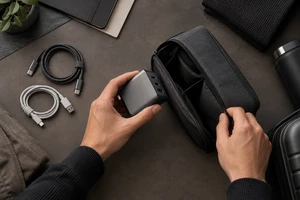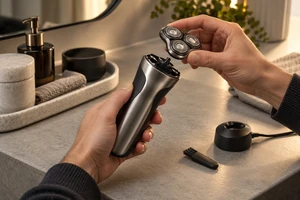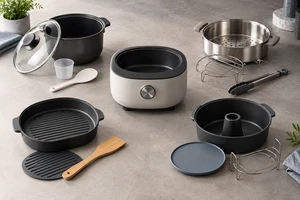
Should a product manual appear only after checkout, or should it help when a buyer asks, “Will this model fit my space?”, “Are the accessories interchangeable?”, or “Can one person assemble it?”
Google Merchant Center now provides a direct answer: the document_link attribute. Merchants can submit product PDFs such as user guides, assembly instructions and package inserts so conversational shopping experiences, including AI Mode, can use them to answer detailed questions and support research and buying decisions.
The field is optional. It does not guarantee that a document will be surfaced, that a product will rank, or that sales will increase. But it changes the role of product documentation. A file that used to sit behind a support link can now participate in pre-purchase discovery.
For overseas brands working with Chinese manufacturers, that creates an operational problem before it creates a media opportunity. Product facts may be split across factory specifications, certification files, packaging artwork, customer-service notes and regional storefronts. Uploading an old manual without reconciling those sources can make stale or market-specific information easier to find. The useful asset is not “a PDF.” It is a public product dossier that both a buyer and a machine can verify.
What Google has actually documented
Google says the document_link attribute is intended primarily for conversational experiences such as AI Mode. It can be used in all countries. A merchant may submit up to five PDFs per product, each no larger than 50 MB. The URLs must be public, stable, crawlable by Googlebot and covered by rights that permit marketing use.
The examples include training manuals, user guides, assembly instructions, package inserts and packaging designs. Google recommends product-specific, authoritative documents with a coherent structure and clear purpose—not a company brochure standing in for product information.
Documents sit beside other Merchant Center inputs. question_and_answer can hold up to 30 product Q&A pairs, while video_link can provide product-specific demonstrations for free listings and eligible ad workflows. Google explicitly advises merchants not to duplicate information across Q&A, product details and documents when the same answer is already available in an authoritative PDF.
Google's September 16, 2026 retail update also connected conversational attributes, product video and AI shopping surfaces. It reported a lululemon test in which brand-submitted conversational attributes were incorporated in 50% of relevant AI Mode product recommendations. That is a platform-reported result from one named test, not an industry benchmark and not evidence that uploading a manual produces more traffic. The broader official rollout details also vary by feature and country. The correct starting point is capability, not prediction.
Why an old support manual is not automatically a pre-sale asset
A support manual is usually organized around safe operation. A pre-sale dossier must first establish whether this is the right product and the right variant.
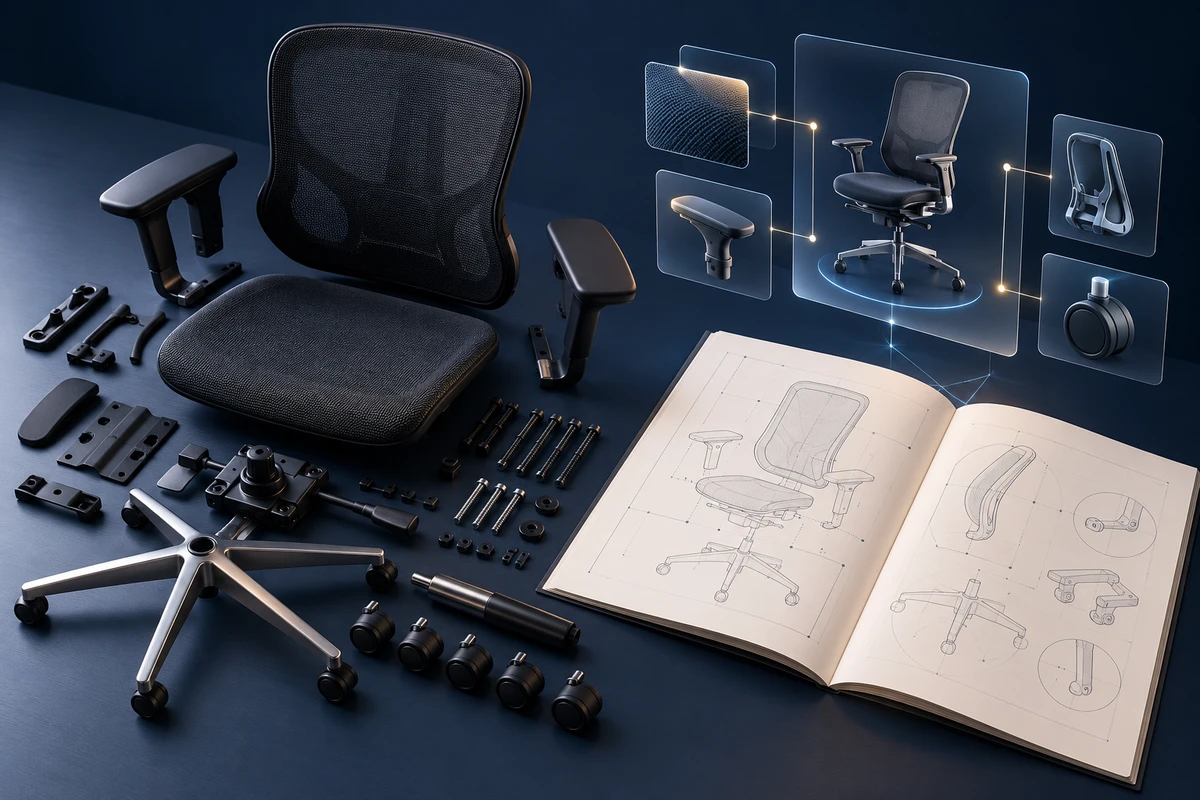
Consider a hypothetical adjustable office chair sold in several sizes and regional configurations. The existing manual may begin with screw counts and assembly steps while failing to identify the exact SKU, seat-height range, armrest configuration, carton dimensions or compatible replacement parts. Support staff may know the answers, and fragments may appear on a product page, but an unversioned PDF leaves both people and systems guessing which diagram belongs to which model.
Three failure patterns are common:
- Marketing describes the product as “made for long working sessions,” but the document provides no concrete structural information that supports the claim.
- Package contents differ by region, but the PDF has no market or language identifier.
- A file is silently replaced at the same URL, so downstream references cannot tell when the facts changed.
Public and crawlable is not the same as current and safe to rely on. Before publication, product identity, source evidence and version ownership need to meet in the same asset.
The ONCE six-part public product dossier
1. SKU identity
Put the brand, model, market, applicable variants, document version and publication date on the first page. If one document covers several models, identify which sections are shared and which are not. Visual similarity is not SKU identity.
2. Buyer questions
Select questions that materially affect the decision. Useful inputs include pre-sales support, return reasons, sales-team questions and product reviews. Do not collect keyword fragments. Write the task in full: “Will the armrest clear a desk of this height?” is more actionable than “adjustable armrest.”
3. Verified answers
Tie each answer to an engineering specification, package list, certification record or confirmed commercial policy. If no owner can verify the answer, leave it out until someone can. Words such as “usually,” “approximately” and “fits everyone” do not repair missing evidence.
4. Limits and warnings
Place compatibility limits, installation conditions and safety notes beside the relevant answer. A pre-sale asset should not show the best case on page two and hide the disqualifying condition at the back.
5. Visual explanation
Dimensions, control locations, assembly actions, folding mechanisms and package contents are often clearer through an accurate diagram, photo sequence or short clip. The document explains relationships; video demonstrates motion. Both need to show the actual selling SKU.
6. Version and stable URL
Assign an owner, review date and change log. The public URL should remain accessible without login or expiration. ONCE recommends a new version URL and an accessible archive for material changes instead of silently replacing facts at one address. That is a governance recommendation, not a Google-required format.
The point of the six checks is to move from “we have a PDF” to “we know which buying questions this PDF can safely answer.”
Update data, recut existing proof or shoot something new?
Do not commission a fresh production for every question. Sort the gaps into three groups.
Text is enough. Model numbers, named materials, package contents, dimensions, electrical requirements and warranty ownership can usually enter structured data and documentation once an accountable source has confirmed them. A camera does not make a number more true.
Existing footage already proves it. If current assets clearly show adjustment, installation, opening, capacity or scale, create product-specific edits and stable links. Verify that the model, accessory set and market version shown on screen still match the offer.
The uncertainty is genuinely visual. Buyers may need to see whether a control is easy to reach, whether one person can complete an installation step, or how the product occupies a real room. If that question drives support or returns and current assets lack a continuous action or useful size reference, the next shoot should capture it.
The efficient unit is not “one video per FAQ.” It is the number of important questions one accurate visual sequence can cover. A controlled product shoot can generate clean stills, step photography, close-ups, short clips and document diagrams in the same setup, then route those assets into the PDP, Merchant Center, support knowledge and paid creative.
Stop pricing the work by PDF page count
Page count is easy to inflate and says little about usable knowledge. A better internal comparison is:
Maintenance cost per verified high-value question = (fact consolidation + technical review + visual capture + localization + version maintenance) ÷ questions that pass review.
This is not a market-rate claim. It is a procurement lens. A long, inexpensive manual with the wrong SKU or no accountable owner may be less useful than a shorter dossier that is accurate and maintainable. A simple, low-risk product also does not need a 30-page document merely because a new field exists.
Investment becomes more sensible when the product requires installation or learning, has many variants, raises recurring compatibility questions, suffers avoidable returns caused by misunderstanding, and will remain in market long enough to maintain the material. If the product is short-lived and has few meaningful questions, fix the core product feed and product page first.
This follows the same principle as keeping changing product facts out of a locked master film: durable physical actions can remain reusable, while price, policy, compatibility and other volatile facts need an editable information layer.
The operational opportunity for brands and production partners
The confirmed change is narrow but real: Google now provides formal fields for product PDFs, Q&A and video, and it explicitly connects some of them to conversational shopping. ONCE's interpretation is that a product shoot can produce more than finished media. It can also create a governed dossier for commerce, support and AI-assisted discovery.
It is still a prediction—not a proven market fact—that more platforms will reuse these assets in similar ways or that a dossier will improve exposure or conversion. Test those outcomes by market, account and product.
The practical first step is smaller: choose one durable SKU with recurring pre-sale questions. Build one public dossier using the six checks. Audit whether existing images and footage answer the important questions. Add new production only where a genuine visual proof gap remains.
Research scope: sources checked through October 7, 2026 include Google Merchant Center Help pages for document_link, question_and_answer, conversational attributes, and video_link, plus Google's September 16, 2026 article, “Boost your holiday sales with these agentic commerce updates.” This article is ONCE editorial analysis, not a guarantee of Google inclusion, visibility, traffic or conversion.