Imagine that the launch date is fixed and the product has six colorways, but only one physical sample has passed CMF approval. Can production start? The useful answer is not simply yes or no. First, divide the shot list into three groups: what a real sample must prove, what CGI can extend, and what must remain previsualization until a physical reference exists.
A live action CGI product film is not just a blue product recolored six times. Every version still has to preserve the same geometry, tactile cues, reflections and interaction logic. An RGB or hex value describes only part of a surface. Without roughness, metallic response, normals, anisotropy or a clearcoat layer, the same “silver” can read as molded plastic, painted metal or brushed aluminum.
Choose one hero sample without asking it to prove every finish
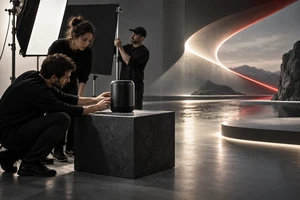
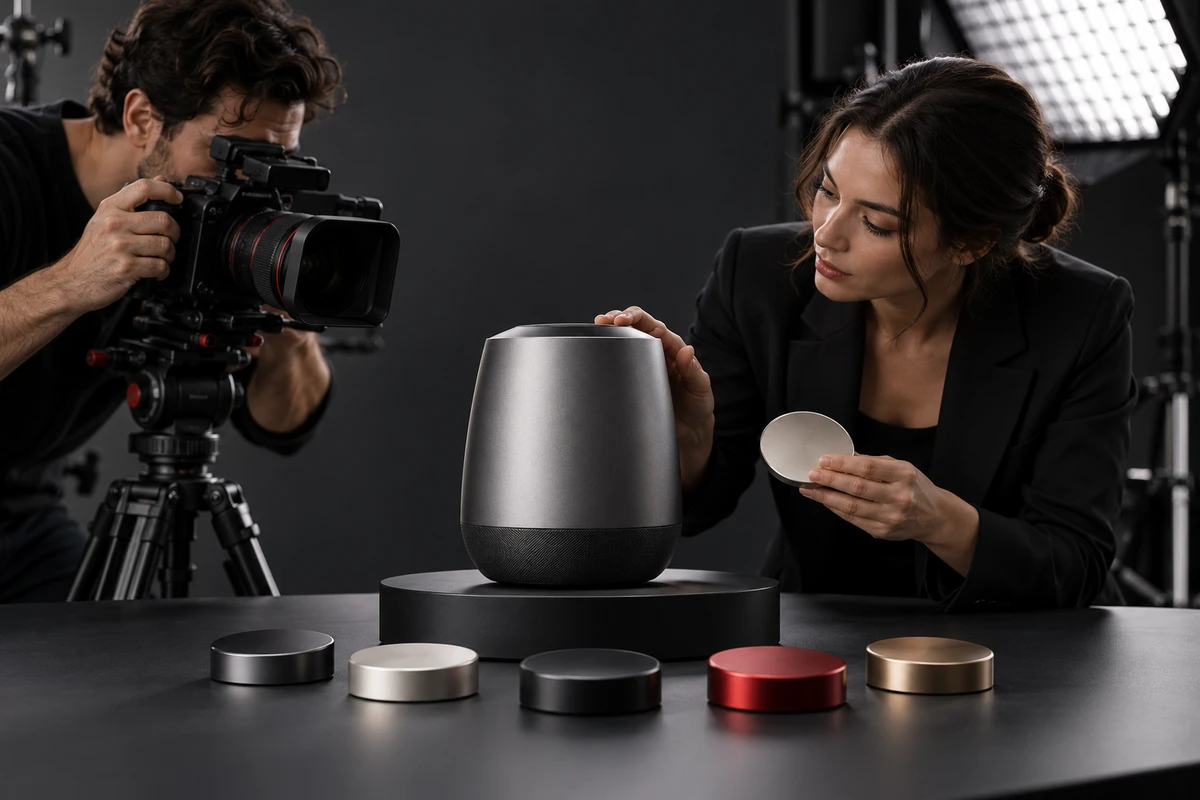
The hero sample should be the unit whose structure, dimensions, assembly and finish have already been approved. It establishes four types of truth: real scale in a hand, the geometry of edges and openings, the shape of highlights across the surface, and the contact relationship when a person touches, places or operates the product.
Shots such as a finger pressing a button, a cable entering a port, fabric brushing the housing, the product settling onto a table, or layered reflections across transparent parts should normally remain live action. These details are not decorative “texture shots.” They are evidence that the product occupies a real physical space.
CGI is better used to extend variables that have already been defined: color changes on the same structure, exploded or cutaway views, interior camera moves that cannot be filmed, repeatable turntable angles, and variants for multiple markets. The phrase “already been defined” matters. If a pearlescent coating, anodized color or translucent component does not yet have an approved sample, CGI can support direction-setting, but the result should not be presented as a final color promise.
A color value is not a material file
The official Khronos glTF PBR material model treats base color, metallic response, roughness and normal information as separate properties. More complex surfaces can also use anisotropy and clearcoat. Adobe Substance 3D documentation similarly separates base color from roughness. For a brand team, the implication is practical: a CMF handoff cannot consist only of a Pantone value, an RGB value or a finished marketing render.
A production-ready material reference should include:
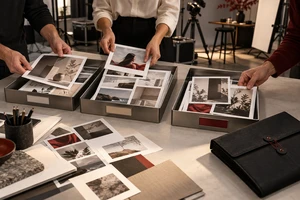
- a physical swatch photographed in neutral light and in the principal scene light;
- front, grazing and moving-highlight viewing angles;
- a description of matte, gloss, metallic, transparent or translucent behavior;
- the acceptable batch range and the differences that would count as errors;
- formal dimensions or CAD, plus brand details that may not be simplified.
If the handoff contains a color value but no reflection behavior, post-production is not “changing color.” It is guessing the material.
Record a camera and lighting setup that post can reproduce
Many hybrid shots fail because the CGI product and the live-action camera do not inhabit the same optical world. Matching focal length is not enough. Lens distortion, camera height, tilt, focus distance and camera motion all change perspective and the product edge.
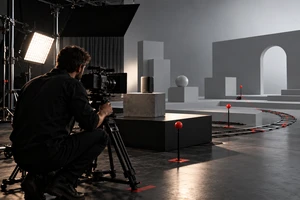
For each composite shot, record the camera and lens model, focal length, focus distance, camera height, product distance and motion path. Capture lens-distortion calibration material, clean plates and visual reference frames. When lighting needs to be reconstructed, record the key-light direction, apparent source size, color temperature, relative intensity and an appropriate environment reference.
Color management also needs to continue from capture into compositing. The official ACES documentation treats capture, editing, visual effects, mastering, presentation and archiving as one color-management lifecycle. The ACES Metadata File documentation explains how transform information can move through production. This does not mean every small job needs a large pipeline. It means the team should agree, before the shoot, how camera footage is interpreted, which working color space CGI uses, what display conditions are used for approval and who owns the final output transform.
Use five handoff gates instead of one argument at final delivery
Gate one is product truth. Approve the hero sample’s structure, visible assembly, tolerance behavior and protected details. If that is not settled, framing should not be used to hide the problem.
Gate two is the material and swatch review. Match base color, roughness, metallic response and normals under a neutral setup before moving into dramatic advertising light. Do not reverse-engineer a material from a heavily graded mood image.
Gate three is camera matching. Use one low-risk shot to test focal length, distortion, scale, contact shadow and tracking. If the test fails, do not duplicate the same error across the film.
Gate four is representative lighting. Compare the hero sample with its digital counterpart in at least one soft close-up and one high-contrast or moving-highlight shot. A colorway that matches under flat frontal light may separate badly under a grazing highlight.
Gate five is the colorway and channel version review. Approve color, finish, screen content, subtitles and framing for each variant, then produce landscape, vertical and ecommerce cutdowns. The approval log should distinguish among “approved against a physical swatch,” “built from CMF values only,” and “previsualization pending sample review.”
When waiting for the sample is the better production decision
If the selling point is the finish itself—pearlescent particles, color-shifting paint, translucent layers or a special brushing pattern—waiting is often safer than rebuilding the campaign after the physical finish changes. If the product involves extensive hand occlusion, flexible deformation, liquid or complex physical contact, test one junction shot before committing to a hybrid film.
The opposite is also true. If there is one colorway, a simple camera plan and a stable approved sample, building a full CGI asset and tracking pipeline may add complexity without useful reuse. Hybrid production earns its place through controlled versioning and expressions that cannot be filmed, not through the terminology itself.
Six questions to answer before the first shoot day
The first production meeting can be reduced to six questions. Which unit is the hero sample? Which finishes have physical approval? Which shots require real contact? Which variants can CGI extend? Who records camera, lighting and color data on set? Who signs off each colorway, and under what display conditions?
Once those answers are clear, one sample does not necessarily prevent the first version from being filmed. It should simply prove only what it can genuinely prove. To decide whether your product can follow a “film the hero sample, then extend the colorways” route or must wait for every sample, review ONCE VISUAL’s 3D product animation services and bring the colorway matrix, sample status, launch date and shot list to a production-route review.