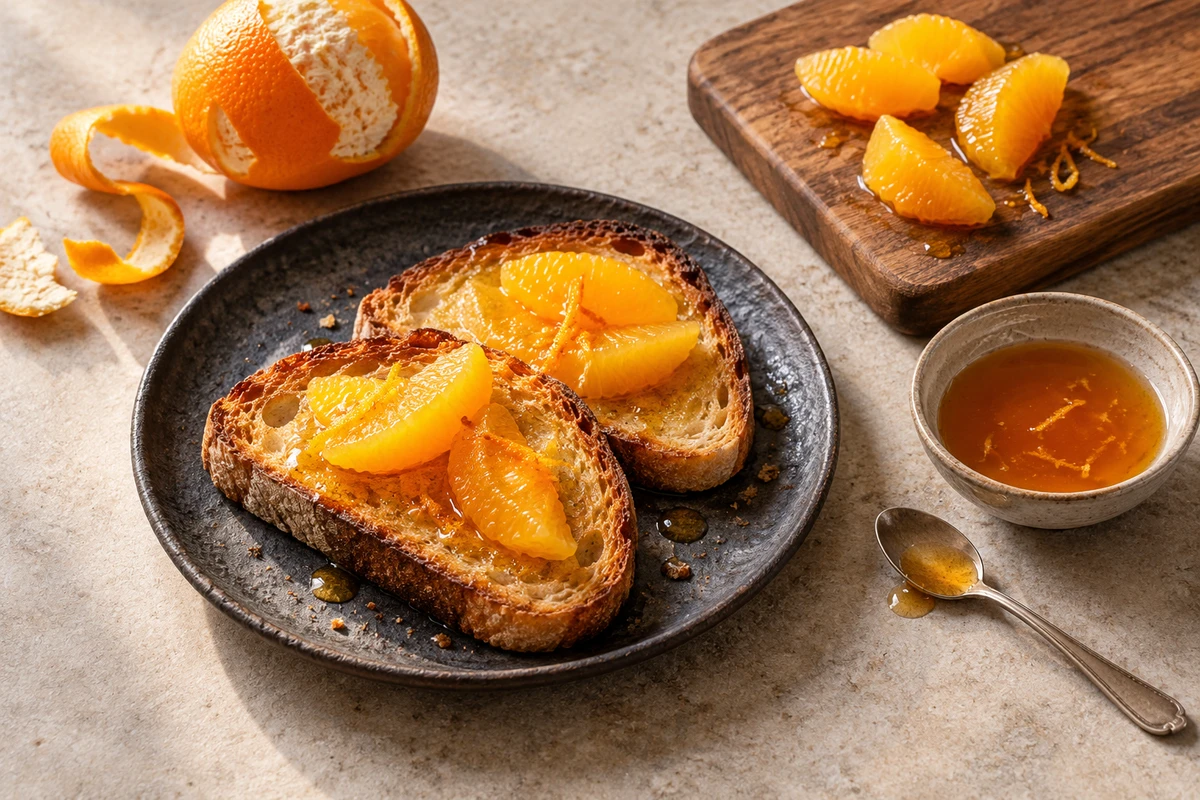
A whole orange, a bright drop of glaze and an elegantly plated piece of toast can each make an attractive photograph. Put them together, however, and they do not necessarily explain how this food arrived before us. A food advertising series needs more than matching backgrounds and color. It also needs a change worth following between images.
That change can be modest: segments that were on a board now sit on bread; separate elements become something ready to carry to the table. Viewers do not need every preparation step. They should have a chance to understand why these images belong to one story, rather than simply share a filter.
Let an ingredient carry the connection
In Nikon’s September 8, 2025 article, Costas Millas distinguishes a preparation narrative from a concept-led food series. His Spaghetti project develops combinations of pasta, meatballs and tomato sauce. This is a photographer’s published creative account, not a shot-by-shot analysis based on watching a campaign film for this article.
Both approaches can work. Food turned into graphic shapes or visual play does not have to become a recipe. But a story from preparation to serving needs more than the repeated appearance of orange. The connection to recognize is an ingredient entering a different state, not just a recurring color.
Imagine an entirely fictional citrus-toast advertising series. A whole fruit has a short curl of peel beside it. The next image presents prepared segments. Another shows those segments being placed on already toasted bread. This is not a recipe and does not explain where a glaze comes from. It selects one transformation: fruit becoming part of a small dish.
If the sequence suddenly switches to a finished dish with no recognizable citrus, identical plates, lighting and scenery may not prevent it from reading as a different food. Conversely, a new angle or tighter view need not break the relationship if the form and placement of the segments remain intelligible. Visual consistency can support change without smoothing it away.
Viewing order need not follow kitchen order
An ad can reveal the finished dish first, then let viewers discover its ingredients. Or it can begin with a final segment about to fall, creating a small expectation about where it will land. This is a narrative choice, not an obligation to explain the entire process from the beginning.
Reversing order does not mean shuffling images at random. A finished piece of toast followed by fruit needs a connection: a recognizable cut, part of a familiar plate, or an action picked up by the next image. There is no universal best transition. Look for what makes this particular change recognizable.
Nor must an ad become a complete lesson to remain coherent. Repeated operations such as opening an oven, waiting or retrieving a plate can stay off screen. If the work promises instructions that people can follow, missing ingredients, quantities or essential steps become a different problem. An aesthetic series and an executable recipe have different responsibilities. Following preparation does not automatically make the images sufficient to teach it.
Keep the change that matters most
The searchable exercise in Adobe Lightroom Academy’s Presentation and Styling proposes recording a scene as it builds toward plating and garnish, then reviewing which images communicate the process and final scene clearly. Only the retrievable exercise passage was read for this article. It is not treated as a universal commercial production standard.
For the fictional toast series, the important moment might not be the second or third placement. It could be the first segment changing a plain piece of bread, or the last touch of glaze connecting the surface. The choice depends on whether the brand wants attention on fruit, bread, sauce or the complete dish.
The same pouring close-up might lead a preserve ad while obscuring the surface that a toast ad needs to show. A beautiful shot is not a shared justification for every product. What enters the picture should also clarify what we are looking at.
Production order can accommodate the food
The order viewers encounter can be separate from the order a shoot is organized. Photographing several fruit arrangements before moving to the finished dish does not require the final sequence to follow suit. Millas’s account also discusses organizing work around ingredient combinations. No production hours, costs or food-storage times are inferred from it here.
In planning, distinguish images that require an intact ingredient from those that require it cut. Then discuss where materials can be shared and where additional preparations are needed. This is a proposed production approach, not a shoot carried out for this article. Quantities and storage should be determined by the people preparing the food, using the actual product and conditions.
The point is not that one orange must perform every state. It is that the final images should not inadvertently rewrite the food. A few segments becoming an inexplicably large serving, contradictory color or consistency in the same sauce, or additional ingredients appearing to come inside a package all deserve discussion. Replacing material for a shot and changing the product representation are different matters.
Backgrounds and tableware can help too. A recurring cloth will not necessarily rescue a series if the surroundings continually compete for attention. If props distinguish preparation from serving, every image need not occupy exactly the same spot. A change of space can belong to the story rather than become a problem to erase afterward.
Give standalone images their own starting point
On one page, a series allows comparison. Published as separate images or short films, the earlier explanation may be absent. This is a change in viewing conditions, not a claim about a particular platform’s rules.
If a standalone piece shows fruit falling, keeping part of the toast visible can give the action a destination. Fruit suspended against a beautiful background may still make a visual poster, but it no longer carries the same preparation narrative. Explained elsewhere in the series does not mean already seen by every viewer.
There is no need to repeat the whole process in each image. Individual pieces can emphasize ingredient, transformation or enjoyment while keeping their own product relationship legible. The complete series then offers additional discoveries instead of acting as an instruction manual for understanding a single frame.
Return to that opening orange. The question becomes not just how many angles remain, but what the next image lets us understand differently. If each frame merely admires the previous one again, more shots may add little. A few images that genuinely change something may come closer to telling the food’s story.
For food-launch photography and short films, bring the actual product, its serving combination and the change you want to emphasize to a discussion with ONCE about food advertising creative and product imagery. Give preparation and the finished dish both attractive images and an intelligible connection.
Sources consulted October 19, 2026. Nikon’s relevant written account and Adobe’s retrievable exercise passage support the limited references above. No embedded films were viewed, and no food shoot, recipe validation or audience-effect test was performed. The toast scenario and original AI cover are fictional creative illustrations, not a marketed product, client work or standard recipe.