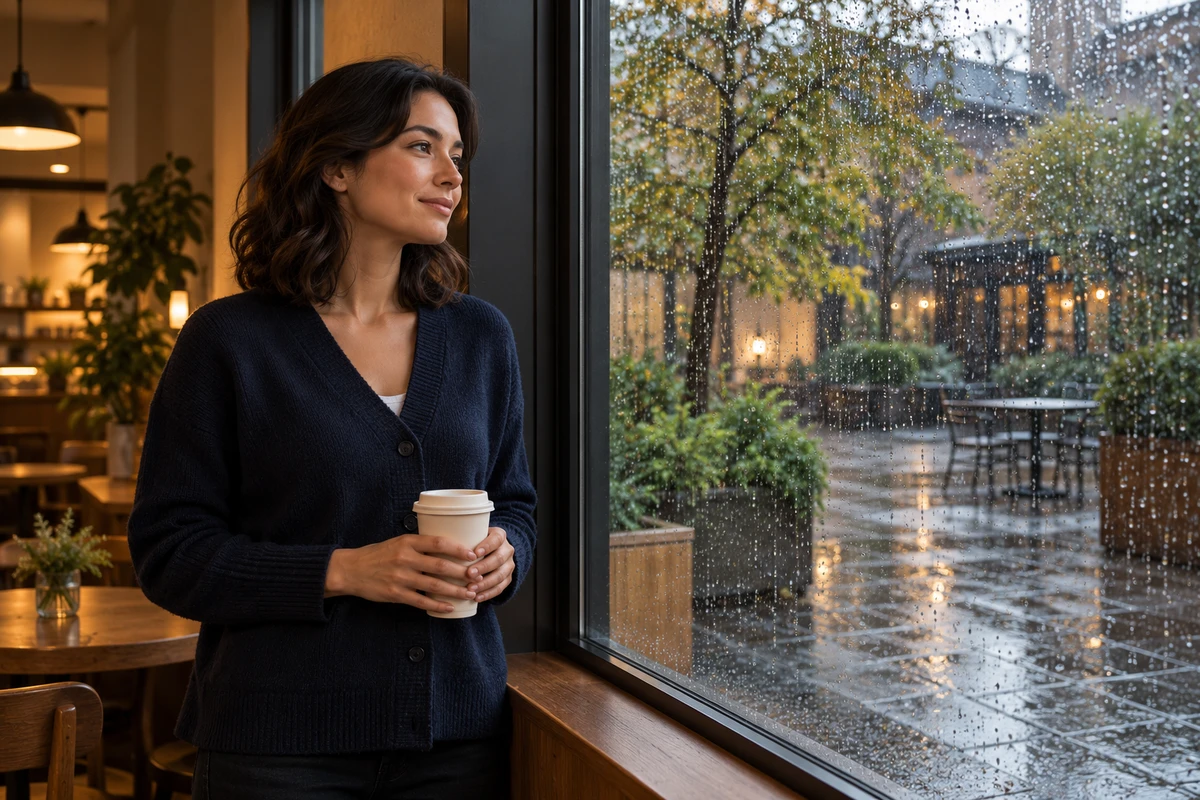
Filming rain in an ad is not only about making the drops visible. It is about deciding whose experience the viewer shares. Watching through a window, waiting at a doorway and travelling through a downpour can happen in the same place, yet tell different stories. More rain cannot necessarily make up for an undefined human situation.
After writing “a rainy night, full of atmosphere,” add one more sentence: whose plans does the weather change? If the person, product and camera carry on exactly as before, the rain may still be decoration. Decoration has a place, but it should not be mistaken for a developed narrative.
Weather gains meaning from a person's position
In its July 22, 2020 article, ARRI SkyPanel shines in Academy Award-winning film “Parasite”, ARRI published a text interview with cinematographer Hong Kyung-pyo. He described different lighting intentions within the rainstorm sequence: making rain attractive at the mansion, while using continually flickering lights at the semi-basement. This is a filmmaker's production account, not advertising-effectiveness research or a claim that we have analysed the film shot by shot.
For advertising, the useful question is what the same weather means to people in different positions. Viewers need more than an impression of heavy rain. Someone can stay inside; someone needs to leave; someone has finally arrived. As that relationship changes, the camera's task changes too.
Consider an explicitly fictional travel-cup ad, not an ONCE client project or a completed shoot. The same person, cup and window could support different ideas. In one version, the person keeps hold of a cup they had intended to take out, then sits down to watch the rain. The subject could be making time for oneself. In a doorway version, they put away the keys they have just picked up and look outside again. A disrupted plan becomes readable, rather than merely a handsome rainy background.
These versions do not depend on making one warm and the other cold. Let action and space establish whether the person can stay or needs to leave; colour then has something specific to reinforce. Turning the whole image blue may otherwise add only a filter to a character whose situation has not changed.
Frame the situation, not just the drops
If the story concerns waiting, the shot can hold the relationship between person and window: the cup remains in their hands, their body settles into a chair, and rain continues outside. The time worth keeping is the change from deciding to stay to actually relaxing, not an arbitrary stretch of slow motion.
If the story concerns arriving, it could begin indoors. The person puts down their belongings, looks back toward the doorway and sits at a table. Rain need not occupy most of the frame. It only needs to distinguish this settled moment from the journey before it. The product has a place in that life, rather than appearing as a pack shot inserted into weather footage.
A playful idea need not automatically switch to sunshine either. Moving toward the window and tapping the cup lightly in time with the drops expresses a different intention from feeling stranded. This fictional treatment illustrates a creative possibility, not a prediction that every audience will read an emotion in the same way.
During storyboard discussions, temporarily remove words such as “sad,” “healing” and “premium.” Describe what the person does, what they originally intended and whether that intention changes. If those actions cannot distinguish two treatments, more rainy reference images are unlikely to make the choice for the story.
Make rain legible without making it the protagonist
In How to Film Rain Like a Pro, published by Zacuto on January 20, 2018, Bruce Logan warns that overlighting rain can make it look false and recommends judging its visibility on the monitor. His production advice should not be reduced to a universal instruction to keep increasing the backlight.
In the fictional interior scene, the creative task is to establish rain outside and a person choosing to remain inside. If every bright streak competes with their gaze and hand movements, visible weather can obscure the intended story. Start by checking whether the action reads, then decide how prominently rain needs to register. Spectacle does not require every shot size to be filled with water.
Beautiful droplets on the product are not an automatic improvement either. The cup in this story can remain dry indoors throughout; a rainy setting does not require soaking it. A switch to outdoor use or a functional demonstration would need to respect the actual product's permitted uses and supportable claims. Atmosphere should not imply unverified waterproofing, heat retention or durability.
The people, location and effects arrangements for a practical rain shoot still require a separate assessment by a suitably capable production team. This is creative analysis, not instructions for building rain rigs or protecting electrical equipment.
Let the choice survive after the rain
The same Zacuto article distinguishes falling rain from a wet-down, in which the ground is treated to suggest that rain has just stopped. A rainy world does not necessarily require drops to keep falling into every shot.
That opens another possibility for the ending. If the person initially chooses to wait, do they immediately resume their plan when the rain stops, or have they decided to keep this time for themselves? Either can work, but each changes how the earlier action is understood. A wet exterior can retain a sense of elapsed time without adding heavier rain or louder music to underline a relationship already clear.
Editing should follow that change. A person moving from eagerness to leave to willingness to sit gives viewers a line to follow. A succession of attractive raindrop close-ups only shows that attractive weather footage was collected. The rain does not have to stop at the end; the ending needs to remain about the person's relationship with it.
For a seasonal mood image, a complete plot may be unnecessary. For a brand film built around human action, bring the product information and one specific life situation to ONCE's commercial production planning. The question to explore together is: which decision does this rain actually change?
This is original creative analysis. The fictional scenes and AI concept cover are not product tests or client work. Both historical production sources were checked again on October 18, 2026; they do not establish current equipment specifications, budgets or advertising results. Overseas source links appear in the English version; mainland China accessibility has not been independently tested for the Chinese version.